
Hospitalist’s regulatory roundup: Medicare penalties adding up for doctors, hospitals


But hospitalists should look closely at their reports, Dr. Torcson said. CMS is still figuring out how to classify the work done by hospitalists. Currently, CMS compares hospitalists’ cost and quality data to general internists even though hospitalized patients have a very different quality and cost profile.
"That’s something where there are still ongoing focused advocacy efforts by SHM to make sure that the attribution and the measurement methodology takes into account the hospitalist model," he said.
Hospitals under pressure, too
But hospitalists have more them just themselves to worry about. Often it’s the hospitalist who is the point person for quality and efficiency in their institution. And Medicare has an array of hospital-focused carrots and sticks, as well.
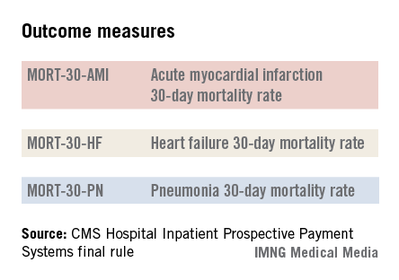
The hospital value-based purchasing program is already in full swing. For fiscal year 2014, which begins in October 2013, hospitals will have 1.25% of their base operating charges at risk in the program. The program bases payment on a group of clinical process measures, patient satisfaction, and selected mortality measures.
Additionally, Medicare is doubling the maximum penalties for its from 1% to 2% of base operating payments starting this month. The penalties apply to hospitals that have excess 30-day readmissions for pneumonia, heart failure, and acute myocardial infarction. CMS is also expected to add more conditions to the list. Total hip and Hospital Readmissions Reduction Program knee arthroplasty and chronic obstructive pulmonary disease will be added to the list of conditions in October 2014.
CMS is also launching a new Hospital-Acquired Condition (HAC) Reduction Program in October 2014. In this program, which was authorized under the Affordable Care Act, hospitals with the most HACs will see their payments reduced by 1%. During the first year, hospitals will be judged based on several indicators including:
• Pressure ulcer rate.
• Iatrogenic pneumothorax rate.
• Central venous catheter–related blood stream infection rate.
• Postoperative hip fracture rate.
• Postoperative pulmonary embolism or deep vein thrombosis rate.
• Postoperative sepsis rate.
• Wound dehiscence rate.
• Accidental puncture and laceration rate.
• Central line–associated blood stream infection.
• Catheter-associated urinary tract infection.
• Hospitals’ scores will be risk adjusted based on age, sex, and comorbidities.
More regulatory changes
CMS is also making some changes that will impact how hospitalists admit patients. Over the summer, Medicare officials issued a regulation that changes the criteria for when to admit a patient to hospital, as covered under Medicare Part A, and when to place them under observation status under Part B. The new criteria are based on the amount of time the physician expects the patient to spend as an inpatient.
Starting on Oct. 1, 2013, Medicare contractors will assume that a hospital stay is covered under Part A if the physician expects the patient to stay as an inpatient in the hospital for at least 2 midnights. CMS also emphasized in the rule that the inpatient stay does not begin until the patient is formally admitted by a physician.
What can hospitalists do to prepare?
While new regulatory requirements continue to hit hospitals year after year, Dr. Torcson said hospitalists are well prepared to handle the changes.
"The whole purpose and success and value of hospitalists is being the physician champions for the hospital-level performance agenda around core measures, readmissions, hospital-acquired conditions, and medical necessity documentation," he said. "That’s something that hospitalists have been preparing for from day 1, going back to the ’90s."
He urged hospitalists to redouble their efforts as hospital champions for quality.
"Concentrating on the hospital-level performance agenda is really going to be the key for hospital medicine programs to continue to be successful," Dr. Torcson said.
mschneider@frontlinemedcom.com
On Twitter @MaryEllenNY

