
Three Tips for Decreasing Alarm Fatigue


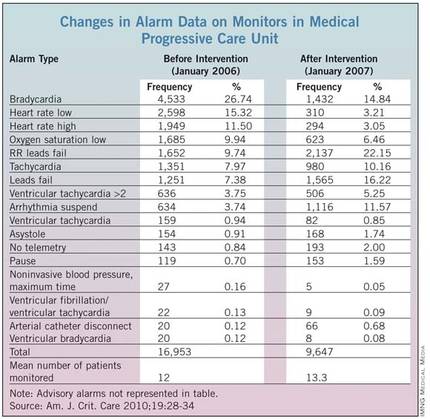
In an initiative undertaken at Dartmouth-Hitchcock Medical Center in Lebanon, N.H., heart rate and oxygen saturation monitors were set to wider threshold limits and only actionable rescue events produced auditory alarm signals. This initiative resulted in early detection of patient distress, early intervention, fewer rescue events, and reduced transfers to intensive care.
In their research, Ms. Cvach and Ms. Creighton Graham were able to decrease critical monitor alarms by 43% from baseline. As they explained, one of the changes was to "revise the default settings for the unit’s monitor alarms, including parameter limits and levels, so that alarms that occurred were actionable and clinically significant."
Get "smart" about alarm monitors. Use technology to help reduce false alarms and increase recognition of clinically significant alarms.
Michael Wong is founder and executive director of the Physician-Patient Alliance for Health & Safety (PPAHS). Passionate about patient safety, he was recently invited by the American Board of Physician Specialties to be a founding member of the American Board of Patient Safety. He is a graduate of Johns Hopkins University and is on the editorial board of the Journal for Patient Compliance, a peer-reviewed journal devoted to improving patient adherence. The researchers reported no conflicts of interest.

