
After Tornado, Joplin Rebuilds Stronger Than Before


"I think what’s often missed in this is that we did take a hit and we continue to take a hit," said Freeman Health emergency physician Dr. Frank Veer. "They took a punch to the face, but we’ve taken body blows ever since then, and I’m impressed with my colleagues’ ability to continue to step up and do that job."
Because there was no electricity during the first few hours after the tornado, the exact patient count isn’t available, but Freeman officials said they treated well over 500 patients and performed 22 lifesaving surgeries. Another 1,700 patients were cared for over the next few days and weeks, and patient volume has continued to be high.
So Freeman has had to find more efficient ways to deliver care – not simply to be a better health system, but out of necessity, Dr. Veer said. The hospital added one full shift in the ED, staffed by ED docs and nurses taking on additional hours.
All three men say that flexibility is the key to any disaster response plan and that a secure back-up communication system – including analog radios and a network of ham radio operators – is invaluable. The tornado destroyed five repeater or relay towers in the Joplin area, which meant that cell phones were unusable and digital EMS channels didn’t work all that well either, Dr. Smith said. Analog radios were the only reliable way to communicate during the first several days or, for some parts of town, weeks.
St. John’s had a disaster trailer on-site that was designed to accommodate 250 patients and included emergency communications equipment. "They found the trailer a week later and it was a mile away, and all they found was the frame and the axles," Dr. Smith said. "If it had been in an underground bunker, it would have been much better, but it was parked next to the hospital, as it had been for years."
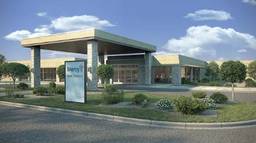
The new hospital will include a hardened structure for back-up communication systems and emergency supplies. Back-up power sources will be located 100-200 yards from the hospital, instead of right next to the ED and nearby gas lines, which ruptured during the storm and began leaking into the hospital.
Dr. Smith recommends that medical staff create personal disaster kits with whatever supplies they might need for at least 72-96 hours, such as their own medications. Some workers had such kits, but it wasn’t a policy.
"I can bet that 95% of us in Joplin now have [a disaster kit], be it in our car or our house," he added.
With the tornado season just underway in the Midwest, Mercy has yet to test many of the hard lessons learned. Fears of a mass exodus have gone unrealized. By July, there will be a net gain of 30-32 physicians in the clinic, including 15 who are new to the community, Dr. Smith said. Even the four physicians who were en route to Joplin when the tornado hit opted to stay on.
"It has reinvigorated our desire to practice medicine," he said. "I don’t know if that makes sense to you, but medicine is no longer a job. What we did before May 22 was important, but since May 22, it’s not a job, it is a mission.
"We’re here to build the infrastructure for health care in our community and to provide top-quality patient care. But we also have a mission to leave a legacy here, to rebuild Joplin, and to [affect] how health care will be delivered here for the next 50 or 100 years."
CORRECTION: 4/19/12 The original version of this story misstated the amount of the annual payroll for Mercy Health.

