
BEST PRACTICES: The A1chieve Resource Centre: Region-Specific Data From Around the World


Reports Generator
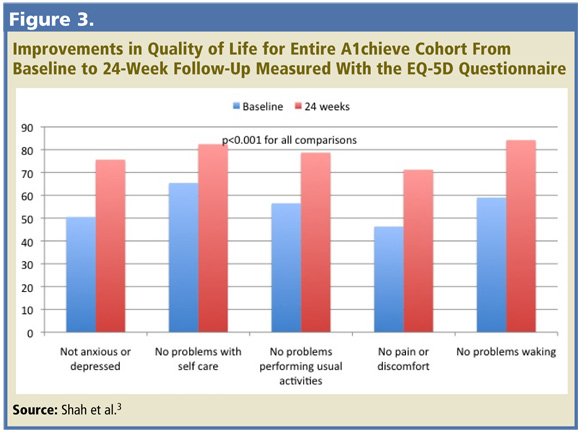
The A1chieve Reports Generator enables users to view and extract demographic, efficacy, and safety data for the entire study cohort or for specific regions. Study outcomes may also be viewed and extracted in their entirety or according to specific end points (eg. Figures 1-3). This information may be further refined according to region and specific end points for that region. For example, users can view all the results for South Asia simultaneously and visually compare these data with all the results from Russia. Or, if greater specificity is needed, the lipid and blood pressure data or patient satisfaction data, for example, could be compared between the two regions. To fit to local practice, the results can be displayed according to different measurement units as well: mmol/L or mg/dL for blood glucose, percent or mmol/mol for HbA1c, and mmol/L or mg/dL for lipid profiles.
Information of interest to individual users can then be extracted and converted to customized takeaway reports. By following the "Create Custom Report" link on the Reports Generator page, users are taken to sets of individual thumbnail images, organized by region, that provide graphic representations of the study results. To create a report, the thumbnails can be dragged to the "drop zone." Once in the "drop zone," the user can arrange the order of the images by dragging them to the desired location. In this way, users may create side-by-side visual comparisons of changes in body weight among patients in Latin America and North Africa, for example, or view changes in weight from all seven regions. By creating a free account with a username and password, users may store their custom reports on the Web site. Reports may also be exported to portable document format (PDFs) or PowerPoint slides.
Conclusions
A1chieve study results demonstrated that starting Novo Nordisk insulin analogue therapy in patients who are new to insulin therapy or in those using other insulin preparations provides an opportunity to improve glycemic control with significant reduction in the risk of hypoglycemia and without any clinically significant weight gain. It also showed that, at various stages of type 2 diabetes, use of Novo Nordisk insulin analogues was associated with improvement in patients’ quality of life across all the regions. Data on patient demographics, including data on diabetes complications and use of various treatments across the participating countries, are scarce, and it is of significant clinical value to make these data available to the medical community. The online A1chieve Resource Centre, to a good extent, will allow physicians and researchers to have access to these data in a user-friendly manner. Considering the large set of data that gets poured into medical literature in the current times, such innovative approaches like the A1chieve online Resource Centre will be of increasing interest going forward.
References
- Home P, El Naggar N, Khamseh M, et al. An observational non-interventional study of people with diabetes beginning or changed to insulin analogue therapy in non-Western countries: The A1chieve study. Diab Res Clin Pract. 2011;94:352-363.
- International Diabetes Federation (IDF). Diabetes Atlas. 5th ed. Brussels, Belgium: IDF; 2011.
- Shah S, Zilov A, Malek R, Soewondo P, Bech O, Litwak L. Improvements in quality of life associated with insulin analogue therapies in people with type 2 diabetes: Results from the A1chieve observational study. Diab Res Clin Pract. 2011;94:364-370.
This supplement was produced by the customized publication department of IMNG Medical Media, an Elsevier company. Neither the editor of CLINICAL ENDOCRINOLOGY NEWS, the Editorial Advisory Board, nor the reporting staff contributed to its content. The opinions expressed in this supplement are those of the faculty and do not necessarily reflect the views of the Publisher.
Copyright © 2012 Elsevier Inc. All rights reserved. No part of this publication may be reproduced or transmitted in any form, by any means, without prior written permission of the Publisher. Elsevier Inc. will not assume responsibility for damages, loss, or claims of any kind arising from or related to the information contained in this publication, including any claims related to the products, drugs, or services mentioned herein. The opinions expressed in this supplement do not necessarily reflect the views of the Publisher.
A Supplement to CLINICAL ENDOCRINOLOGY NEWS®. This supplement was sponsored by Novo Nordisk.


