
Leaders: Bridging the Physician-Nurse Divide


When Dr. Kevin O’Leary helped to launch the new hospitalist program at Northwestern University back in 2003, he was suddenly inundated with reports on adverse events.
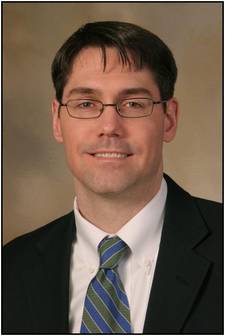
Now that hospitalists were sharing responsibility for quality improvement with the nursing leadership, they were hearing about many of the adverse events occurring in the hospital for the first time. “Prior to our having a hospitalist program, there wasn’t a really good way for physicians to hear about them in an organized way,” said Dr. O’Leary, the associate chief of the division of hospital medicine and the chair of the medicine department’s quality management committee at Northwestern University, Chicago.
It didn’t take long to realize that the common theme in many of the adverse events was a lack of communication, particularly between physicians and nurses.
“When we spoke to nurses about this, they nodded their heads. They got it,” Dr. O’Leary said. “But when we discussed this issue of miscommunication and lack of teamwork with physicians, a lot of times I’d get a blank look.”
So Dr. O’Leary and his colleagues set out to improve teamwork. The first step was to localize the physicians to specific units. That improved the frequency of communication between nurses and physicians, but it didn’t do much to improve their agreement on a plan of care. Next, they chose a physician on each unit to be the unit’s medical director, and paired that person with unit’s nurse manager. They gave them training on closed-loop communication and coaching, and made them responsible for improving the safety and quality of care for their unit. Their main task was to co-lead “structured interdisciplinary rounds” in the unit.
The idea of interdisciplinary or multidisciplinary rounds has been in existence on general medical floors for some time. But these rounds often differ greatly from hospital to hospital and even within different units of the same hospital. So Dr. O’Leary and his colleagues tested some ideas and then standardized the hospital’s approach to interdisciplinary rounding.
What they came up with was a model in which the rounds occurred each day, Monday through Friday, for about 30 minutes. The discussions involved all patients on the unit, and occurred not at the bedside but in a conference room. The model called for all frontline providers to attend, including nurses, physicians, pharmacists, case managers, and social workers. They decided to use a structured communication tool similar to the daily-goals-of-care form used in intensive care units for discussing new patients. For existing patients, they discussed their progress.
The response from both nurses and physicians was positive. After about 6 months, most people involved said they thought this was helping to improve patient care and the efficiency of the workday. Dr. O’Leary also evaluated the “teamwork climate score,” and found significant improvements from baseline. Recently, they performed a chart review on 555 patients on a single unit, and found that there was a significant reduction in the rate of adverse events using both an historic and concurrent control.
Dr. O’Leary said he hopes that other hospitals can take the work done at Northwestern and tailor it to meet their needs, because “it is absolutely a problem elsewhere.”
But he cautioned physician leaders who want to work on this that the first challenge will be to convince their colleagues that it’s a problem. He suggests simply asking nurses and physicians to rate their collaboration. Most likely, nurses won’t be satisfied with the level of teamwork and collaboration they get from physicians, he said.
The lack of teamwork isn’t a surprise and it’s also understandable, Dr. O’Leary said. Physicians aren’t trained at communication, they’re extremely busy, and they are treating multiple and very sick patients. “But that means we just have to be more creative in overcoming those barriers,” he said.
Reporting by Mary Ellen Schneider, Hospitalist News Digital Network