
New screening tests: HSV, CMV, HBV, HCV, parvovirus, and HIV


Tips on choosing the right tests and getting valid results
Thanks to type-specific serology tests, HSV 1 and/or 2 infection can be diagnosed with confidence.3 Type-specific tests determine the IgG antibody response to an envelope glycoprotein (gG) of HSV. In the diagnosis of primary infection, the test detects seroconversion from a negative to a positive titer. The earliest time for antibody production is 3 weeks after infection—but 8 to 12 weeks should elapse prior to testing for seroconversion.4
The US Food and Drug Administration (FDA) has approved an office test for HSV-2 antibodies. The biokitHSV-2 rapid test (biokit USA, Lexington, Mass) requires blood or serum—though statistical analysis indicates that serum demonstrates higher sensitivity with this assay than does capillary whole blood—and can be performed in any outpatient setting, with excellent sensitivity and specificity.
Flaws of IgM testing and viral cultures
IgM testing for HSV is not advised, as the presence of IgM does not correlate with acute disease. As for cultures, laboratories have been slow to change from HSV cultures to PCR testing from suspected HSV lesions. Because viral cultures for HSV have extremely low sensitivity, only positive results are clinically useful.
Primary infection yields a higher positive culture rate because of increased viral shedding. In contrast, recurrent disease, with its low levels of viral shedding, yields significantly lower positive culture rates.5
Cytomegalovirus
CATHY’S CASE
Flu-like symptoms and plans to conceive
When Cathy, 28, comes in for her annual visit, she reports that she has been experiencing exhaustion, chills, and body aches for several weeks and wonders whether she might have mononucleosis. She also mentions that she and her husband are trying to have a child. She recently started a new job in a day care center, working directly with young children. You decide to test her for the Epstein-Barr virus. Since she is planning to conceive, you also test her for CMV, and the test is positive.
How do you counsel Cathy?
CMV infection usually is diagnosed after clinical findings in the individual or fetus (by ultrasound examination) suggest this infection, or when the clinician suspects it for other reasons.
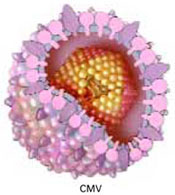
In young adults, primary CMV infection can cause flu- or mononucleosis-like symptoms such as extreme fatigue, fever, chills, and/or body aches, though they generally resolve within several weeks without further morbidity. However, CMV can cause grave illness—even death—in immunocompromised patients, who may continue to experience the disease intermittently after the first outbreak. CMV also can seriously impair development in infants who are infected in utero. The vast majority of these infants appear normal at birth and only later exhibit problems.
Cathy should be counseled to postpone conception until the virus clears, to avoid jeopardizing her infant’s health.
Testing for CMV during pregnancy
Diagnosing primary infection in pregnancy can be difficult. In the United States, we do not screen for CMV prior to pregnancy, except for special circumstances such as Cathy’s, because the virus is widespread and causes few problems in healthy, nonpregnant individuals. This lack of screening renders the best diagnostic method (ie, seroconversion, or finding CMV IgG antibody in a previously seronegative woman) impossible in most cases. Rather, the clinician usually orders IgG and IgM antibody tests, hoping they will help determine whether a primary infection is present.
In these situations, detection of the IgM antibody during pregnancy is vital to diagnose primary infection.
IgG avidity test clarifies IgM findings
The enzyme-linked immunosorbent assay (ELISA) and the capture ELISA assay are used to detect CMV IgG and IgM antibodies. However, the ELISA for IgM can yield false-positive results due to the presence of:
- IgG (especially at high titers),
- rheumatoid factor of the IgM class (IgM-RF),
- reaction between IgM antibodies and cellular antigens, and
- primary Epstein-Barr viral infection, which can stimulate production of CMV IgM antibody in CMV-immune individuals.
Thus, a positive IgM finding in the serum of a pregnant woman can be caused by acute primary CMV infection, the convalescent phase of a primary CMV infection, or simply persistent IgM antibodies.6,7
That’s where the IgG avidity test comes in. It can help confirm and clarify the clinical significance of finding the IgM antibody and distinguish between primary and recurrent CMV infection. Using the IgM antibody test together with the IgG avidity test increases the likelihood of a correct diagnosis.
A positive IgM with a low avidity index is highly suggestive of a recent (less than 3 months) primary CMV infection.
Standardization of the IgG and IgM assays and the IgG avidity assay is urgently needed to reduce the likelihood of incorrect diagnosis and unwanted intervention in otherwise normal pregnancies.


