
Is training patients in self-examination an effective way to screen for melanoma?


More knowledgeable patients were less likely to have a thick (≥0.75 mm) tumor and a delayed diagnosis (OR=0.34; 95% CI, 0.13-0.88). Similarly, patients with greater awareness of their skin were less likely to have a thick tumor and a delayed diagnosis (OR=0.50; 95% CI, 0.28-0.89 and OR=0.30; 95% CI, 0.12-0.71, respectively). Investigators found no significant difference in mortality based on knowledge or skin awareness.
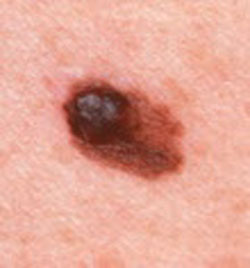
Which patients are more likely to detect melanoma?
A retrospective series of 816 consecutive cases of newly diagnosed melanoma investigated the frequency of self-detection in a Mediterranean population at intermediate risk.3 Subjects were statistically more likely to find melanoma themselves if they had a lesion on the lower limbs, were of younger age (49.8 vs 52.9 years of age), had fewer atypical nevi, had >8 years education, were knowledgeable about the characteristic features of melanoma, and performed regular SSE (P<.01 for all comparisons).
Recommendations
The US Preventive Services Task Force finds insufficient evidence to recommend for or against routine counseling by primary care clinicians to prevent skin cancer.4
The Cancer Care Ontario Program in Evidence-based Care, on the other hand, advises health care providers to perform annual total-body skin examinations of high-risk patients and teach the patients to examine themselves.5
The American Cancer Society (ACS) and the American Academy of Dermatology (AAD) both provide information about recognizing melanoma on their Web sites and recommend that people at high risk perform monthly self-examinations. They further advise such people to periodically see a health care professional qualified to diagnose skin cancer (ACS), or a dermatologist (AAD), for a complete skin examination.6,7

