
Unmasking Our Grief


Background: Health care systems have been calling for trainings on the topics of self-care and burnout to help staff cope with the impact of the COVID-19 pandemic. The geriatric care workforce in particular has been hard hit by the stresses of COVID-19 and social inequities for themselves and their patients. These stresses have led to trauma and grief among our colleagues and ourselves.
Observations: Self-care techniques in and of themselves are not an adequate salve for the massive, collective, and many times unrecognized grief that the geriatric care workforce has faced over the course of this pandemic. We must acknowledge, name, and make space for the grief that is exhausting the entire elder care workforce and we must do so at an organizational level. In this paper, we briefly discuss the distress affecting the geriatric care workforce, reflect on our efforts to cope as health care workers, and offer recommendations at individual and organization levels to help address our collective grief.
Conclusions: This pandemic has revealed our vulnerabilities as well as our strengths. These experiences also present us with opportunities to be better and do better as both professionals and people. We hope that teams and organizations will take advantage of these opportunities for self-reflection and continue unmasking our grief, healing our wounds, and honoring our shared humanity.
In our experience, caring for ourselves and our teams in times of prolonged stress, trauma, and grief is essential to maintain functioning over time. We strongly believe that it must occur at both the organizational and individual levels. In the throes of a crisis, teams need support immediately. To offer a timely response, we gathered knowledge of team-based care and collaboration to develop practical strategies that can be implemented swiftly to provide support across the team.15-19
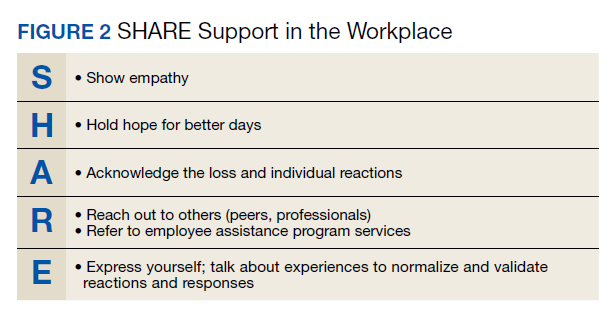
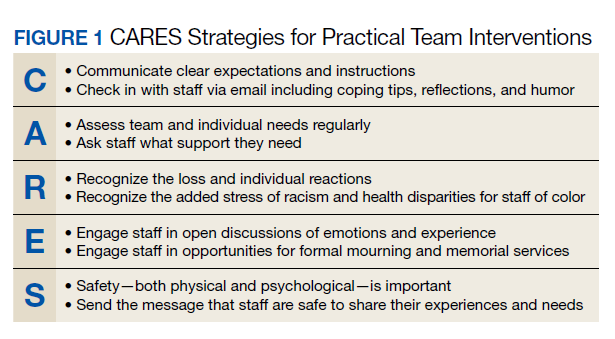
The strategies we developed offer steps for creating and maintaining a supportive, compassionate, and psychologically safe work environment. First, the CARES Strategies for Practical Team Intervention highlights the importance of clear communication, assessing team needs regularly, recognizing the stress that is occurring, engaging staff in discussions, and ensuring psychological safety and comfort (Figure 1). Next, the SHARE approach is laid out to allow for interpersonal support among team members (Figure 2). Showing each other empathy, hoping for better days, acknowledging each other’s pain, reaching out for assistance, and expressing our needs allow HCWs to open up about their grief, stress, and trauma. Of note, we found these sets of strategies interdependent: a team that does not believe the leader/organization CARES is not likely to SHARE. Therefore, we also feel that it is especially important that team leaders work to create or enhance the sense of psychological safety for the team. If team members do not feel safe, they will not disclose their grief and remain stuck in the old mode of suffering in silence.
Conclusions
This pandemic and the collective efforts toward social justice advocacy have revealed our vulnerabilities as well as our strengths. These experiences have forced us to reckon with our past and consider possible futures. It has revealed the inequities in our health care system, including our failure to protect those on the ground who keep our systems running, and prompted us to consider new ways of operating in low-resourced and high-demand environments. These experiences also present us with opportunities to be better and do better as both professionals and people; to reflect on our past and consider what we want different in our lives. As we yearn for better days and brace ourselves for what is to come, we hope that teams and organizations will take advantage of these opportunities for self-reflection and continue unmasking our grief, healing our wounds, and honoring our shared humanity.


