
Implementation of a Protocol to Manage Patients at Risk for Hospitalization Due to an Ambulatory Care Sensitive Condition


Background: Ambulatory care sensitive conditions (ACSCs), such as type 2 diabetes mellitus, chronic obstructive pulmonary disease, hypertension, congestive heart failure, urinary tract infections, asthma, dehydration, bacterial pneumonia, angina without an in-hospital procedure, and perforated appendix put patients at risk for hospitalization. Currently at the William S. Middleton Memorial Veterans Hospital in Madison, Wisconsin, no standardized process or protocol exists that can identify and optimize primary care for patients with ACSCs who have been hospitalized but are predicted to be at low risk for rehospitalization.
Methods: This project aimed to evaluate the implementation of offering further referrals and care for these patients. A pharmacy resident conducted a baseline chart review using a standardized template in the US Department of Veterans Affairs (VA) Computerized Patient Record System to identify additional referrals or interventions a patient may benefit from based on any identified ACSC. Potential referral options included a clinical pharmacy specialist or nurse care manager disease management, whole health/wellness, educational classes, home monitoring equipment, specialty clinics, nutrition, cardiac or pulmonary rehabilitation, social work, and mental health.
Results: Comparing the 3 months prior to and the 3 months after offering referrals, there was a cumulative quantitative decrease in the number of emergency department visits (5 to 1) and hospitalizations (11 to 5).
Conclusions: Identifying patients at risk for hospitalization from an ACSC via a review and referral process by using the VA patient aligned care team structure was feasible and led to increased patient access to primary care and additional services.
Methods
This quality improvement project to offer further referrals and care to patients considered low risk for hospitalization was implemented to enhance ambulatory-care provided services. All patients identified as being a low risk for hospitalization via a VA dashboard from July through September 2018 were included. Patients were identified based on age, chronic diseases, gender, and other patient-specific factors predetermined by the VA dashboard algorithm. Patients receiving hospice or palliative care and those no longer receiving primary care through the facility were excluded.
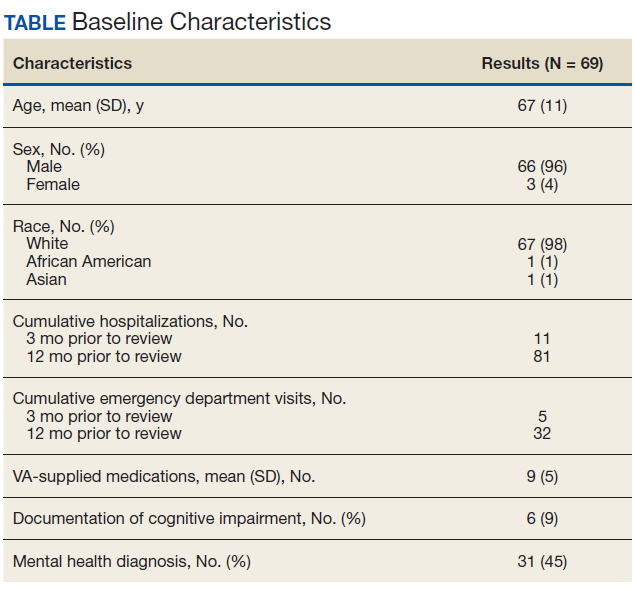
A pharmacy resident conducted a baseline chart review using a standardized template in the computerized patient record system (CPRS) to identify additional referrals or interventions a patient may benefit from based on any identified ACSC. Potential referral options included a CPS or nurse care manager disease management, whole health/wellness, educational classes, home monitoring equipment, specialty clinics, nutrition, cardiac or pulmonary rehabilitation, social work, and mental health. A pharmacy resident or the patient aligned care team (PACT) CPS reviewed the identified referrals with PACT members at interdisciplinary team meetings and determined which referrals to offer the patient. The pharmacy resident or designated PACT member reached out to the patient via telephone or during a clinic visit to offer and enter the referrals. If the patient agreed to any referrals, a chart review was conducted 3 months later to determine the percentage of initially agreed-upon referrals that the patient completed. Additionally, the number of emergency department (ED) visits and hospitalizations related to an ACSC at 3 months was collected.
Feasibility was assessed to evaluate potential service implementation and was measured by the time in minutes to complete the baseline chart review, time in minutes to offer referrals to the patient, and proportion of referrals that were completed at 3 months.4 As this quality improvement project was undertaken for programmatic evaluation, the University of Wisconsin-Madison Health Sciences Institutional Review Board determined that this project did not meet the federal definition of research and therefore review was not required. Data were analyzed using descriptive statistics.


