
Effects of Computer-Based Documentation Procedures on Health Care Workload Assessment and Resource Allocation: An Example From VA Sleep Medicine Programs


Background: Computer-based documentation (CBD) is used commonly throughout the world to track patient care and clinical workloads. However, if capture of clinical services within the electronic health record (EHR) is not implemented properly, patient care services and workload credit will be inaccurate, which impacts business decisions related to demand for care and resources allocated to meet the demand. Understaffing of medical personnel can contribute to delays in treatment, missed treatments, and workforce turnover.
Objective: To illustrate the impact of CBD procedures on health care workload assessment and resource allocation, this article uses data from the US Department of Veterans Affairs Corporate Data Warehouse to provide examples from the Veterans Health Administration (VHA) sleep medicine programs.
Discussion: Inaccurate CBD led to underreporting of sleep medicine services provided at VHA facilities nationwide and contributed to insufficient allocation of resources and personnel. Recent modifications in CBD protocols (Stop Codes) improved the accuracy of data capture and reporting while providing VHA sleep programs with data they can use to advocate for workforce expansion to meet patient care needs.
Conclusions: Inaccurate CBD of clinical workloads can result in inadequate allocation of health care personnel and resources to meet the needs of patients. Untreated sleep disorders are associated with increased risk of depression, anxiety, impaired neurocognitive functions, cardiovascular disease, motor vehicle accidents, and premature death. Educating health care providers and administrators on the importance of accurate designation of clinical services within the EHR is necessary to facilitate improvements in health care availability and delivery.
Discussion
Inaccuracies in CBD procedures can adversely affect health care workload assessment and allocation, contributing to ongoing challenges faced by sleep medicine clinics and other VHA programs that have limited staff yet strive to provide timely and high-quality care to veterans. “Not only does inaccurate coding contribute to miscalculations in staffing and resource allocation, it can also contribute to inaccuracies in overall measures of VA healthcare efficiency,” the GAO reported to Congress.9 The GAO went on to recommend that the VA should ensure the accuracy of underlying staffing and workload data. VHA sleep medicine programs have made efforts to educate HCPs and administrators on the importance of accurate CBD as a tool for accurate data capture that is necessary to facilitate improvements in health care availability and delivery.
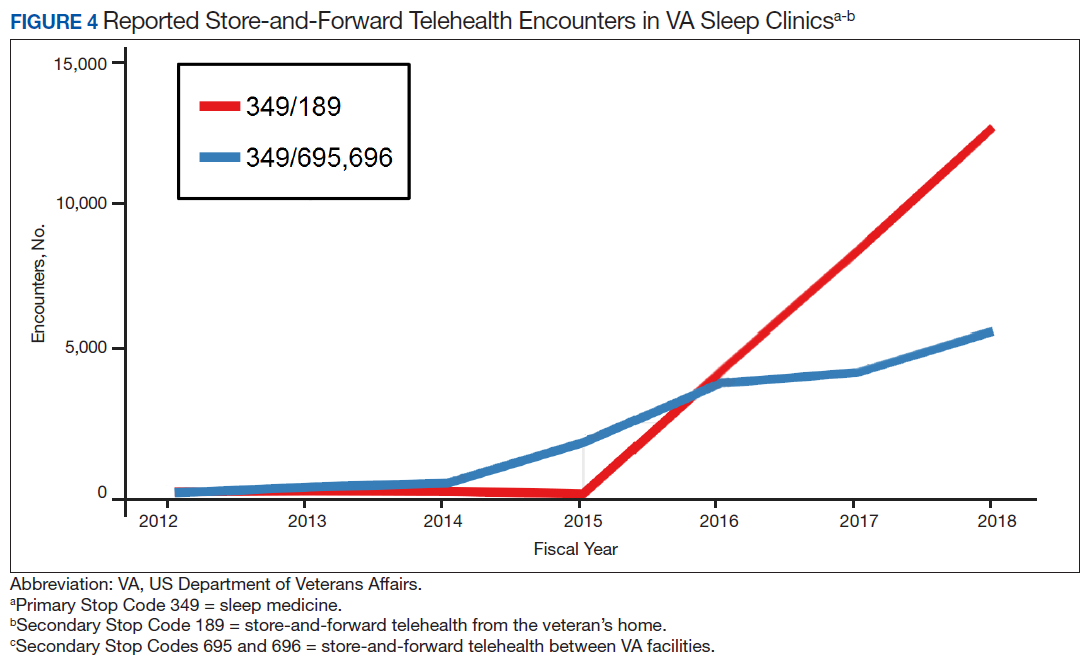
In 2018, the VA Sleep Program Office released an updated set of Stop Code changes, including expansion of telehealth codes and improved designation of laboratory and home sleep testing services. These changes are anticipated to result in accurate documentation of VA sleep clinic workload and services, especially as the VA TeleSleep EWI to reach rural veterans expands.16 In light of the improved accuracy of reporting of delivered sleep services due to changes in Stop Codes over the past 4 years, VHA sleep medicine providers continue to advocate for allocation of resources commensurate with their clinical workload. An appropriate administrative response to the significant clinical workload performed by disproportionately few providers should include the authorization of increased resources and personnel for sleep medicine as well as providing the tools needed to further streamline workflow efficiency (eg, artificial intelligence, machine learning, and population health management).
Conclusions
Despite the barriers faced by many large integrated health care systems, VHA sleep medicine leadership continues to implement changes in CBD protocols that improve the accuracy of clinical workload tracking and reporting. Ultimately, these changes will support proposals for increased resources necessary to improve the quality and availability of sleep care for veterans. This example from VA illustrates the importance of accurate workload capture and its role in informing administrators of health care systems as they strive to meet the needs of patients. Although some VA sleep medicine programs continue to face challenges imposed by systemwide limitations, the ORH TeleSleep Program is a major initiative that improves veterans’ access to care by disseminating and implementing effective telehealth technologies and strategies.16
Acknowledgments
This work was supported by a VA Office of Rural Health Enterprise-Wide Initiative.


