
Making a Difference in Dermatology



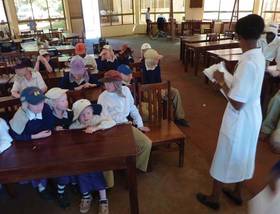
What were some of the greatest challenges to practicing medicine in this setting?
The hardest thing about treating patients in this setting is the lack of access to medications. You could reasonably make a diagnosis, but not be able to help because the necessary medications were not available or affordable to the patient. This is especially true of pediatric formulations. In one case, a newborn baby had been exposed to varicella. Here in the United States, that child would have promptly received intravenous acyclovir. Since that wasn’t available in Moshi, we simply observed the baby, hoping he would clear on his own. Luckily he did so, but many other babies aren’t so fortunate.
What were some of the most rewarding aspects of the trip?
Professionally speaking, I loved seeing the patients. They were very grateful for any help I could provide, and in turn they provided innumerable diagnostic challenges. Equally rewarding was teaching the dermatology and pediatrics residents. They sincerely appreciated any time spent educating them, and they were quite eager to learn.
I can say without doubt that the residents that I met in Tanzania were on par with our residents here and are truly wonderful doctors.
On a personal level, this was a great adventure for my family and me. It was absolutely wonderful to see my son adapt to a different culture. He attended a great international school and made friends quickly with children from all over the world. We also learned that mechanics are much more sought after than doctors. My husband volunteered in the hospital workshops, fixing everything from the hospital’s decaying fleet of Land Rovers to the aging and temperamental hospital generator. We saw the great migration in the Serengeti, swam in the Indian Ocean, and I climbed Mt. Kilimanjaro. These experiences will shape my family and me for the rest of our lives.
How have you applied what you learned in Tanzania to your practice in the U.S.?
While I always have an eye out for leprosy or the rare infectious disease, mostly I use the practicality that was a necessity there in treating my patients here. The simple choice often works just fine. Also, I do not take for granted the access to care that we have here in the U.S. People would have to travel days, at an exorbitant personal cost, just to see a dermatologist. I hope to continue to serve in global health, training physicians in pediatric dermatology who are working in remote parts of the world.
– Interviewed by Heidi Splete
U.S.-trained internists who have practiced abroad will receive a $100 stipend for contributing to this column. For details, visit the World Wide Med column at www.internalmedicinenews.com or send an e-mail to imnews@elsevier.com.

