
Defending direct pay: Psychiatrists say model works



Dr. Willenbring said he hopes that some version of his treatment approach will be adopted by health care organizations, allowing it to reach more patients. Treatment for alcohol and substance use disorders can be started in primary care, and patients can be referred to specialists as needed, as is the case with treatment for asthma or depression, he said. This will be particularly important for patients with public insurance, he added.
Ms. Diehl of NAMI agreed that current managed care models do not leave much room for innovation. “There needs to be some kind of acknowledgment that psychiatry is an evolving practice. For acknowledgment of innovation and validation you have to scale up from one practitioner doing something that works, to a small exploratory study, and eventually you get something like cognitive-behavioral therapy where you say, ‘OK, this is robust.’ ”
Trust and continuity
,Direct-pay psychiatrists strongly defend their model as placing patient confidentiality, trust, and continuity of care at its center.
The European psychoanalysts who found refuge in the United States around the time of World War II were the first to institute private, office-based practices – a model that psychiatrists, who formerly worked mainly in hospitals, soon adopted, said Dr. Rodrigo A. Muñoz, who has been in private practice in San Diego since 1977 and is a former president of the American Psychiatric Association.
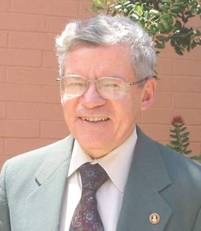
“These were patient-oriented people who truly believed in their practice and expected that this would be their life,” Dr. Muñoz said. But within decades, “all sorts of people came to intervene in psychiatry – government, insurance companies, employers, and the big physicians’ groups. A lot of money came to intermediaries who gained control over large chunks of the practice.”
Although Dr. Muñoz accepted insurance, including Medicaid, for decades, he no longer does. “The HMO people have tried to reduce office practice to 15 minutes for medication. I cannot practice that way,” he said. “My sessions are between 30 minutes and an hour,” he said, and include medication checks, psychotherapy, and detailed progress notes. “I am very interested in many areas of the patient’s life – family, work, plans, many other things, and I take my time. If my decision is between accepting insurance and seeing the patient for less money, I will take less.”
Dr. Muñoz says he does not have a waiting list and sees as many as 30 new patients a month. Direct pay allows him to keep overhead and fees as low as possible, and to maintain a level of discretion that his patients appreciate. He once clashed with Medicaid auditors on recording patients’ cultural backgrounds, because his mostly-Latino patients felt sensitive about what the information was being used for.
“I now have the practice I want to have. I believe I’ve got what every psychiatrist wants – a good relationship with my patients. Because you have to recall that many people come against their will. You’re treating them because you believe they have symptoms, and they may not agree. Sometimes I’m the fellow who tries to put them in the hospital.” Trust of patients, and their families, he said, is key.
Most patients on public insurance, meanwhile, “are destined to go to a clinic where the costs are much lower and supported by state subsidies,” Dr. Muñoz said. “They may see several practitioners – whoever is available that day at the clinic.”
Bridging the gap
“When psychiatrists go into psychiatry they are not simply going in to manage medications. You have to find out what’s going on with the patient’s life to make the best use of the medication. It’s not like primary care where there’s a clear path forward. You have to have a conversation. And health plans have not worked that into their actuarial and financial models,” said Ms. Diehl.
“Effective psychiatric practice includes psychotherapy and medication management,” Ms. Diehl continued. “On the other hand, this costs a lot to the system. We found that the average 45-minute treatment visit costs $250 out of pocket, and an initial evaluation can be upwards of $600. Not many people can pay that,” she said.
Dr. Lee H. Beecher, a psychiatrist recently retired from a direct-pay practice in St. Louis Park, Minn., said the private-pay model, done correctly and transparently, is accessible to most patients.
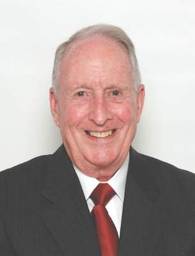
“I’m not talking about this as a model for the rich or celebrities. My clientele consisted of people from all backgrounds,” he said, and his fees – about $250 for a 50-minute session that included medication checks and psychotherapy – were always posted online. “I would tell patients what my costs were and why I do what I do, and they were satisfied with that,” he said. With a roster of 3,000 patients, Dr. Beecher managed his practice with only one support staff member.

