
Antibiotic Use in Hospitalized Patients With COVID-19 After Treatment Guidance Implementation at 5 VA Facilities


Background: Limited data and resources drove clinical collaboration during the COVID-19 pandemic. In July 2021, a stewardship collaborative among Veterans Integrated Service Network (VISN) 9 facilities developed COVID-19 guidance for bacterial coinfection in patients hospitalized with COVID-19. However, the method for disseminating the guidance and its impact on antibiotic use and appropriateness was unknown.
Methods: Electronic medical records (EMRs) of patients with COVID-19 admitted to VISN 9 facilities from August 2020 to August 2021 (preguidance) and November 2021 to November 2022 (postguidance) were reviewed. Data on COVID-19 infection, hospitalization, and antibiotic use were obtained from the US Department of Veterans Affairs Corporate Data Warehouse. COVID-19–specific antibiotic stewardship (AS) interventions and guidance distribution plans were collected from each facility. A random sample of EMRs from patients who received antibiotics within 4 days of hospital admission were reviewed for appropriateness, defined as meeting ≥ 1 guidance criteria. Antibiotic use for nonrespiratory infections was excluded. Pre- and postguidance antibiotic use and appropriateness were analyzed using multivariable logistic regression.
Results: Facility-specific interventions and guidance distribution varied among sites. Overall, the odds of receiving an antibiotic during the first 4 days of admission were 33% lower in the postguidance period (adjusted odds ratio [AOR], 0.67; 95% CI, 0.58-0.77). For patients prescribed an antibiotic, appropriateness in the postguidance period was not significantly different from the preguidance period (AOR, 0.98; 95% CI, 0.72-1.35).
Conclusions: Antibiotic use for bacterial coinfection in COVID- 19 significantly decreased after dissemination of collaboratively developed clinical guidance in a VISN incorporating 5 facilities with heterogeneous AS resources. This approach may encourage more resource-limited AS programs to collaborate to optimize antibiotic use for other infections.
Despite estimates that < 10% of people with COVID-19 have a bacterial coinfection, empiric antibiotic use occurs in > 50% of patients hospitalized with COVID-19.1-3 Within the Veterans Health Administration, Dieringer et al found that trends in antibiotic use during the first 5 months of the pandemic negated the downward trend of antibiotic use achieved through antibiotic stewardship (AS) in the 5 years prior to the pandemic.4
Inappropriate antibiotic use during the COVID-19 pandemic has been reported to drive antibiotic resistance and related adverse effects.5-8 Clinical guidance for antibiotic therapy to treat COVID-19 from the National Institutes of Health (NIH) and the World Health Organization (WHO) emerged early in the pandemic.9,10 Clinical guidance for antibiotic therapy to treat COVID-19 from the National Institutes of Health (NIH) and the World Health Organization (WHO) emerged early in the pandemic.9,10 While discouraging broad antibiotic use for COVID-19 infection, initial guidance for diagnosis of bacterial coinfection remained ambiguous. Additionally, guidance from the NIH and WHO listed older patients as a higher risk population for coinfections and leaned on clinical judgment for differentiation.
Some institutions developed local guidance and strategies to reduce inappropriate antibiotic use in the treatment of COVID- 19.11-14 Pettit et al compared before vs after implementation of antibiotic use guidelines in patients with COVID-19 at a single center and found a statistically significant decrease in use (74.5% to 42.1%; P < .001) and duration (1.3 days shorter; P < .001) of antibiotics. 13 Anderson et al also demonstrated a reduction in use (61.8% vs 44.4%; P = .002) and shorter antibiotic duration (2 days shorter; P = .03) after implementation of an electronic medical record (EMR)-based clinician best practice alert at 7 hospitals in a single health care system.14 However, these interventions were resource intensive and posed challenges for implementation at sites with limited AS program (ASP) support.
AS collaboratives have increased productivity among member ASPs through shared resources.15-17 Veterans Integrated Service Network (VISN) 9 includes 5 facilities in Tennessee and Kentucky with varied ASP models and developed an AS collaborative in January 2020. This multidisciplinary group included infectious diseases (ID), hospital medicine, and critical care physicians, as well as pharmacists. The facilities’ ASPs relied on the collaborative to develop shared resources to address empiric antibiotic use in patients with acute COVID-19, which led to the creation of guidance for identification and treatment of bacterial coinfection in patients with COVID-19. This guidance was disseminated to all collaborative facilities for implementation by the individual ASPs.
This study sought to (1) describe the dissemination of the clinical guidance at each facility; (2) evaluate the potential impact of this guidance document on antibiotic use in hospitalized patients with COVID-19; and (3) evaluate appropriate antibiotic use and mortality of hospitalized patients with COVID-19 before and after dissemination of the guidance to assess for potential unintended consequences. The authors aimed to share this work to increase support for the development and use of ASPs to increase performance via shared resources to optimize antimicrobial prescribing not only for COVID-19 but other infections.
Methods
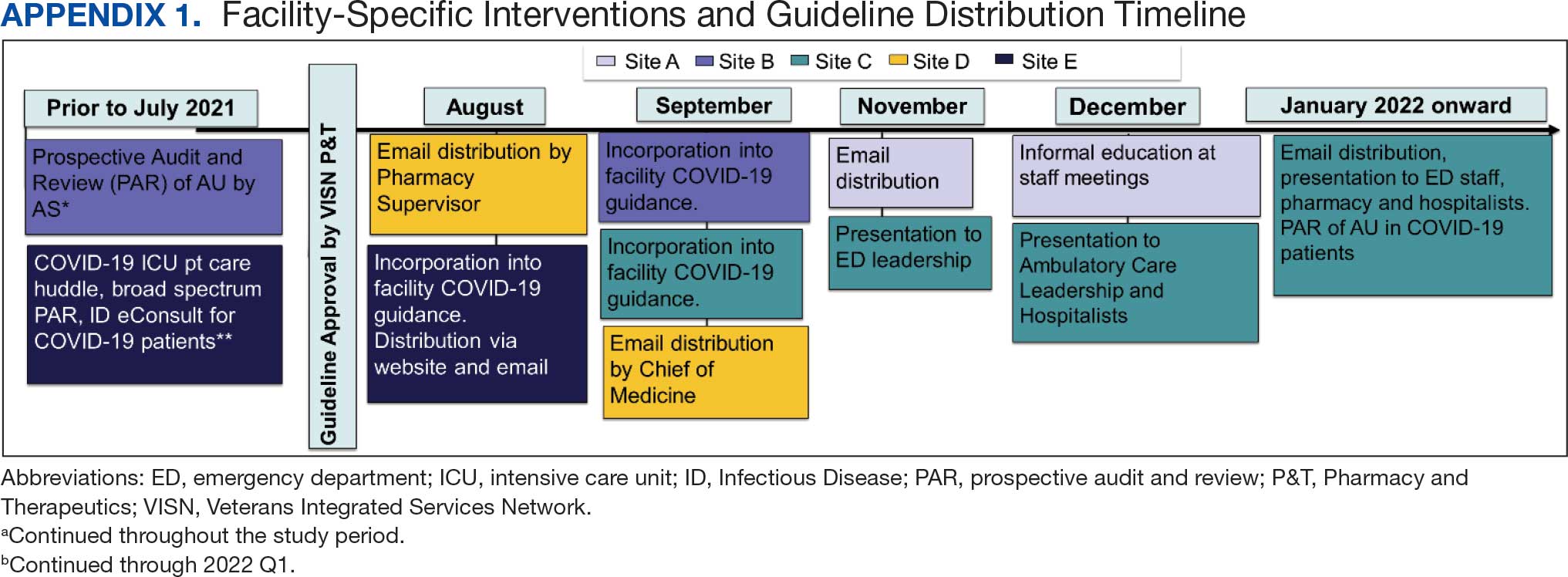
Prior to guidance creation, 2 sites (A and D) did not have formal intervention for antibiotic use in patients with COVID-19. Site B conducted prospective audit and feedback via ASP pharmacists. Site C designated a multidisciplinary COVID-19 committee to develop facility guidance for COVID-19 treatment, education, and patient review as well as required ID e-consultations for COVID-19 therapeutics, but did not have formal guidance for antibiotic use. Site E used prospective audit and feedback by ASP pharmacists, held critical care huddles to review patients with COVID-19 in the intensive care unit (ICU), and required ID e-consultations for patients with COVID-19, all of which addressed COVID-19 therapeutics and antibiotic use (Appendix 1).
Guidance Development and Distribution
A multidisciplinary group of ID, acute care, and critical care clinicians from each VISN 9 facility developed guidance for the use of empiric antibiotic therapy in patients with COVID-19. It targeted antibiotic use for outpatients and inpatients within the first 4 days of hospitalization and recommended deferring antibiotics unless 1 of 4 risk factors was present: (1) leukocytosis; (2) fever after initial defervescence; (3) unilobar consolidation on chest imaging; or (4) sepsis.
The guidance document was approved by the VISN Pharmacy Benefits Management group in July 2021. These recommendations provided previously lacking formal guidance for the identification of bacterial coinfection in COVID-19. All 5 VISN 9 sites distributed the guidance to hospital leadership and staff, with select sites implementing additional interventions to ensure compliance.
Risk factors for bacterial coinfection outlined in the document were validated on a subgroup of inpatients at 2 sites. An EMR review was completed on about 400 patients admitted with COVID-19; data on risk factors for bacterial coinfection were collected and analyzed, along with documentation of bacterial coinfection. When no risk factors were present, the negative predictive value for bacterial coinfection was 96.7%.18
Data Extraction
Data from patients admitted to a VISN 9 site from August 1, 2020, to August 31, 2021, (preguidance) and November 1, 2021, to November 30, 2022, (postguidance) were extracted from the VA Corporate Data Warehouse. Patients with a positive COVID-19 test were included. Patients were excluded if the positive COVID-19 test was > 2 weeks before the admission date or > 4 days after the admission date. Patients receiving long-term antibiotics or antibiotics prior to admission that were continued on admission were excluded.
Age, sex, and obesity have been associated with higher odds of having a bacterial coinfection in COVID-19, and receipt of nonantibiotic medications for COVID-19 has been shown to be associated with differences in race, sex, and age, among other factors.19,20 Age, sex, race, body mass index (BMI), COVID-19 vaccination status, length of hospital stay, receipt of steroids, ICU stay, and mortality (ie, inpatient, ≤ 30-day postdischarge) were collected and analyzed.
Outcomes
The primary outcome was the adjusted odds ratio (AOR) of receiving an antibiotic during the first 4 days of hospitalization in the postguidance period compared with the preguidance period. Antibiotic appropriateness was evaluated in a convenience sample representing about 50% of the cohort, randomly selected by a number generator (Microsoft Excel, version 2308) from all patients who received an antibiotic within the first 4 days of hospitalization. The presence of leukocytosis, fever, documentation of sepsis, or chest X-ray imaging with focal consolidation concerning for lobar bacterial pneumonia was extracted via EMR review. If a patient met ≥ 1 criteria, the antibiotic was considered appropriate. When there were questions or discrepancies, the EMR was reviewed by a physician or pharmacist from a different site for adjudication.
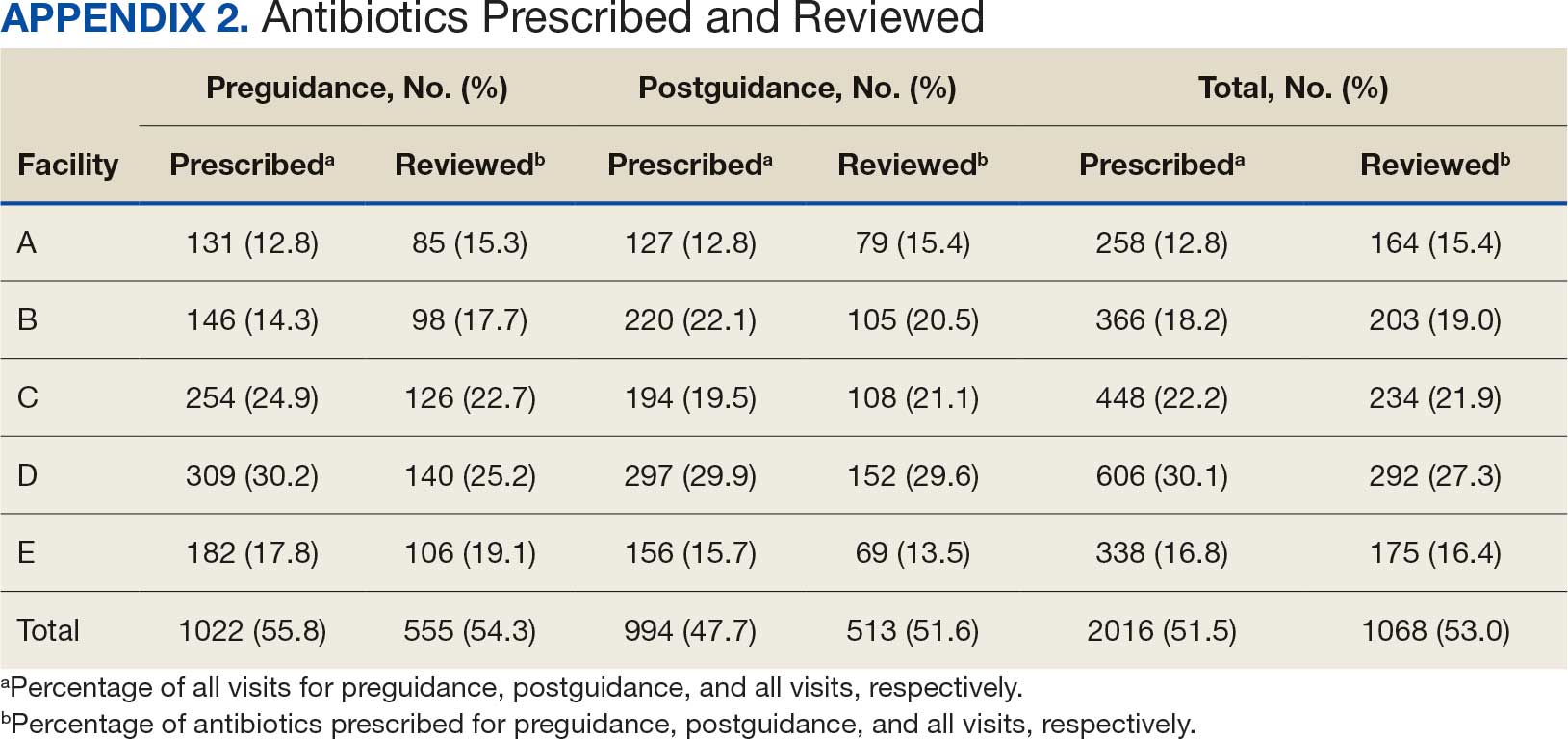
The EMR was also reviewed for nonrespiratory infectious indications that would necessitate an antibiotic, and these patients were excluded. A postselection analysis of the selected sample was performed to ensure the proportional percentage of all EMRs selected and reviewed from each facility mirrored the proportion of patients with antibiotics prescribed from each facility (Appendix 2). Antibiotic appropriateness was reported as the AOR of the antibiotic being appropriate in the pre- vs postguidance period.
Analysis
To evaluate antibiotic use and appropriateness, AORs were calculated using a multivariable logistic regression adjusted for facility, sex, age, BMI, race, and ICU admission. Subanalyses to evaluate facility-specific antibiotic prescribing and appropriateness were performed using multivariable logistic regression but restricted to each individual site.
Mortality. Although an increase in mortality was not expected, a secondary analysis was performed to evaluate mortality after guidance implementation using a multivariable logistic regression adjusted for site, sex, age, BMI, race, ICU stay, preadmission vaccination status, receipt of antibiotics within the first 4 days of admission, inpatient use of steroids, and hospital length of stay. Any unexpected increase in mortality was investigated to ensure it was not due to guidance implementation.
Missing Values. There were 431 missing BMI values, 272 preimplementation and 159 postimplementation, of which 50 and 24, respectively, were missing for the pre- and postappropriateness data, respectively. For the logistic regression analyses, we first imputed missing BMI values using multiple imputation linear regression with independent variables of pre- or postimplementation, age, race, sex, site, receipt of antibiotic within first 4 days (yes or no), preadmission vaccination (yes or no), and inpatient ICU stay (yes or no), and then ran 10 imputations with replacement. The logistic regression analyses for receipt of antibiotic within the first 4 days of admission and for antibiotic appropriateness were then run with the multiple imputations using mi estimate (Stata/MP 16.1).
Results
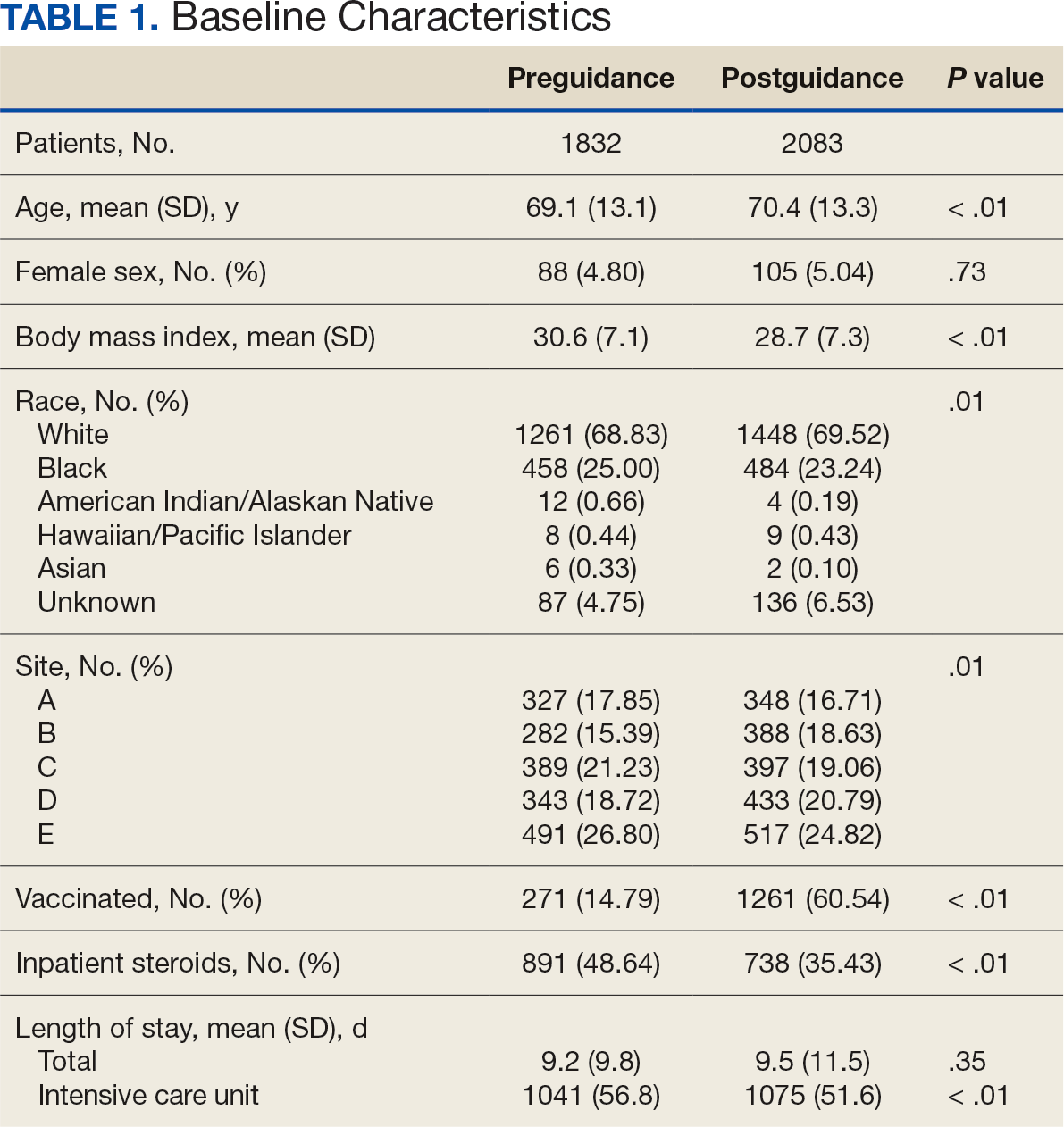
In VISN 9, 3915 patients with COVID-19 were hospitalized: 1832 (46.79%) preguidance and 2083 (53.21%) postguidance. In the first 4 days of hospitalization, 2016 patients (51.49%) received antibiotics, 1022 (50.69%) preguidance and 994 (49.31%) postguidance. Patients in the postguidance group had lower BMIs, were older, more likely to be vaccinated prior to admission, and less likely to receive steroids or require an ICU stay (Table 1).
Primary Outcome
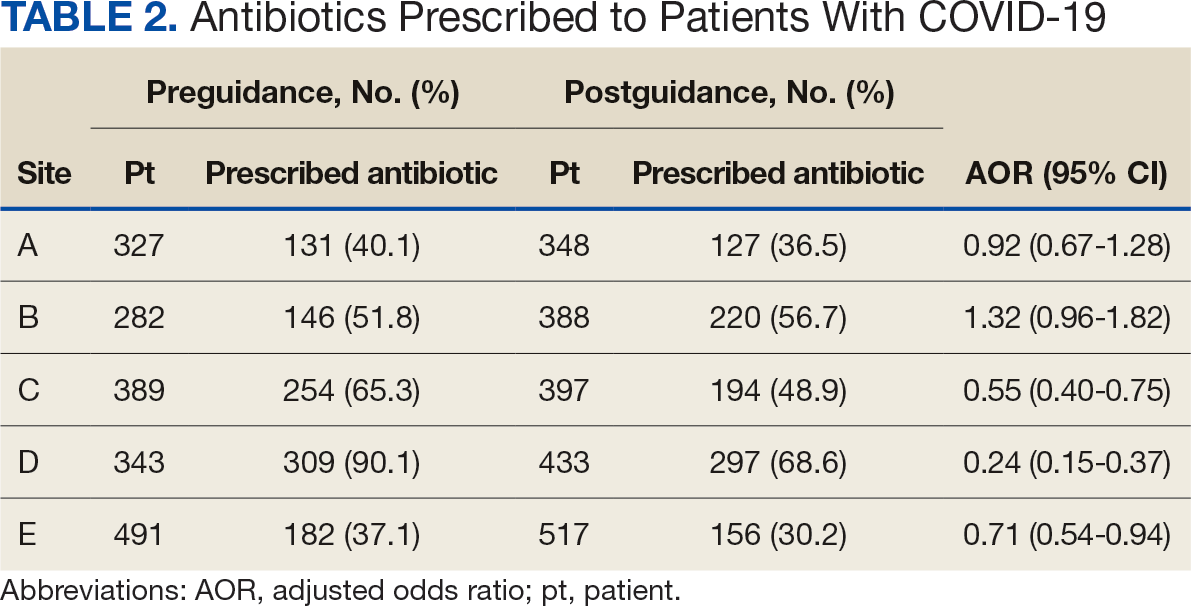
The odds of a patient receiving an antibiotic in the first 4 days of admission were 33% lower in the postguidance period (AOR, 0.67; 95% CI, 0.58-0.77) when adjusted for treatment site, age, BMI, sex, race, and ICU stay. ICU stay was associated with a higher likelihood of receiving antibiotics (AOR 1.6; 95% CI, 1.4-1.9). Among the individual sites, use of antibiotics within the first 4 days of hospitalization for patients with COVID-19 decreased in the postguidance period at 4 of 5 sites, with sites C, D, and E reaching statistical significance (Table 2).
Secondary Outcomes
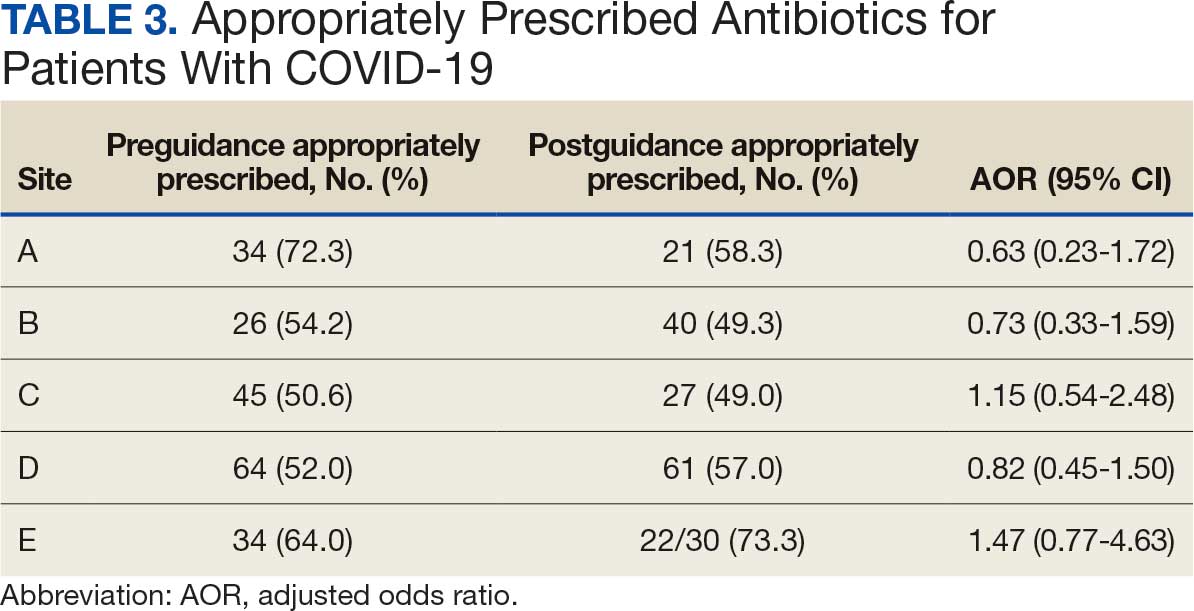
Antibiotic Appropriateness. Appropriate antibiotic use based on guidance criteria was evaluated in 950 of 2016 patients (47.12%) prescribed antibiotics: 472 (49.68%) in the preguidance group and 478 (50.32%) in the postguidance group (112 preguidance and 169 postguidance patients were excluded because the antibiotics were prescribed for nonrespiratory indications). Across VISN 9, 203 antibiotics (56.39%) in the preguidance group and 171 antibiotics (55.34%) in the postguidance group were deemed appropriately prescribed. There was no statistically significant preguidance vs postguidance difference in appropriate antibiotic use when adjusted for site, age, BMI, sex, race, and ICU care (AOR, 0.97; 95% CI, 0.69-1.36).
Subanalysis revealed the percentage of patients analyzed for each site approximated the site-specific percentage contribution to overall antibiotic use. Appropriateness increased postguidance in sites D and E but did not reach statistical significance (Table 3).
Mortality. Of 1832 preguidance patients, 287 (15.67%) died; 219 (76.31%) while hospitalized and 68 (23.69%) ≤ 30 days postdischarge. Of 2083 postguidance patients, 183 (8.79%) died; 125 (68.31%) while hospitalized and 58 (31.69%) ≤ 30 days postdischarge. After adjusting for site, patient age, sex, race, BMI, receipt of antibiotics within 4 days of admission, receipt of steroids, preadmission vaccine status, ICU care, and length of stay, the odds of death while inpatient or ≤ 30 days postdischarge were statistically lower postguidance (AOR, 0.71; 95% CI, 0.56-0.91). Older age was associated with higher odds of death (AOR, 1.06; 95% CI, 1.05-1.07). For patients who died, there was a higher odds of receiving antibiotics within the first 4 days of admission (AOR, 2.07; 95% CI, 1.63-2.63), receiving steroids (AOR, 2.79; 95% CI, 1.91-4.09), and requiring ICU care (AOR, 5.32; 95% CI, 4.00- 7.08). There was a 44% decrease in odds of death for patients who received COVID-19 vaccination prior to admission (AOR, 0.56; 95% CI, 0.43-0.73).
Discussion
This study found a statistically significant decrease in antibiotic use (AOR, 0.67; 95% CI, 0.58-0.77) among patients with COVID-19 who were admitted to the 5 VISN 9 institutions following dissemination of a guidance document for diagnosis and treatment of bacterial coinfection in hospitalized patients developed through a pre-existing multisite ASP. Despite wide variability in ASP structure and COVID-19 initiatives at all sites, decreases in antibiotic use ranging from 3.6% to 21.5% was seen at 4 of 5 sites, with 3 sites having statistically significant decreases. These results are consistent with previous research on stewardship interventions for COVID-19, but are among the first to use an interfacility ASP.13,14 The findings of this study support use of ASPs to achieve effective interventions for all types of infections.15-17
Research has focused on changes in antibiotic use in patients with COVID-19, though few studies define or examine antibiotic appropriateness.11-14 Our study examined adherence to the guidance criteria for when to prescribe antibiotics for concern about bacterial superinfection of COVID- 19. The results show improvement in appropriateness (ie, the patient met ≥ 1 guidance criteria) for 2 of 5 sites, but no overall significant increase in antibiotic appropriateness postguidance compared with preguidance.
This study was designed to look at the appropriateness of antibiotic use in cases when an antibiotic was given, but did not evaluate the appropriateness of the decision to withhold antibiotics. However, most patients with COVID-19 should not have received antibiotics based on estimates of a low incidence of bacterial superinfection.1-3 Therefore, a decrease in overall antibiotic use in the postguidance period likely corresponded with an overall increase in appropriate management. Additional research is necessary to investigate this hypothesis.
The odds of death during an inpatient stay or within 30 days of discharge was significantly lower postguidance. This was most likely due to an increase in clinician experience with managing COVID-19, a significant increase in vaccination rates (especially given the mean age of both cohorts was > 60 years), and availability of effective therapeutics.21,22 These data suggest there was no unexpected increase in mortality after implementation of clinical guidance on antibiotic use.
Limitations
Site B demonstrated an increase in antibiotic use and decrease in appropriateness between the study periods; however, neither change was statistically significant. Site B experienced ASP personnel turnover during the guidance implementation phase, which likely affected the impact of the intervention. COVID-19 management evolved during the pre- and postguidance periods and definitive causality of guidance decreasing antibiotic use cannot be established. Additionally, antibiotic appropriateness was not assessed in all patients, but instead from a sample of patients who received antibiotics, which may not have been representative. Lastly, metrics of stewardship such as duration of therapy and cost savings were not explored and offer opportunities for future research.
Conclusions
This study reported a significant decrease in antibiotic use in patients with COVID- 19 across VISN 9 following dissemination of a shared guidance document. The results suggest that implementation of guidance aiming to limit antibiotic use in patients hospitalized with COVID-19 was not associated with an increase in in-hospital or 30-day discharge mortality. These findings support future development of ASPs to develop standardized approaches to stewardship for all infections that can serve a region rather than a single facility. Additional research is needed to assess how to approach implementation across a larger region.
