
Hypothyroidism: Clinical Challenges in Diagnosis and Treatment


Although accreditation for this CE/CME activity has expired, and the posttest is no longer available, you can still read the full article.
Expires July 31, 2015
–
Although hypothyroidism is common, its typically vague symptoms of fatigue, lack of energy, and weight gain are shared with many other conditions. Awareness of risk factors for hypothyroidism will aid in the differential diagnosis, and the patient’s symptoms can help guide the clinician to the appropriate diagnostic workup. Thyroid function test results are necessary to confirm or rule out the diagnosis.
PATIENT EDUCATION
Patient education should focus on treatment and follow-up. Patients need to be told that treatment is lifelong, and it may be helpful to describe levothyroxine as a replacement for their thyroid hormone, rather than as a treatment of their thyroid disease. They should be reminded that they will need to undergo repeat thyroid function testing periodically to assess their dose. While their dose may need to be adjusted over time, typically TSH levels will stabilize and laboratory testing will only be necessary every 12 months.4
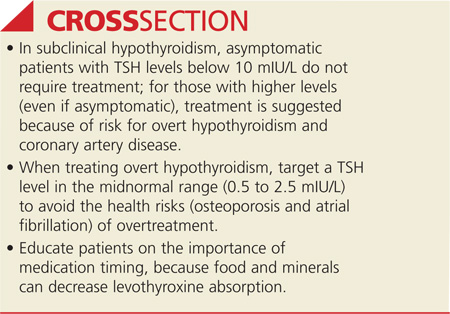
Clinicians should also review with patients how and when to take levothyroxine. One tablet should be taken daily, with water, on an empty stomach, at least 30 to 60 minutes before eating or drinking or four hours after eating or drinking. Multivitamins or other supplements, especially those containing calcium and iron, should be taken at least four hours after taking levothyroxine. These are necessary requirements because both food and minerals can decrease absorption of the medication.4
Patients should also be informed that if they miss a dose of medication, two tablets may be taken the next day, but consistency in daily dosing is the goal. In patients with significant compliance problems, weekly dosing of levothyroxine results in similar safety, treatment outcomes, and TSH values as daily dosing.11
Finally, symptoms of both hypothyroidism and hyperthyroidism should be described and reviewed. Patients should be advised to notify their health care providers should any of these symptoms occur.
CONCLUSION
Hypothyroidism is a common illness encountered in the primary care setting. Clinicians must be familiar with the signs and symptoms, as well as the risk factors for the disease, because many patients have minimal symptomatology. Appropriate laboratory testing will clarify the diagnosis.
Patients with symptomatic hypothyroidism confirmed on laboratory testing should be treated. The benefit of treatment in other subgroups is less clear and should be guided by current evidence-based guidelines. The mainstay of medical management for hypothyroidism is levothyroxine; other treatment options require further research. Well-informed patients are key to effective management of hypothyroidism.


