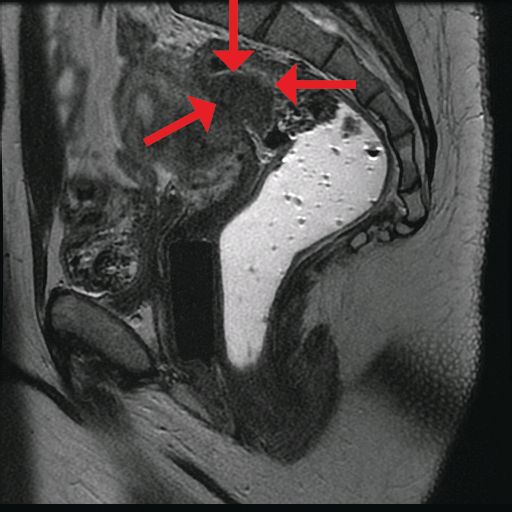
This patient had a larger nodule and required a segmental resection and anastomosis.
Some have questioned the completeness of endometriosis removal with anterior discoid resection. A prospective surgical and histological study published in 2005 showed positive margins for residual endometriosis in approximately 44% of patients who underwent anterior discoid resection for rectovaginal endometriosis (Hum Reprod. 2005 Aug;20[8]:2317-20). However, the clinical significance and long-term effects of these findings are unclear. Among my concerns is that the presence of persisting disease was determined by the presence of fibrosis in the areas surrounding the resected nodules. Residual fibrosis is not synonymous with residual endometriosis, and it is unclear whether residual fibrosis results in the recurrence of symptoms.
In general, there is agreement among surgeons that for consideration of discoid resection, nodule diameter should not exceed 3 cm, with a maximum of half of the bowel circumference and a maximum of 60% stenosis. I view these numbers as guiding principles, however, and not firm rules. Surgical decisions should be personalized based on the patient, the surgeon’s impression of the extent of the disease, and the ability to perform anterior discoid resection without compromising the rectal lumen with primary closure of the defect.