
New screening tests: HSV, CMV, HBV, HCV, parvovirus, and HIV



Tips on choosing the right tests and getting valid results
Further testing can confirm fetal transmission
If primary CMV infection is detected in a pregnant woman, accurate prenatal diagnosis is possible to determine whether the infection has been transmitted to the fetus.
Sophisticated tests such as PCR make in utero diagnosis possible. In fact, PCR remains the most accurate means of diagnosing CMV, with sensitivities ranging from 80% to 100% in prospective studies of gravidas infected with cytomegalovirus.8
Hepatitis B
LIAN’S CASE
Pregnant, with no history of vaccination
Lian, 25, was born in Taiwan and has been in the United States 6 years. She presents for her first prenatal visit at 12 weeks’ gestation and reports no medical history, including no vaccination against hepatitis. This is her first pregnancy. Because testing for hepatitis B is routine in pregnancy, she undergoes a hepatitis B surface antigen test (HBsAg), which is positive.
What is your next step?
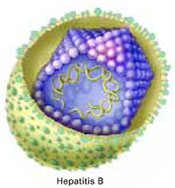
Lian’s positive test suggests she is a carrier for HBV. Additional testing can clarify her status and direct treatment and prevention.
Unlike some of the other viruses covered in this article, HBV has been well studied, and the identifying proteins have been described. This information has made it possible to produce sensitive and specific tests that can determine whether a patient is infected, a carrier, or immune to HBV.
Screening for carrier status is universal among gravidas in the United States. Standard ELISA assays have been developed for several HBV proteins as well as the antibody.
Signs of a carrier
The carrier state for HBV is determined by measuring HBsAg, the envelope protein of the virus, which circulates freely in the serum after acute infection (1–10 weeks) and in carrier patients. A woman is a carrier if HBsAg persists 6 months after primary infection.
The nucleocapsid core protein of the hepatitis B core antigen (HBcAg) and its secretory product e antigen (HBeAg) are produced after viral multiplication. There is no assay for HBcAg, but the hepatitis B surface antibody (HBsAb) develops after acute HBV infection. In the carrier state, no HBsAb is detected. However, HBcAb is detected in virtually all infected individuals, usually 4 to 8 weeks after infection.
HBeAg production is a sign of active production of the virus in the liver and is associated with more severe disease. It is usually cleared by 16 weeks post-infection. The antibody to the e protein (HBeAb) occurs more than 16 weeks after infection, and is a finding that suggests less severe disease.
The only finding in the serum of patients successfully vaccinated against HBV is HBsAb.9,10
How to qualify infection status
In Lian’s case, further testing should include liver function and other markers of HBV infection. The presence of hepatitis B e antibody (HBeAb) and e antigen (HBeAg) can define infection and the risk of transmitting the virus to the newborn. For example, when HBeAg is present, the patient has a higher risk of transmitting the virus to other people, including her fetus. When HBeAb is present, the patient has a lower risk of transmitting the virus to other people, including her fetus.
In addition, the viral load can be measured via PCR; if the viral titers are elevated, appropriate antiviral therapy can be given during and after pregnancy.
HBV DNA testing is more sensitive than HBeAg to detect viruses in the blood. When it is performed, DNA testing is generally in addition to regular serologic tests. It also is used to monitor therapy in individuals with chronic HBV.
Lian should also be referred for gastrointestinal (GI) consultation for management during her pregnancy, as well as long-term follow-up after delivery. Vaccination of the partner may be required to prevent his infection.
Hepatitis C
JESSICA’S CASE
Partner had hepatitis
Jessica is a 20-year-old college student home for the summer. She schedules an appointment to discuss contraception, but during her visit she also asks to be screened for sexually transmitted diseases (STDs) and wants to know if there is any way to determine whether she has had a hepatitis B vaccination. In further discussion, she tells you that she was sexually involved with a male who had hepatitis.
You order testing for STDs, including antibody testing for HBV and HCV. The results suggest that Jessica was vaccinated for HBV but is HCV-positive.
How should you proceed?
HCV infection in women is diagnosed by ELISA assays sensitive enough to detect HCV antibody. However, the US Centers for Disease Control and Prevention recommend that a person be diagnosed with HCV only after a positive test for HCV antibodies is confirmed by a more specific test, such as a nucleic amplification test or recombinant immunoblot assay.11,1 2 Thus, Jessica should undergo further testing, including liver function tests and measurement of her viral load. Supplemental testing also is recommended for patients with a borderline result on their initial ELISA.


