
Stress urinary incontinence: A closer look at nonsurgical therapies



This pervasive condition has spawned a host of treatments, from conservative measures like pelvic floor rehabilitation to cutting-edge modalities such as radiofrequency therapy. In this discussion, a panel of experts compares the less invasive options and offers pearls on evaluating and counseling patients and selecting appropriate treatments.
I also try to reinforce use of vaginal support devices such as continence rings and pessaries, which are very helpful in both younger and older women. In addition, I emphasize the importance of pelvic muscle rehabilitation, giving verbal instructions, coaching the patient, and recommending a physical therapist when necessary.
SAND: At our center, we also offer people a full menu of treatment options and try to let them make an independent decision once they have the basic information. One could argue that it’s difficult for patients to make educated decisions about different treatments, even with a small amount of data. Still, we talk with them about behavioral techniques and interventional devices.
We also discuss use of alpha-adrenergic agents (pseudoephedrine) and the tricyclic antidepressant imipramine, as well as electrical stimulation as an alternative to Kegel contractions with biofeedback. When the incontinence is exercise-induced, something as simple as a tampon in the vagina can sometimes be very effective, as Nygaard et al demonstrated.1
Treating the postmenopausal woman
SAND: What about women of advanced age, beyond the reproductive years? How would you treat a patient over 65 if she elected not to have surgery?
LUBER: The pelvic floor is not an area that people exercise on a daily basis in normal activities, as we do our arms and legs. In addition, over the course of time—perhaps in combination with the denervation associated with vaginal birth—the pelvic floor of mature women tends to become very atrophic and nonresponsive. I usually steer my elderly patients with poor pelvic floor recruitment and tone to biofeedback because they are unlikely to get a response to pelvic floor exercises done independently.
MYERS: I make it a point to offer conservative options initially to all patients. As you know, many older patients have other medical problems that render surgical therapy inadvisable. So I proceed with the menu we discussed earlier. I favor electrical stimulation for patients who are unable to do any type of Kegel squeeze. I think it’s important for the patient to get an idea what a levator contraction feels like and, hopefully, learn to perform the exercise on her own.
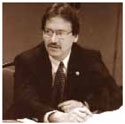
—Dr. Davila
Rehabilitating the pelvic floor: Electrical stimulation, physiotherapy, and moderation
SAND: I’m not a big fan of independent pelvic floor exercises without biofeedback, as studies at Duke some years ago showed very poor compliance, with only 10% of people staying on self-directed Kegel exercise therapy.2 Roughly one third of those were actually doing a Valsalva maneuver instead of contracting their muscles—and that is destructive over time. So I discuss electrical stimulation as an option, as well as innervation using an electromagnetic chair.
MYERS: In our practice, if someone has an absent Kegel squeeze or only a 1 or 2 on a scale of 5, we will start her on electrical stimulation. Once those muscles have been educated and strengthened, we move to biofeedback. If a woman already has a strong Kegel squeeze, we tend to recommend biofeedback first. I have not had any experience with the electromagnetic chair.
LUBER: I manage patients similarly. In our center, electrostimulation is reserved primarily for those patients who need to be “jump started”—who lack the ability to isolate and contract their pelvic floor muscles. Electrostimulation seems to help. Then they go on to more intensive biofeedback-assisted pelvic muscle rehabilitation.
DAVILA: Some years ago, our center compared voluntary Kegel contractions with electrically stimulated Kegel contractions at various frequencies and found that voluntary Kegel contractions are much stronger than stimulated ones.3
LUBER: We conducted a similar trial, with comparable findings.4
SAND: In the orthopedic area, people can have electrically stimulated contractions that are maximized until they are equal in intensity to voluntary contractions. Unfortunately, we can’t do that for the pelvic floor due to limitations in the delivery system and the electrodynamics of the currents being used.
LUBER:To use an analogy from psychoanalysis, electrical stimulation is like a couch and the physiotherapist is like the psychiatrist. The couch doesn’t do much good without the psychiatrist there. So we use electrical stimulation to help patients recruit those muscles—and we use it in conjunction with a physical therapist. Without the coaching and monitoring of the physical therapist, I don’t think these patients are going to benefit as much from electrostimulation.
DAVILA: A number of years ago, my colleagues and I published a paper describing a multimodality approach to pelvic floor muscle rehabilitation using biofeedback and electrical stimulation. We showed that it is possible to reduce incontinence episodes by 90%.5 In a motivated patient, that reduction can be maintained.


