
The Role of Temperament in Creative Failure


Linking specific brain disorders to creative failure mediated by alterations in temperament is even more challenging and uncertain. Nonetheless, some apparent associations include patients who are impersistent due to attention deficit disorder, or perseverative due to frontal lobe injury or obsessive compulsive disorder. Damage to ventromedial frontal regions affects motivational centers, but – rarely – this can occur on a developmental basis and appear as more of a temperamental issue than an acquired amotivational state (BMC Neurol. 2011;11:151). (See figure below.)
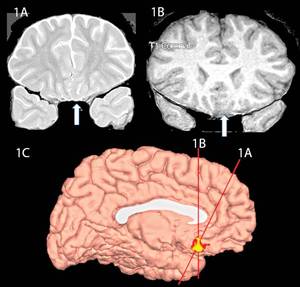
Finally, the balance between patient perseverance and strategically changing directions depends a great deal on our perception of progress, that is, what is being achieved for the effort expended over a given time. If our perception of time changes, then we can become inappropriately impatient or conversely perseverative. Our perception of time is normally influenced by our 24-hour circadian rhythm, but this may take on pathological proportions in unusual circumstances, such as night shift work, or in patients with hypothalamic disorders that involve the suprachiasmatic nucleus (Nat. Rev. Neurosci. 2011;12:553-69).
Temperament may be the secret ingredient that determines the relative level of creative success among people with similar opportunities and abilities. Yet creative success is ultimately in the eyes of the beholder, and that generally means society. The way in which we as individuals interact with society can also be a source of creative failure, as we shall discuss next month.

