Tinnitus: Patients do not have to ‘just live with it’


ABSTRACTTinnitus is distressing and affects the quality of life for many patients. Because primary care physicians may be the entry point for patients seeking help for tinnitus, we urge them to acknowledge this symptom and its potential negative impact on the patient’s health and quality of life. Physicians should actively listen to the patient and provide hope and encouragement, but also provide realistic expectations about the course of treatment. The patient must also understand that there may be no singular “cure” for tinnitus and that management may involve multidisciplinary assessment and treatment.
KEY POINTS
- The first step is to rule out underlying otologic disease.
- Nonotologic interventions range from minimal counseling in the office to referrals to specialists in one or more fields, including audiology, dentistry, neurology, physical therapy, psychology, and psychiatry.
- A simple algorithm can help determine if patient education is all that is required or if referral is needed.
NEUROLOGY: LOOKING FOR AN UNDERLYING CONDITION
The comprehensive neurologic evaluation of the tinnitus patient should include a thorough neurologic history, review of systems, examination, and appropriate imaging. The aim is to identify accompanying symptoms or disorders that may help to localize and ultimately diagnose the underlying condition.
Related disorders could manifest with vestibular symptoms (dizziness, imbalance), various pain syndromes including facial pain and headache (tension or migraine),27 or other cranial nerve disorders such as Bell palsy (facial nerve injury)28 or trigeminal neuralgia.
Medical and surgical interventions for tinnitus-associated neurologic conditions
In cases in which there is a treatable underlying neurologic condition, tinnitus-focused interventions should be deferred until treatment has been completed or discontinued.
At that point, other options including various oral medications (eg, antiarrhythmics, anticonvulsants, benzodiazepines, and antidepressants) and anesthetic blocks (eg, intravenous anesthetic-plus-steroid injections)29 may be considered on a case-by-case basis. Results of randomized clinical trials of the aforementioned drugs have not been promising30; however, drugs that affect the emotional status of the patient by reducing anxiety, depression, and sleep disturbance have been shown to be beneficial.31,32
In addition, some experimental surgical treatments (eg, deep brain stimulation, dural grid stimulation)33,34 are being evaluated and show potential for managing tinnitus.
PHYSICAL THERAPY
A preliminary physical therapy evaluation can identify biomechanical problems of the head, neck, and jaw that can contribute to tinnitus.
Subsequent therapy is designed to restore proper cervical and temporomandibular biomechanics and to educate the patient on proper posture, ergonomics, and exercise techniques that together could help minimize these abnormalities and reduce the severity of tinnitus in some patients.11,24–26,35
PSYCHOLOGY: ADDRESSING DEPRESSION, ANXIETY
Tinnitus exacts an emotional toll on its sufferers. Some estimates suggest that 40% to 50% of tinnitus patients experience significant perceived handicap and psychological distress.36 Consequently, many patients respond to the onset of tinnitus with anxiety or depression, or both. Owing to these responses, the chronicity of the condition, and the patient’s perception that tinnitus is uncontrollable, tinnitus can produce notable distress and impairment in quality of life.
When a patient’s responses include both depression and anxiety, the reduction in quality of life and impairment in coping capacities can be significant.37 Sleep problems, poor concentration, social withdrawal, feelings of helplessness, avoidance behaviors, and upset in interpersonal relationships are common signs that quality of life is compromised.
One of the greatest challenges for the primary care physician when treating tinnitus patients is attending to their emotional suffering and disability. Simple screening tools can be useful in quickly assessing a patient’s emotional response to tinnitus and in helping to enter into a conversation with the patient about this topic. These tools include:
- The THI-S (Table 3)14
- The Patient Health Questionnaire-9 (PHQ-9)38
- The Generalized Anxiety Disorder-7 (GAD-7).39
Suicidal ideas need to be addressed
The final question on the PHQ-9 asks about suicidal ideation. This cannot be overlooked when assessing patients with tinnitus. The questionnaire invites the patient to communicate this rather painful topic to the physician in a direct matter.
The physician should be prepared to address suicidal ideas, plans, means, intentions, and safety measures with the patient. This requires that the physician be comfortable conducting these conversations in a direct and forthright manner; it also requires that the physician have reliable referrals to qualified mental health practitioners at the ready to assist the distressed tinnitus patient.
Asking a patient to commit to calling 911 or going to the nearest emergency room if he or she has any impulse toward self-harm is a simple option that many distressed patients may have never considered.
Treatments for depression and anxiety in tinnitus patients
Some patients may already have been seeing a mental health professional before the onset of tinnitus and may elect to discuss treatment with their current provider. However, many need guidance in selecting appropriate treatment. Their options may include:
Psychotropic drugs such as selective serotonin reuptake inhibitors and benzodiazepines, to provide quick relief from debilitating depression and anxiety.
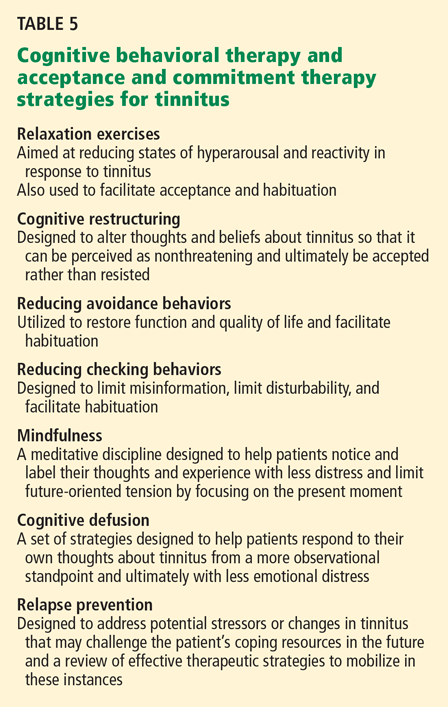
Cognitive behavioral therapy, designed to provide a more active and durable adjustment to tinnitus. It is the most widely validated psychotherapeutic treatment approach to tinnitus.40