
Tinnitus: Patients do not have to ‘just live with it’


ABSTRACTTinnitus is distressing and affects the quality of life for many patients. Because primary care physicians may be the entry point for patients seeking help for tinnitus, we urge them to acknowledge this symptom and its potential negative impact on the patient’s health and quality of life. Physicians should actively listen to the patient and provide hope and encouragement, but also provide realistic expectations about the course of treatment. The patient must also understand that there may be no singular “cure” for tinnitus and that management may involve multidisciplinary assessment and treatment.
KEY POINTS
- The first step is to rule out underlying otologic disease.
- Nonotologic interventions range from minimal counseling in the office to referrals to specialists in one or more fields, including audiology, dentistry, neurology, physical therapy, psychology, and psychiatry.
- A simple algorithm can help determine if patient education is all that is required or if referral is needed.
Unfortunately, physicians often tell patients with tinnitus (the perception of noises in the ear, head, or both without an external acoustic source) to simply “learn to live with it.” This type of advice can result in missing the diagnosis of a potentially serious medical condition or, at the very least, in dismissing the patient’s complaints and hence failing to provide any hope of relief—increasing the negative impact on the patient’s quality of life.
See related patient information
The disabling effects of tinnitus resemble those of chronic pain.1 Specifically, its consequences may include:
- Loss of sleep
- Interference with concentration
- Difficulties functioning at work, at home, and in social relationships
- Negative emotional reactions, including despair, frustration, depression, and suicidal ideation.2,3
Chronic tinnitus affects 42 million Americans and is considered “clinically significant” in 10 million adults, and the numbers are increasing.4–7
Because primary care physicians may serve as the gatekeepers for tinnitus sufferers, as they do for patients with other chronic health issues, it is important that they understand the underlying mechanisms responsible for tinnitus, its impact, and its management options.
The goal of this article is to provide a basic understanding of tinnitus and its treatment so that physicians can provide hope to its sufferers and know when to initiate appropriate referrals for management.
WHAT CAUSES TINNITUS?
The precise cause of tinnitus is unknown. However, substantial evidence indicates that it is the result of plastic changes in the auditory system that cause auditory neurons to become hyperactive and to fire more synchronously.
If the auditory system is injured, eg, if outer hair cells have been lost because of noise exposure or ototoxicity, then neurons that normally have low levels of activity in silence begin to fire at a higher rate and more synchronously. Therefore, reduced neural activity from the peripheral system (ie, the cochlea) may result in increased spontaneous neural activity in the central auditory nervous system.8
Although most investigators of the neurobiology of tinnitus subscribe to this theory, more than one system must be involved, either simultaneously or interactively, since tinnitus has both auditory and nonauditory components.9
Evidence is accumulating that the perception of tinnitus is multimodal and may arise from complex interactions among different sensory and motor systems.10 For example, some patients with tinnitus can modulate its pitch, loudness, or both by forcefully contracting the muscles in the head, neck, or limbs; by moving the eyes in the horizontal or vertical axis; by placing pressure on myofacial trigger points; by moving the face or mouth; or by applying pressure to the temporomandibular joint.11,12 Although somatic tinnitus modulation is not yet well understood, it may reflect the interaction between the auditory system and other sensory systems.
Because the underlying mechanisms of tinnitus are complex and may involve more than the auditory system, a multidisciplinary approach to management should be considered.
RULING OUT HEALTH-THREATENING DISEASE
The complaint of tinnitus should not be taken lightly. True, it may be just a nuisance the patient can learn to ignore. On the other hand, it may negatively affect the patient’s quality of life. Worst of all, it could be a symptom of a potentially health-threatening disease.
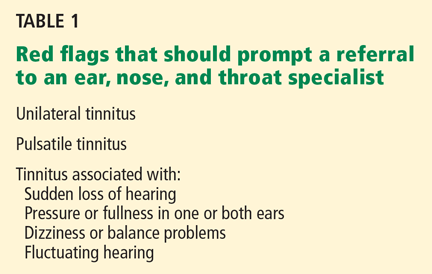
Primary care physicians should know the red flags (Table 1) for otologic diseases such as vestibular schwannoma, Meniere disease, cholesteotoma, glomus jugulare tumor, and temporal bone trauma and, if these are present, refer patients to an otolaryngologist for a complete cochleovestibular examination.
At the same time, the physician should avoid heightening the patient’s preoccupation with the tinnitus by creating unnecessary fear about an underlying cause. This may create further anxiety and exacerbate the patient’s perception of tinnitus and emotional reaction to it.13
WHAT IS THE IMPACT OF TINNITUS ON QUALITY OF LIFE?
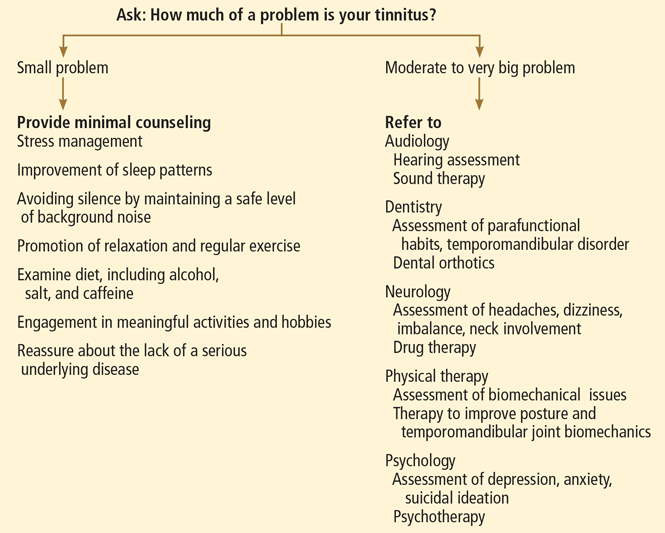
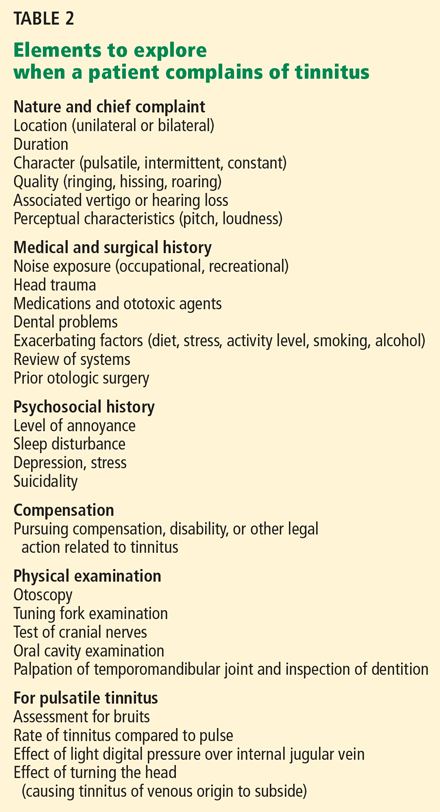
A quick method is simply to ask, “How much of a problem is your tinnitus?” If the patient considers it a small problem, minimum counseling may suffice (Figure 1). But if the response suggests a greater impact, an in-depth history should be taken (Table 2) to determine the appropriate treatment plan.
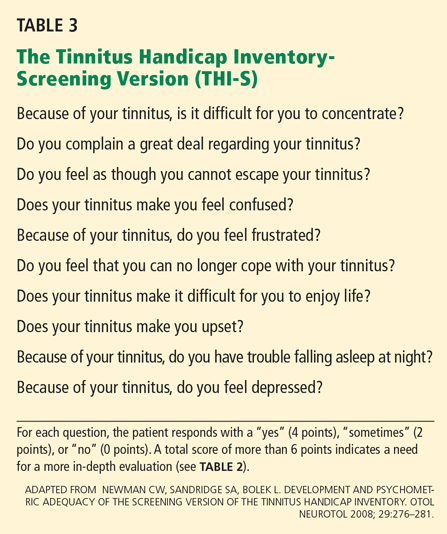
Still another option is to use a standardized screening tool. The Tinnitus Handicap Inventory-Screening Version (THI-S)14 consists of 10 questions that screen for the psychosocial consequences of tinnitus (Table 3). For each question, the patient answers “yes” (worth 4 points), “sometimes” (2 points), or “no” (0 points). The possible total score thus ranges from 0 to 40 points; the higher the score, the greater the perceived disability (activity limitation) and handicap (participation restriction). A score of more than 6 points indicates a need for an in-depth evaluation (Table 2). Having the patient complete this tool in the waiting room can save precious time and help identify those in need of referral.
SOME PATIENTS MAY NEED TO SEE ONE OR MORE SPECIALISTS
Patients whose tinnitus is distressing may need referral. Traditionally, the primary care physician refers the patient to an otolaryngologist. However, the complex nature and etiology of tinnitus may necessitate referring the patient to one or more specialists in addition to an otolaryngologist for further assessment and management. The following sections briefly describe what other specialists offer.


