
Using biochemical markers of bone turnover in clinical practice


ABSTRACTBiochemical markers of bone turnover provide clinically useful evidence of the normal and pathologic processes that reflect bone cell activity in the skeleton. Understanding the behavior of markers of bone formation and bone resorption should aid in managing patients with a variety of skeletal disorders.
KEY POINTS
- Biomarkers of bone formation and resorption reflect the overall osteoblastic and osteoclastic activity in the skeleton and in some situations may serve as surrogates for histologic examination of bone.
- Biomarkers of bone turnover can be used to document the effects of therapeutic agents in some patients with osteoporosis and possibly reduce the need for frequent bone density testing.
- In cancer patients with bone metastases, biomarkers of bone resorption provide evidence of the efficacy of antiresorptive therapy. The baseline levels also have prognostic value: patients with the highest levels have the worst prognosis.
In inflammatory bowel disease
Patients with inflammatory bowel disease, especially Crohn disease, have low bone mass and are at risk of fractures.55 These complications could be due to glucocorticoid therapy, hypogonadism, vitamin D defeciency, weight loss, and high circulating levels of bone-active cytokines released by inflammatory cells residing in the diseased intestine.
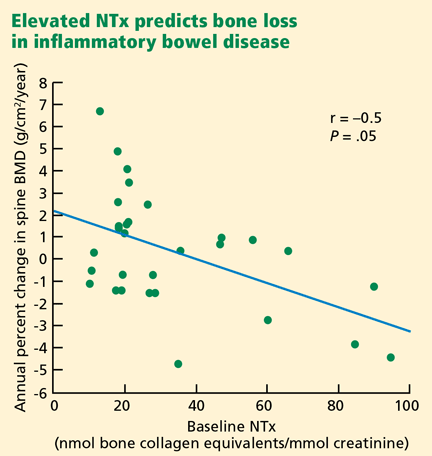
Bone formation markers have not been found to be outside the normal range, although both interleukin 1 and tumor necrosis factor alpha are known to inhibit bone formation.
Bisphosphonate treatment produces an increase in bone density concomitant with decreases in markers of bone resorption and formation.57,58 Of considerable interest is the observation that infliximab (anti-tumor necrosis factor alpha; Remicade) generally produces a rise in bone formation markers, with a smaller and inconsistent effect on bone resorption.59,60
In rheumatoid arthritis
The incidence of osteoporosis and fractures is also increased In patients with rheumatoid arthritis.61 As in patients with inflammatory bowel disease, a variety of factors can contribute to bone loss, including glucocorticoid therapy, hypogonadism, vitamin D deficiency, immobility, and elevated levels of bone-active cytokines.
Generally, studies have reported increased bone resorption based on type I collagen markers,62,63 whereas patients with osteoarthritis have levels of these bone resorption markers no different from those of control subjects.62 Although serum total TRAP protein is elevated in rheumatoid arthritis patients, this is probably due to the 5a isoform, the origin of which may be macrophages and dendritric cells.64
The influence of abnormalities in bone formation on bone loss is less clear. Levels of bone formation markers have been reported to be normal,65 elevated,66 or reduced.67
Treatment of rheumatoid arthritis with high-dose glucocorticoid pulse therapy is effective in controlling the symptoms and some manifestations of the immune system in patients with the disorder. The latter effect would be expected to have a beneficial effect on bone metabolism. This appears to be the case, as there are only transient decreases in bone formation markers and no significant reduction in bone density.68 Similarly, there is only a transient decrease in serum osteocalcin after an intra-articular injection of a glucocorticoid, and no effect on urinary pyridino-line.69
As would be expected, bisphosphonate therapy prevents bone loss in rheumatoid arthritis patients treated with glucocorticoids.70,71 Both oral and intravenous therapy decrease the levels of bone turnover markers.70–72 Infliximab therapy was shown to reduce the levels of bone resorption markers but not of PINP (a bone formation marker).73
In primary hyperparathyroidism
Hypersecretion of parathyroid hormone increases osteoclastic activity, with a secondary increase in osteoblastic activity. Bone loss may ensue and an increase in fracture incidence may be a consequence, particularly in post-menopausal women, who have the highest incidence of the disorder.74
Before screening chemistry panels became widely used during routine medical evaluations, it was not unusual to find elevated serum total alkaline phosphatase levels in patients discovered to have primary hyperparathyroidism. Today, this finding is not so common, as the disorder is diagnosed at a much earlier stage. Nevertheless, more specific and sensitive markers of bone turnover have made it possible to demonstrate the metabolic abnormalities that reflect the skeletal pathology in patients with primary hyperparathyroidism and its response to various therapies.75,76
On average, patients with untreated primary hyperparathyroidism have high levels of markers of bone resorption and formation, except in the mildest cases.73,74 Bone turnover returns to normal within 6 months to a year after successful parathyroidectomy.77,78 This response correlates with improvement in bone density, primarily in the lumbar spine.77,78
In patients who do not undergo surgery, alternative means of preventing bone loss include estrogen replacement in estrogendeficient postmenopausal women,76 bisphosphonates,79,80 and cinacalcet (Sensipar).81 Estrogen,76 raloxifene (Evista),82 and alendronate79,80 all reduce levels of bone resorption and formation markers, and estrogen76 and alendronate79,80 increase bone density. Although cinacalcet usually restores the serum calcium to the normal range and prevents bone loss, it only reduces serum parathyroid hormone levels by about 20%, and both bone resorption and formation markers increase above baseline.81 This could be related to fluctuations in serum parathyroid hormone that occur during each day of therapy.
In osteomalacia and rickets
Osteomalacia and rickets of any cause are characterized by increased osteoblastic activity. If the underlying cause is vitamin D deficiency, genetic or acquired defects in calcitriol synthesis, or vitamin D resistance, then hyper-parathyroidism with increased bone resorption is a secondary feature.
Serum total alkaline phosphatase activity has been a useful marker of disease activity for many years, although the newer markers, except for serum osteocalcin,83 are potentially more sensitive. The insensitivity of osteocalcin as an index of osteoblastic activity is unexplained but could be related to the state of differentiation of the osteoblasts. Bone resorption markers are elevated in vitamin D deficiency84 but are not widely used in clinical practice, as serum parathyroid hormone is an excellent indirect means of assessing the presence of increased bone resorption and the response to therapy.
In renal osteodystrophy
Bone disease associated with renal failure is termed renal osteodystrophy and is quite heterogeneous.85 Microscopic examination of a bone biopsy specimen is still considered the gold standard for diagnosis, and measurement in serum of intact parathyroid hormone is an important guide to diagnosis and response to therapy.
Nevertheless, recent studies suggest that serum markers of bone formation and resorption may be of additional help in assessing bone turnover.86 At present it is not certain whether any of the newer markers are superior to serum total alkaline phosphatase activity. Future studies that correlate bone histology with bone turnover markers should clarify the value of the various markers.


