
Quality and Safety of Pediatric Inpatient Care in Community Hospitals: A Scoping Review


BACKGROUND: Although the majority of children are hospitalized in nonchildren's hospitals, little is known about the quality and safety of pediatric care in community hospitals.
OBJECTIVE: The aim of this study was to conduct a scoping review and synthesize literature on the quality and safety of pediatric inpatient care in United States community hospitals.
METHODS: We performed a systematic literature search in October 2016 to identify pediatric studies that reported on safety, effectiveness, efficiency, timeliness, patient-centeredness, or equity set in general, nonuniversity, or nonchildren’s hospitals. We extracted data on study design, patient descriptors, and quality outcomes and assessed the risk of bias using modified Newcastle-Ottawa Scales.
RESULTS: A total of 44 articles met the inclusion criteria. Study designs, patient populations, and quality outcome measures were heterogeneous; only three clinical domains, (1) perinatal regionalization, (2) telemedicine, and (3) imaging radiation, were explored in multiple studies with consistent directionality of results. A total of 30 studies were observational, and 22 studies compared community hospital quality outcomes with other hospital types. The remaining 14 studies reported testing of interventions; 12 showed improved quality of care postintervention. All studies reported an outcome addressing safety, effectiveness, or efficiency, whereas timeliness, patient-centeredness, and equity were infrequently addressed. Risk of bias was moderate or high for 72% of studies.
CONCLUSIONS: Literature on the inpatient care of children in community hospitals is limited, making it difficult to evaluate healthcare quality. Measures of timeliness, patient-centeredness, and equity are underrepresented. The field would benefit from more multicenter collaborations to facilitate the application of robust study designs and to enable a systematic assessment of individual interventions and community hospital quality outcomes.
© 2019 Society of Hospital Medicine
RESULTS
After removal of duplicates, our search identified 2,068 abstracts for screening (Figure). Of these, 1,777 did not meet the inclusion criteria, leaving 291 articles for full-text review. Of these, 43 articles met all the inclusion criteria, and one additional article was included from search of references, resulting in a total of 44 articles.
Study designs, patient populations, and quality outcome measures were heterogeneous. We identified only one randomized controlled trial (RCT). A total of 30 articles were observational studies, 27 of which used retrospective cohort or cross-sectional designs; the remaining three used prospective cohort designs (Table 2). Of these studies, 20 involved multiple hospitals, whereas 10 were conducted at a single community hospital. Sample sizes ranged from 29 (single-site) to 107,727 (multisite) patients. Twenty-two studies aimed to compare quality outcomes at community hospitals with other hospital types, of which 16 performed risk-adjusted analyses (detailed findings of observational studies are summarized in Appendix Table 2). The remaining 14 articles were interventional studies (Table 2). Of these, 12 (86%) reported improvement in quality outcomes after implementation (detailed findings of interventional studies are summarized in Appendix Table 3).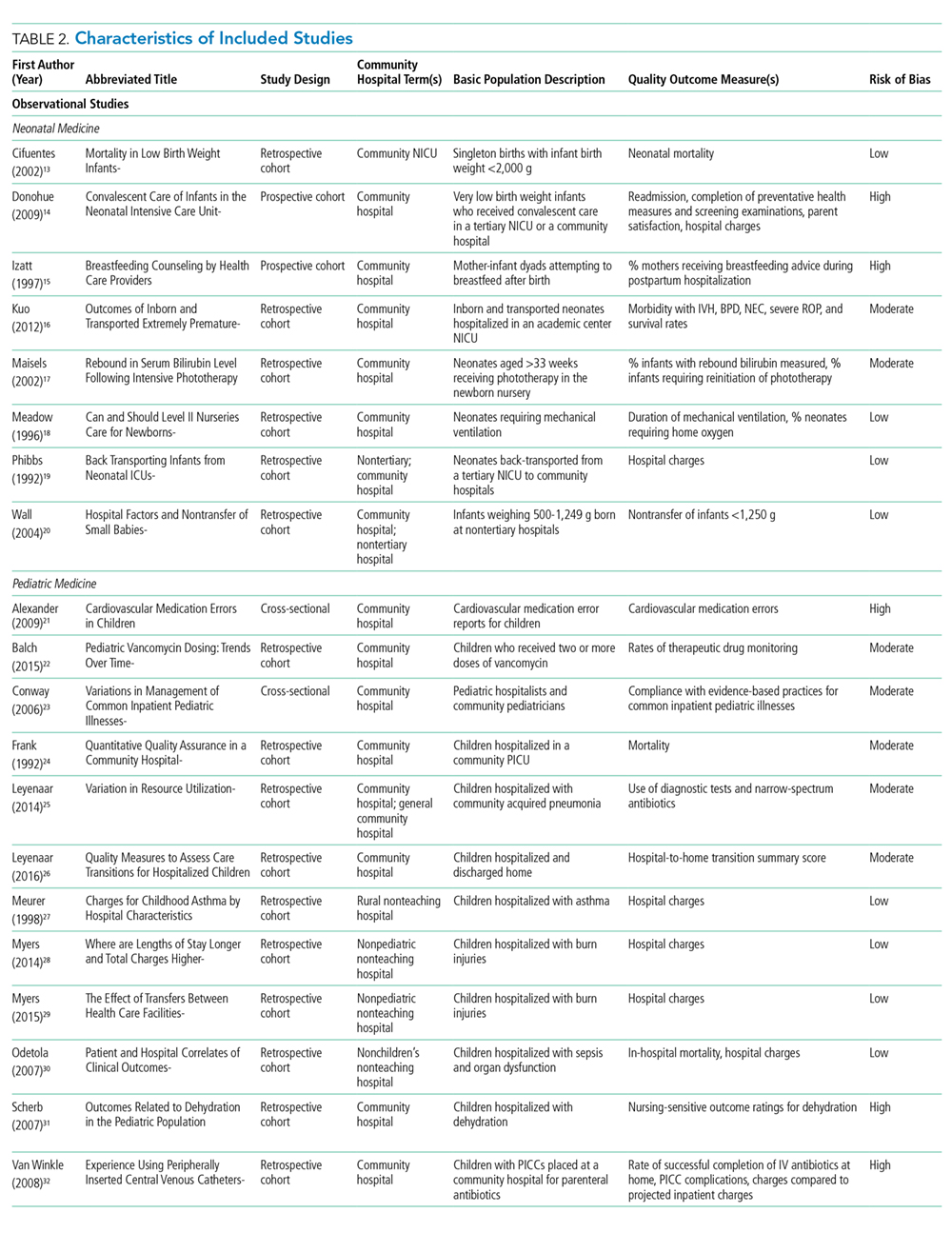
The included studies evaluated quality outcomes addressing all six of the IOM aims of quality healthcare, with safety, effectiveness, and efficiency being the most predominant (Table 3). Patient-centeredness and timeliness were infrequently addressed, and only one study assessed equity.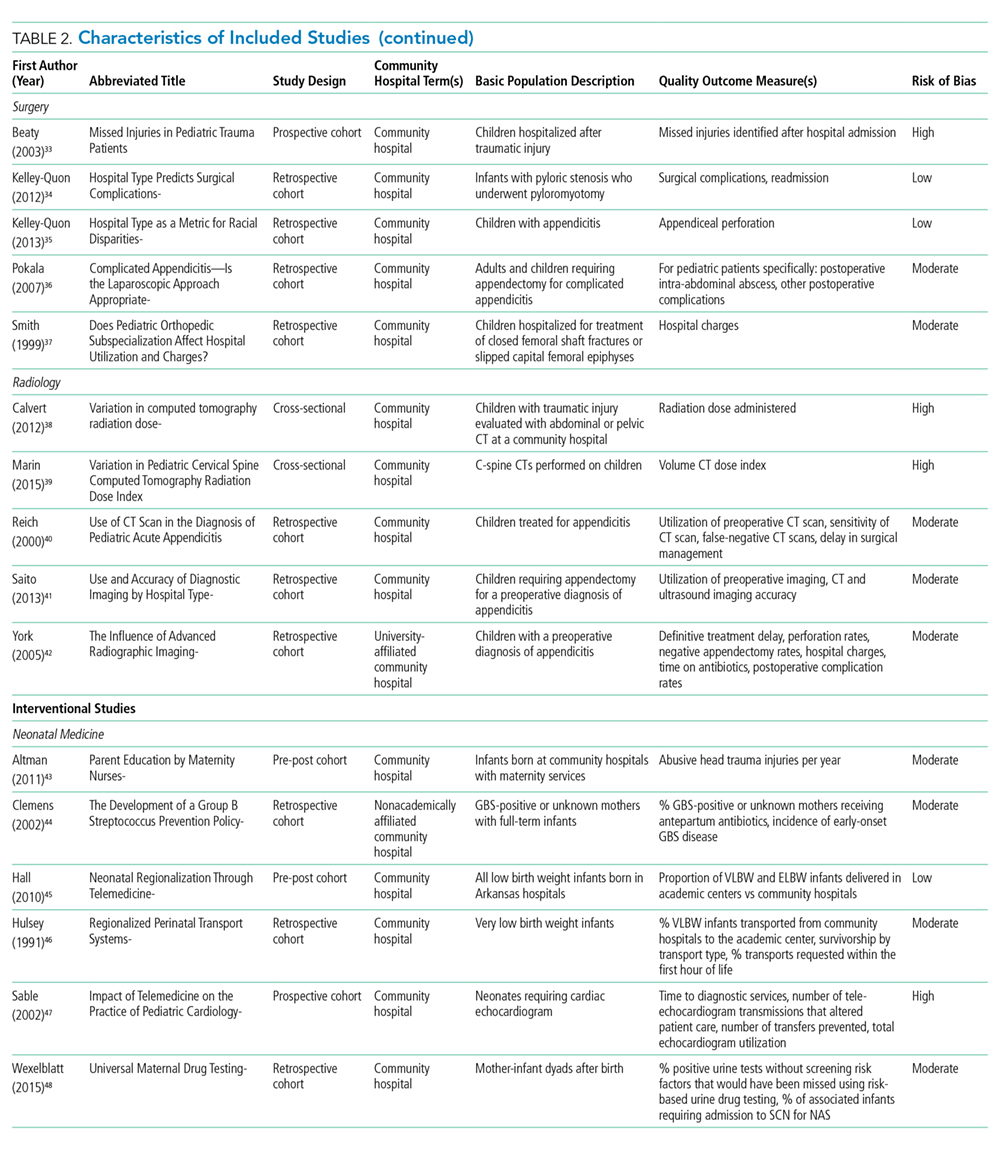
Risk of bias was moderate or high for 27 (69%) of the observational and interventional cohort studies and four (100%) of the included cross-sectional studies (Table 2), with the median NOS score being 4 (range: 0-6) for cohort studies (Appendix Table 4) and 4 (range: 3-6) for cross-sectional studies (Appendix Table 5). The higher risk of bias was largely driven by low comparability scores due to inadequate risk adjustment or statistical reporting. Of the 12 studies with low risk of bias, 11 (92%) were multisite, 9 (75%) used large regional or national databases, and half reported quality outcomes limited to hospital charges and/or mortality.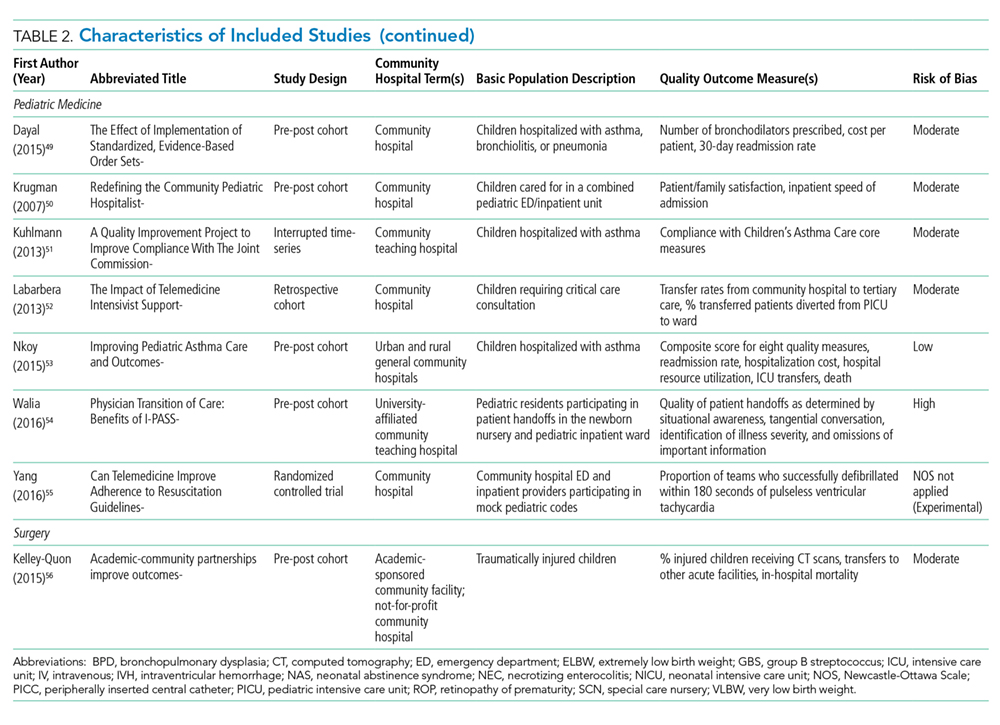
Observational Studies
Neonatal Medicine
Five multisite studies focused on neonatal care,13,14,16,19,20 of which four examined outcomes associated with the transfer of neonates to or from community hospitals to tertiary care hospitals, such as neonatal morbidity, readmission, completion of preventative health measures and screening, parent satisfaction, and hospital charges.14,16,19,20 For example, in a study of extremely premature very low birth weight infants born in Hawaii, Kuo et al. demonstrated that the odds of retinopathy of prematurity was 2.9 times higher for infants born at a community hospital and transported to their tertiary center compared with those inborn at the tertiary center (P = .02).16 The fifth study examined neonatal mortality by site of birth, demonstrating that, among infants with birth weights less than 2,000 g, birth at a hospital with a community neonatal intensive care unit (NICU) was associated with 1.4 times higher odds of risk-adjusted mortality compared with birth at a regional NICU (P < .001).13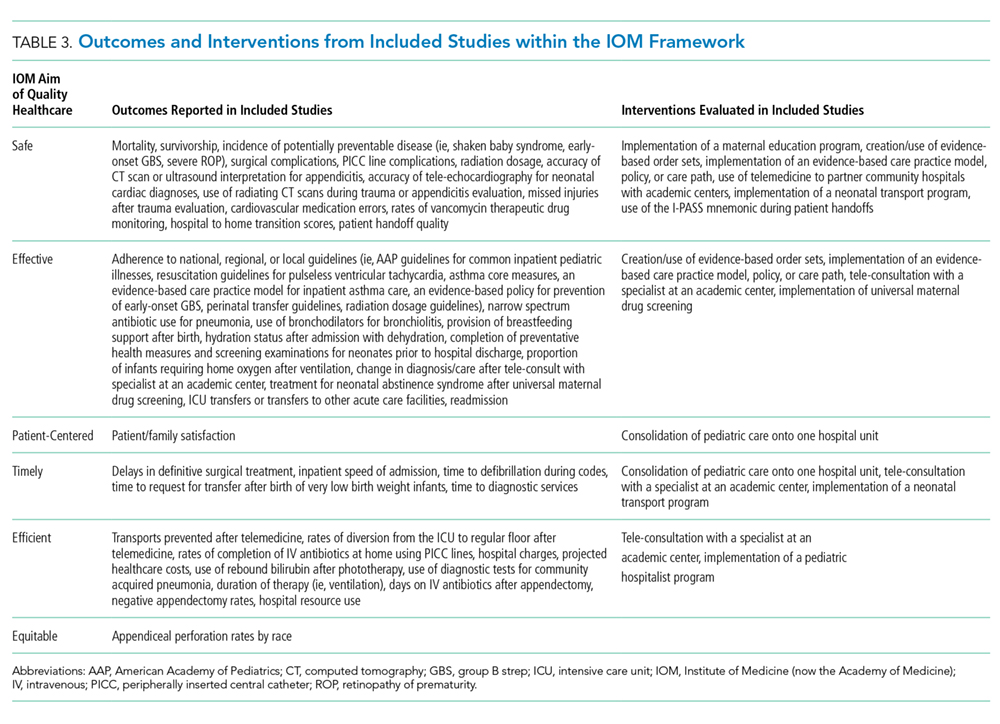
Three studies evaluated the quality of neonatal care at a single community hospital.15,17,18 Quality outcomes were heterogeneous, including utility of rebound bilirubin levels for infants with jaundice, morbidity of neonates requiring mechanical ventilation, and provision of breastfeeding advice to mothers of breastfeeding infants. For instance, Meadow et al. attempted to determine the quality of care for ventilated neonates at one community NICU compared with a tertiary hospital.18 They found no difference in days on ventilation or need for home oxygen therapy between the community hospital and the tertiary center, although P values and effect sizes were not reported for these outcomes and analyses were not adjusted beyond matching on birthdate and birth weight.


