A Better Way to Breathe: Combining Allergy and Pulmonary Care Into One Clinic


Background: The use of biologic agents for severe asthma has transformed management, decreasing asthma exacerbations, improving lung function, reducing corticosteroid use, and decreasing hospitalizations. However, numerous financial and logistic barriers have complicated the implementation of biologic agents, including long wait times to see specialists and insurance coverage.
Observations: A retrospective chart review was performed for 15 patients enrolled in this severe allergy clinic at the Washington DC Veterans Affairs Medical Center over 30 months. Outcomes examined included emergency department visits, hospitalizations, intensive care unit (ICU) stays, forced expiratory volume (FEV1), and steroid use. The average use of steroids decreased from 4.2 to 0.6 tapers per year following the initiation of biologics. There was an average 10% improvement in FEV1 after starting a biologic. Thirteen percent of patients (n = 2) had an emergency department visit for an asthma exacerbation since starting a biologic agent, 0.6% of patients (n = 1) had a hospital admission for an asthma exacerbation, and no patients had an ICU stay.
Conclusions: Biologic agents have significantly improved outcomes for patients with severe asthma. The model of a combined allergy/pulmonology clinic can be particularly efficacious in the treatment of severe asthma, as it reduces the need for multiple appointments with different specialties, reduces wait time before starting a biologic agent, and offers the perspective of 2 specialists.
If patients continued to experience asthma exacerbations after the initiation of a biologic, a change in agent was considered after 4 to 6 months. Additionally, a complete blood count, respiratory allergy panel, and pulmonary function tests (PFTs) were completed. 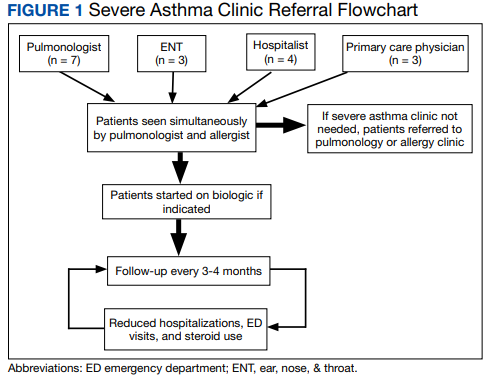
Clinic Patients
Preliminary data were obtained from a retrospective chart review of 15 patients enrolled in the severe asthma clinic over 30 months. The inclusion criteria for chart review consisted of patients aged > 18 years receiving a biologic agent for > 3 months for the treatment of severe asthma. The outcomes examined included steroid use, emergency department (ED) visits, hospitalizations, FEV1, and ICU stays.
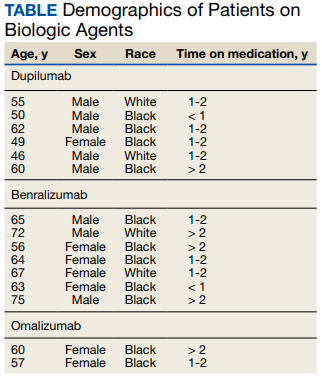
Seven patients used benralizumab, 6 used dupilumab, and 2 used omalizumab (Table).