
Pediatric GERD


Although accreditation for this CE/CME activity has expired, and the posttest is no longer available, you can still read the full article.
Expires May 31, 2014
–
As with US adults, infants and children appear to be at increased risk for gastroesophageal reflux disease (GERD). Lacking a cardinal symptom in children and often linked with confounding extra-esophageal symptoms, pediatric GERD challenges the primary care clinician to make an early diagnosis, preventing progressive damage and possible complications. Management begins with conservative lifestyle changes; pharmacologic and surgical options are reserved for specific pediatric patients.
SIGNS AND SYMPTOMS
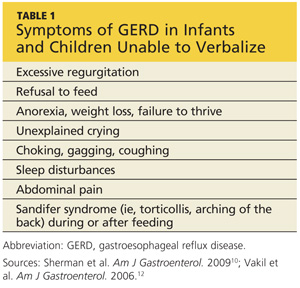
Symptoms of GERD vary among adults and children in different age-groups. According to the Montreal definition, which was developed and modified by an international panel of pediatric gastroenterologists,10,12 GERD should be suspected in infants and toddlers who fail to thrive and exhibit the symptoms listed in Table 1.10,12 Clinicians should also consider GERD in older children and adolescents who present with heartburn, since it is the most common initial presenting symptom.10,13 Of note, a 2010 database study of UK children with GERD revealed a high incidence before age 1 year and the greatest incidence among 16- to 17-year-olds.5
GERD should also be considered in pediatric patients who complain of vague symptoms of “stomachache” or nausea, abdominal pain or chest pain, since children may have trouble describing the sensation of heartburn.6,10 Children may also present with extra-esophageal complaints, such as dry cough, asthma-like symptoms, sore throat, hoarseness, sleep apnea, or dysphagia, all of which can be complications of GERD.10,11 Researchers have suggested that GERD contributes to and/or exacerbates pulmonary fibrosis, asthma, and chronic cough.6,10 Therefore, clinicians should consider GERD in children with these seemingly unrelated illnesses.
Continued on next page >>

