
The Challenges of Normal Pressure Hydrocephalus: A Case-Based Review


Although accreditation for this CE/CME activity has expired, and the posttest is no longer available, you can still read the full article.
Expires December 31, 2016
Idiopathic normal pressure hydrocephalus (iNPH) is one of the few reversible causes ofdementia. Unfortunately, the symptoms of iNPH—cognitive impairment, gait change, andurinary incontinence—develop slowly and are often mistaken for those ofother conditions or for normal aging. This article explains when to suspect iNPHand the steps you need to take when iNPH is in the differential.
PROGNOSIS
The symptoms of iNPH are slowly progressive. Early recognition and intervention have been shown to improve outcomes.28 Long-term improvement following shunt surgery has been reported in up to 75% of patients when there is proper patient selection.13 A large body of literature has focused on proper patient selection and outcome predictors for shunting (see Table 2).
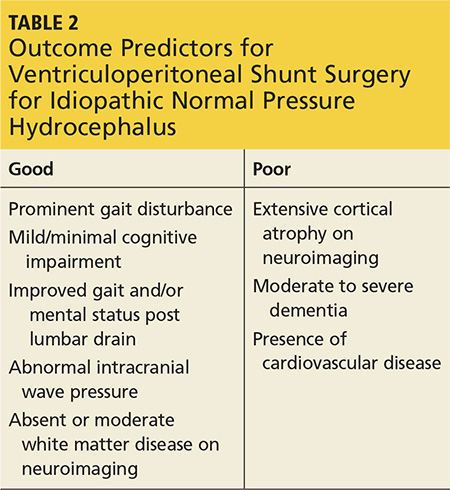
Gait and imbalance have repeatedly been reported to improve the most from shunting, particularly when gait disturbance precedes cognitive decline.29,30 Cognitive impairment, particularly once it reaches the degree of dementia, is least responsive to shunt placement, with only about 50% of patients experiencing improvement in cognition postsurgery.31
,The SINPHONI study (Study of Idiopathic Normal Pressure Hydrocephalus on Neurological Improvement) conducted in Japan found that mild impairment in any of the triad symptoms (gait, cognition, urinary incontinence) prior to shunt surgery predicted disappearance of symptoms following surgery; in addition, younger age was a predictor of disappearance of gait disturbance.32 Complete disappearance of symptoms is often not achievable, but significant improvement in symptoms may be a more attainable outcome goal. Long-term follow-up has found that symptom improvement is sustained in up to 25% to 47% of patients over three to five years.33,34
Continue for the conclusion >>


