
When and how to evaluate mildly elevated liver enzymes in apparently healthy patients


ABSTRACTBecause 1% to 9% of people without symptoms have elevated liver enzymes, extensive evaluation of all abnormal test results would expose many patients to undue risks and expenses. On the other hand, failure to evaluate minor liver enzyme elevations could mean missing the early diagnosis of potentially treatable disorders. This review discusses likely causes of elevated aminotransferase, alkaline phosphatase, and gamma-glutamyl transferase levels and provides algorithms for evaluating high liver enzyme values in apparently healthy patients in the primary care setting.
KEY POINTS
- Nonalcoholic fatty liver disease is the most common cause of asymptomatic elevated aminotransferase levels.
- Suspect alcoholic liver disease when the aminotransferases are elevated and the aspartate aminotransferase level is two to three times higher than the alanine aminotransferase level, especially when gamma-glutamyl transferase levels are elevated.
- If medications or alcohol is a suspected cause of elevated aminotransferase levels, remeasure the levels after 6 to 8 weeks of abstinence.
RISK FACTORS GUIDE THE WORKUP OF ELEVATED ENZYMES
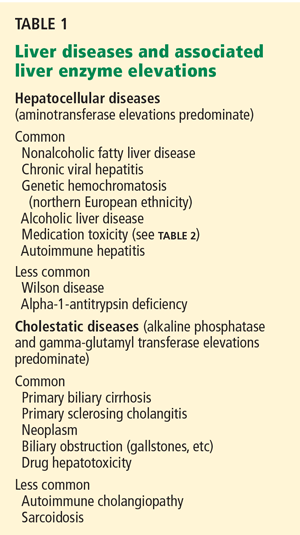
Chronic viral hepatitis
Prevalence. Hepatitis C virus infection affects an estimated 1.8% of the general population, but the rate is much higher in people with known risk factors (see below), and those with ALT levels greater than 40 U/L.
Hepatitis B virus infection is somewhat less common: between 0.2% and 0.9% of the general US population have positive results on tests for hepatitis B surface antigen. However, the prevalence of this antigen in the United States can be as high as 20% in patients who have emigrated from endemic areas of the world. The risk factors described below dramatically increase the prevalence of both viruses.
Risk factors. Risk factors include bloodproduct transfusions (especially before 1992), intravenous drug use, intranasal cocaine use, hemodialysis, organ transplantation, and birth in an endemic region. Although both viruses can be transmitted sexually, hepatitis B is more readily transmitted by this route than hepatitis C. Worldwide, transmission of hepatitis B virus usually occurs shortly after birth or at a young age.
Comments. Most patients with chronic viral hepatitis have no symptoms or only mild symptoms and minimally elevated ALT and AST levels, ie, two to five times higher than the upper limit of normal. Given the relatively high prevalence of hepatitis C, serologic testing for it should be done early in the evaluation of chronically elevated liver enzyme levels.4,5
Hereditary hemochromatosis
Prevalence. The prevalence of the major HFE-gene mutations that cause hereditary hemochromatosis is 0.25% to 0.5% in people of northern European descent. In northern Europe, about 1 person in 10 is heterozygous and 1 in 200 to 400 is homozygous for the mutated gene.
Risk factors. Northern European ancestry is the primary risk factor. In men, the onset of disease is usually in the third and fourth decades of life, while menses protects women until menopause. From 83% to 85% of people with clinically defined hemochromatosis are homozygous for the C282Y mutation in the HFE gene.
Comments. Hereditary hemochromatosis should be considered early in the evaluation of men of northern European descent. Patients usually have no symptoms until iron overload causes significant end-organ damage. Phlebotomy can be an effective treatment for this potentially fatal disease.6
Alcoholic liver disease
Risk factors. The degree of alcohol-related liver disease depends on a variety of factors, including the volume and duration of alcohol ingestion, the type of liver disease, genetics, and the coexistence of viral hepatitis and obesity.
Alcohol-related liver disease can range from simple fatty liver to alcoholic hepatitis with or without cirrhosis. Cirrhosis develops in only 20% to 30% of patients who consume a substantial amount of alcohol, defined as more than a decade of 60 g/day to 80 g/day of alcohol in men and as little as 20 g/day in women. (A standard drink, ie, a 12-ounce beer, a 5-ounce glass of wine, or 1.5 ounces of distilled spirits, contains 12 g of alcohol.) Factors that potentiate alcohol’s harmful effects include female sex, chronic viral hepatitis (especially hepatitis C), obesity, hereditary hemochromatosis, and use of drugs such as methotrexate (Trexall) and acetaminophen (Tylenol).
Comments. Although cirrhosis affects fewer than one-third of long-term heavy drinkers, early detection and treatment can potentially reduce morbidity and prevent early death. Alcoholic liver disease should be suspected in patients with elevated ALT and AST levels (if the AST level is two to three times higher than normal7) and with a history of excessive alcohol use.
Nonalcoholic fatty liver disease
Prevalence. Nonalcoholic fatty liver disease is a spectrum that ranges from simple steatosis to nonalcoholic steatohepatitis to cirrhosis. Its prevalence in the general US population is about 25%, but is much higher in groups at risk, such as patients with type 2 diabetes (50% to 60%), and morbidly obese patients undergoing bariatric surgery (90% to 95%).
On the other hand, the prevalence of the potentially progressive form of nonalcoholic fatty liver disease, ie, nonalcoholic steatohepatitis, is estimated to be 3% to 5%. Nonalcoholic fatty liver disease is perhaps the most common cause of mildly elevated liver enzymes in the United States.
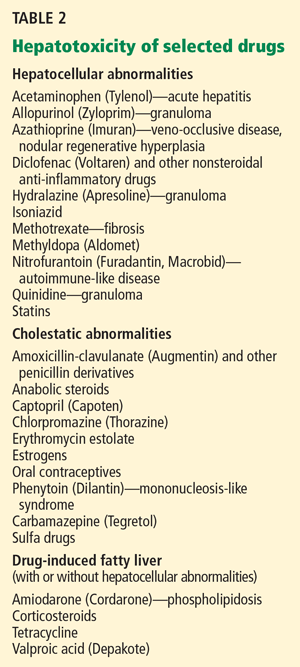
Comments. Nonalcoholic steatohepatitis and steatonecrosis describe a potentially progressive form of nonalcoholic fatty liver disease. Although these disorders are histologically indistinguishable from alcohol-induced liver disease, their mechanism is related to insulin resistance, abnormalities of lipid metabolism, increased hepatic lipid peroxidation, activated fibrocytes, and abnormal patterns of adipokine and cytokine production related to visceral obesity. Results from a few natural history studies suggest that simple steatosis has a benign course, whereas nonalcoholic steatohepatitis can progress to cirrhosis in 10% to 20% of patients.8
Treatment of diabetes, obesity, hypertension, and hyperlipidemia has potential benefit and should be undertaken regardless of liver test abnormalities in any patient with underlying nonalcoholic fatty liver disease.
Autoimmune hepatitis
Prevalence. The prevalence of autoimmune hepatitis varies, depending on geographic location and on the extent of viral hepatitis in the community. In Hong Kong, only 1% of all people with chronic hepatitis have autoimmune hepatitis. By contrast, in Germany and Austria, 34% and 62% of patients with chronic hepatitis may have autoimmune hepatitis.9 In North America, the prevalence of autoimmune hepatitis in patients with chronic liver disease is estimated to be 11% to 23%, and the incidence is about 0.68 per 100,000 individuals per year. In addition to underlying genetic differences, detection bias can explain the variability in prevalence rates.
Risk factors. Autoimmune hepatitis occurs predominantly in women and can be associated with other autoimmune disorders.
Comments. The diagnosis of autoimmune hepatitis is suggested by exclusion of viral causes of chronic hepatitis, by pathologic findings, and by the presence of autoimmune markers such as antinuclear antibody, smooth muscle antibody, and liver-kidney microsomal antibody. Hypergammaglobulinemia is present in most patients, and serum protein electrophoresis may be helpful as part of the initial evaluation of autoimmune hepatitis.
Liver biopsy is usually needed to confirm the diagnosis and to stage the extent of fibrosis. The International Autoimmune Hepatitis Group Scoring System is based on clinical, laboratory, and pathologic data and can be very helpful in establishing the diagnosis.
Treatment of autoimmune hepatitis with immunosuppression is effective. Most patients may need long-term maintenance treatment.


