
Carcinoid tumors: What should increase our suspicion?


ABSTRACTCarcinoid tumors are neuroendocrine neoplasms, primarily of the gastrointestinal tract. Their incidence has been increasing over the last 2 to 3 decades. Patients often present with vague, nonspecific symptoms. Thus, primary care physicians should keep this diagnosis in mind and start appropriate diagnostic testing if they suspect it on a clinical basis. Patients with carcinoid tumors are also at increased risk of developing other malignancies, so close follow-up by their primary care physician is necessary.
KEY POINTS
- Bioactive compounds secreted by carcinoid tumors cause carcinoid syndrome—ie, bronchospasm, diarrhea, cutaneous flushing, and right-sided valvular heart lesions.
- Endocardial fibrotic plaques can occur in patients with carcinoid tumors. The right side of the heart is affected more often than the left, as the left side is protected by inactivation of the bioactive compounds in the lungs. Tricuspid valve regurgitation is the most common finding.
- Since carcinoid tumors have high concentrations of somatostatin receptors, octreotide scanning offers a distinct advantage in imaging them: use of radiolabeled octreotide, a somatostatin analogue, enables imaging of primary tumors and metastases.
Provocative tests
Provocative tests such as the pentagastrin test can be considered if other screening test results are equivocal.12 Such testing must occur in a closely monitored, controlled environment, with intravenous somatostatin available in case of a “carcinoid crisis” (see discussion further below).
Patients with equivocal results from biochemical assays or provocative testing should be followed annually without further testing or evaluated for other causes of their symptoms. If the results of biochemical or provocative testing are abnormal, the tumor topography should be identified with an imaging study.
Imaging tests
Topographic localization of carcinoid tumors is done using various imaging tests, depending on the suspected site of the primary tumor.6
Somatostatin receptor scintigraphy, the preferred imaging test, is based on the principle that some carcinoid tumors have high concentrations of somatostatin receptors. Thus, a radiolabeled form of octreotide, a somatostatin analogue, is used to image these primary tumors and metastases.
Other imaging studies:
- Barium studies
- Computed tomography
- Endoscopy
- Endoscopic ultrasonography.
On imaging studies, in general, the tumor may appear as a smooth submucosal mass, as a target lesion (if it ulcerates), as wall-thickening, or as a cystic or calcified mass.6
MANAGEMENT IS MULTIDISCIPLINARY
Any patient with a carcinoid tumor should be referred to a medical and surgical oncologist once the diagnosis is established. Referral to additional specialists, such as a gastroenterologist or an interventional radiologist, is based on the location and extent of disease.
Surgery is the cornerstone of therapy
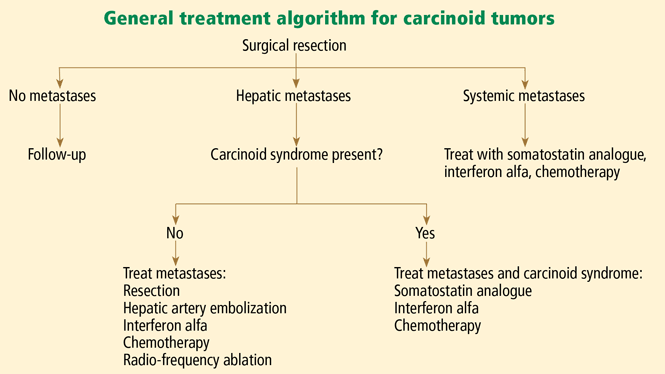
Drug therapy
Somatostatin analogues such as octreotide (Sandostatin) and lanreotide (Somatuline) are useful for treating carcinoid syndrome16 and also have a role in treating systemic metastases. These agents are effective in controlling flushing and diarrhea in 70% to 80% of patients.17 There are data, albeit limited, supporting a role for these agents in inhibiting tumor growth.18 They are the treatment of choice for carcinoid crisis (see discussion below). Important adverse effects include nausea, cramps, diarrhea; cholelithiasis; hypoglycemia or hyperglycemia; cardiac arrhythmias; and gastric atony.16
Interferon alfa is useful as an additive therapy when symptoms of carcinoid syndrome do not resolve with a somatostatin analogue alone. The addition of interferon alfa in these patients is useful for both symptom control (seen in 40% to 50% of those treated) and tumor stabilization (in 20% to 40% of those treated).19 However, it is still unclear whether combination drug therapy is more effective than a somatostatin analogue alone as the initial therapy for carcinoid syndrome.20 Adverse effects of interferon alfa include myelosuppression, depression, flu-like symptoms, and thyroid disturbances.
Supportive therapies
In patients with hepatic metastases who are not candidates for surgery, hepatic artery embolization with chemotherapy or particles can be used as palliative therapy. Severe adverse effects of this procedure include renal failure, hepatic failure, carcinoid crisis, and hepatic abscess and are seen in about 10% of patients.1
Conventional chemotherapy and molecularly targeted therapy are used for patients with rapidly progressive and widely metastatic disease. The precise role and efficacy of these therapies need further study.
Other supportive therapies for patients with carcinoid disease include dietary supplementation with vitamin B3, bronchodilators for bronchospasm, antidiarrheals, diuretics, and valve replacement for carcinoid heart disease.


