
Carcinoid tumors: What should increase our suspicion?


ABSTRACTCarcinoid tumors are neuroendocrine neoplasms, primarily of the gastrointestinal tract. Their incidence has been increasing over the last 2 to 3 decades. Patients often present with vague, nonspecific symptoms. Thus, primary care physicians should keep this diagnosis in mind and start appropriate diagnostic testing if they suspect it on a clinical basis. Patients with carcinoid tumors are also at increased risk of developing other malignancies, so close follow-up by their primary care physician is necessary.
KEY POINTS
- Bioactive compounds secreted by carcinoid tumors cause carcinoid syndrome—ie, bronchospasm, diarrhea, cutaneous flushing, and right-sided valvular heart lesions.
- Endocardial fibrotic plaques can occur in patients with carcinoid tumors. The right side of the heart is affected more often than the left, as the left side is protected by inactivation of the bioactive compounds in the lungs. Tricuspid valve regurgitation is the most common finding.
- Since carcinoid tumors have high concentrations of somatostatin receptors, octreotide scanning offers a distinct advantage in imaging them: use of radiolabeled octreotide, a somatostatin analogue, enables imaging of primary tumors and metastases.
SYMPTOMS ARE OFTEN ABSENT OR NONSPECIFIC
Carcinoid tumors are often clinically silent. Signs and symptoms, when present, represent local effects of the tumor, tumor-induced fibrosis, biological effects of secreted products, or metastases.
Local effects can include abdominal pain, intestinal obstruction, appendicitis, rectal bleeding, and peptic ulcer disease, depending on the site of the tumor. Intestinal obstruction can be caused by intussusception, by the intraluminal effects of the tumor, or by adhesions due to tumor-induced fibrosis.7
Tumor-induced fibrosis can be retroperitoneal and have a myriad of manifestations, for example2,5:
- Hydronephrosis from ureteral obstruction
- Mesenteric ischemia from vascular trapping
- Peyronie disease (an acquired fibrosis of the penis that produces bending or pain of the erect penis).
Classic carcinoid syndrome, caused by the entry of bioactive compounds secreted by the tumor into the systemic circulation, occurs in fewer than 10% of patients with carcinoid tumors.2,6 Most patients who present with this syndrome have a midgut carcinoid tumor.
The hallmark is cutaneous flushing, which typically affects the face, neck, and upper body and lasts from 30 seconds to 30 minutes. This reaction can be unprovoked, but it is often precipitated by foods (eg, bananas, tomatoes, eggplant, kiwi, pineapple, cheese), by alcohol consumption, by exercise, by emotional stimuli, or by anesthesia.4,8 Other symptoms of this syndrome include bronchospasm, secretory diarrhea, and venous telangiectasia.
Carcinoid syndrome variants, caused by differences in secretory products, are seen in some patients with bronchial and gastric carcinoid tumors. Patients with gastric carcinoid variants have flushing that is pruritic and well demarcated, and they have an increased incidence of peptic ulcer. In contrast, flushing in patients with bronchial carcinoid variants can last days and is often associated with changes in mental status.2,9
Carcinoid heart disease refers to endocardial fibrotic plaques that occur in patients with carcinoid tumors, especially those with hepatic metastases. The right side of the heart is generally affected, as the left side is protected by inactivation of the bioactive compounds in the lungs. Tricuspid valve regurgitation is the most common finding, but tricuspid stenosis, pulmonary valve regurgitation, and pulmonary valve stenosis can also occur.10 Left-sided lesions can occur in patients with pulmonary metastases.
Hypoalbuminemia and pellagra. The amino acid tryptophan is a precursor of serotonin and niacin (vitamin B3). In patients with widely metastatic carcinoid tumors, increased conversion of tryptophan to serotonin by the tumor cells can lead to tryptophan deficiency and niacin deficiency.1,2 These manifest as hypoalbuminemia and pellagra (glossitis, scaly skin, and confusion).
IF YOU DON’T THINK ABOUT THEM, YOU WON’T LOOK FOR THEM
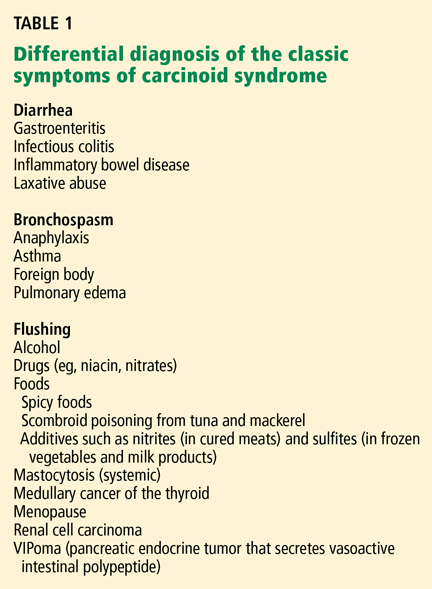
Many carcinoid tumors are discovered incidentally during surgery or diagnostic procedures. However, an evaluation for a carcinoid tumor is often prompted by symptoms that suggest the carcinoid syndrome. Of importance, since these symptoms can often be erroneously attributed to other, more common causes (Table 1), a very high level of suspicion is required on the part of the primary care physician to initiate the evaluation for carcinoid tumors.
When evaluating a patient who presents with flushing, the clinician should obtain a detailed history, noting the pattern of flushing, precipitating factors, duration, and associated symptoms, such as diarrhea and bronchospasm. 11
Often, patient recall can be improved by asking the patient to keep a symptom diary. If the diary does not offer any clues to the diagnosis, a trial of abstinence from foods and drugs that increase urinary 5-hydroxyindoleacetic acid (5-HIAA) should be attempted. If the flushing resolves, the foods and drugs can be reintroduced one at a time to identify the culprit.11 However, if symptoms persist, a more extensive workup should be undertaken, including screening for carcinoid tumor.
Biochemical assays
Biochemical screening for carcinoid tumors is performed using an assay for bioamines secreted by the tumor.
Plasma chromogranin A is the preferred screening test because it is very sensitive12; however, it is not very specific. Several conditions (including essential hypertension, proton pump inhibitor use, chronic atrophic gastritis, heart failure, renal failure, and pheochromocytoma) can be associated with elevated levels of chromogranin A. Its specificity for diagnosing carcinoid tumors can be increased to about 84% by raising the cut-off value to 31 or 32 U/L. Its specificity can be increased to 95% by using 84 to 87 U/L as the cut-off value, but this comes at the cost of diminishing its sensitivity (from 75% to about 55%).13 Significantly elevated levels of chromogranin A (> 5,000 U/L) independently predict a poor prognosis.13
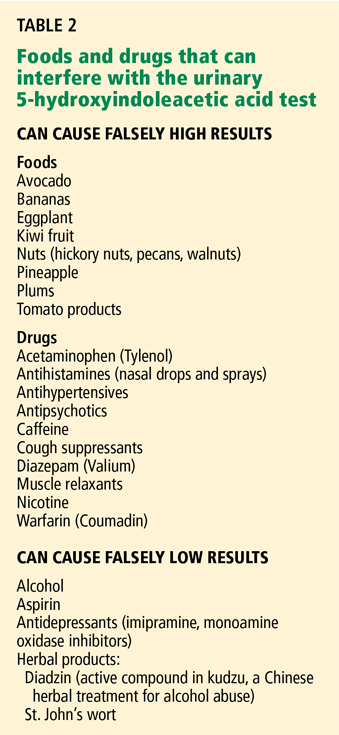
Urinary 5-HIAA levels also vary depending on the origin of the carcinoid tumor and are therefore useful in locating the site of the tumor. Foregut tumors lack the decarboxylase enzyme necessary to convert 5-hydroxytryptophan to serotonin, resulting in minimal to no elevation in urinary 5-HIAA levels. Midgut tumors secrete serotonin, resulting in high levels of urinary 5-HIAA. Hindgut tumors secrete neither 5-hydroxytryptophan nor serotonin and thus do not raise urinary 5-HIAA levels.
Other less sensitive markers include bradykinin, human chorionic gonadotropin, and neuropeptide PP.14


