
Managing diabetes in the elderly: Go easy, individualize


ABSTRACTThe care of elderly patients with diabetes should be individualized, taking into account the patient's comorbidities, other medications, cognitive abilities, home care situation, and life expectancy. Especially in frail, elderly patients, there should be less emphasis on strict glycemic control than on avoiding malnutrition and hypoglycemia and achieving the best quality of life possible.
KEY POINTS
- The diagnosis of diabetes in the elderly is often missed because its symptoms, such as dizziness, confusion, and nocturia, are often common and nonspecific.
- Elderly people at risk of malnutrition should have unrestricted meals and snacks; medications should be adjusted as necessary to control blood glucose levels.
- Tight control of blood glucose reduces the risk of death and diabetes-related complications but poses the risk of hypoglycemia.
DIABETES CARE TAKES A TEAM
Geriatric patients have complex problems. In the face of multiple comorbidities, difficult social situations, and polypharmacy, the physician can best address the drug therapy and lifestyle changes that diabetes management requires by working with a certified diabetes educator, dietitian, social worker, and pharmacist.
Nonpharmacologic therapy
The first step in therapy for glycemic control is diet and exercise, although such measures are often limited in the elderly.
Diet. Carbohydrate control can maintain euglycemia in some patients with type 2 diabetes. But for the elderly, especially those living in long-term health care facilities, malnutrition may be of more concern than obesity, making dietary restrictions harmful. Patients in danger of malnutrition should be given unrestricted menus with consistent amounts of carbohydrate at meals and snacks. Medications should be adjusted to control blood glucose levels if necessary.39
For patients living in the community, dietary therapy should be individualized by a dietitian. Medicare covers up to 10 hours of diabetes education with a certified diabetes educator or registered dietitian within a 12-month period if at least one of the following criteria are met: the patient is newly diagnosed with diabetes, the hemoglobin A1c level is higher than 8.5%, medication has been recently started, or the risk of complications is high.
Supplementation of vitamins and minerals is prudent. Supplemental magnesium, zinc, and vitamins C and E may improve glycemic control.40–44
Exercise reduces insulin resistance, weight, and blood pressure; increases muscle mass; and improves lipid levels. Both aerobic and nonaerobic activity are beneficial.45–47 The best time to exercise is 1 to 2 hours after a meal, when glucose levels tend to be highest. Either hypoglycemia or hyperglycemia may occur up to 24 hours following exercise, and medications may need to be adjusted.
Oral medications
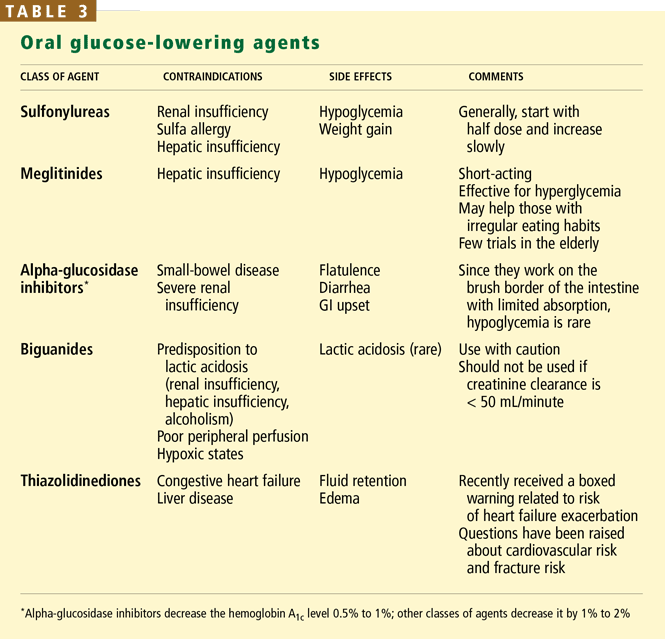
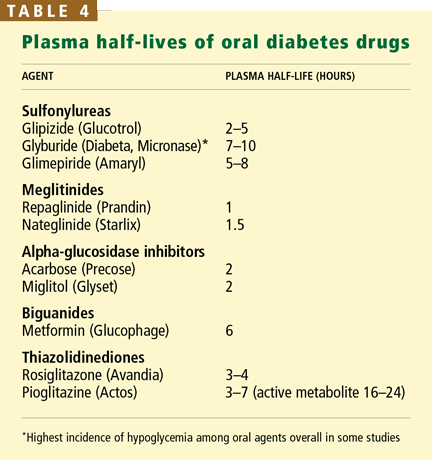
Insulin
Insulin therapy is necessary if oral combination therapy proves insufficient. Insulin is generally required for patients with moderate or severe hyperglycemia, especially for those with renal or hepatic insufficiency.52,53 Before prescribing insulin therapy to elderly patients, we need to consider their visual acuity, manual dexterity and sensation, cognitive function, family support, and financial situation.However, several studies showed that quality of life improves in the year after starting insulin for patients whose blood sugar was previously poorly controlled with oral agents.54,55
An evening dose of neutral protamine Hagedorn (NPH) insulin is a good way to start. More complex regimens may be necessary, depending on glycemic goals.
A number of premixed preparations of various types of insulin with different durations of action are available. They may improve accuracy, acceptability, and ease of insulin administration, although glycemic control and the risk of hypoglycemia may not change or in fact may be worse.56 Some patients may not achieve adequate glucose control with fixed-dose regimens.57,58
Frequent, small, titrated doses of short-acting agents control hyperglycemia better, particularly postprandial hyperglycemia,resulting in less hypoglycemia. However, these regimens may be too complex for many elderly patients; a patient’s support system must be evaluated before recommending this type of therapy.
Most insulins are available in vials and in pens, the latter of which are quick and easy to use, provide precise doses, and can be managed by many elderly patients. Pens require the user to attach a needle, set the dose by a dial, and depress the plunger to inject the dose. Some are prefilled and disposable, others have refillable cartridges. Studies in patients older than 60 years have shown the pen systems to be more acceptable, safer, and more effective than conventional syringes.
If conventional syringes are used, low-dose syringes (30-unit or 50-unit), which have more visible unit markings, should be prescribed whenever possible rather than the 100-unit sizes. Magnifying devices that attach to a syringe are also available.
Studies have also shown that continuous subcutaneous insulin infusion is safe for selected elderly patients.
Incretin mimetics: Possibly well-suited
Incretins, such as glucagon-like peptide-1, are hormones released from the gastrointestinal tract in response to eating. They stimulate insulin secretion by non-glucose-related pathways.
Exenatide (Byetta), a 39-amino-acid peptide incretin mimetic, is a synthetic version of exendin-4, an incretin isolated from the saliva of the Gila monster. Recently approved for treating type 2 diabetes, it is given subcutaneously.59,60 Oral dipeptidyl peptidase-4 inhibitors (sitagliptin and vildagliptin) decrease the degradation of endogenous incretin and thus prolong its action.61 Because a decline in glucose-mediated beta-cell insulin secretion is a major contributor to the development of diabetes in the elderly, the drug may be especially helpful for this population.However, further clinical research and experience is needed before specific recommendations for elderly patients can be made.


