
Managing diabetes in the elderly: Go easy, individualize


ABSTRACTThe care of elderly patients with diabetes should be individualized, taking into account the patient's comorbidities, other medications, cognitive abilities, home care situation, and life expectancy. Especially in frail, elderly patients, there should be less emphasis on strict glycemic control than on avoiding malnutrition and hypoglycemia and achieving the best quality of life possible.
KEY POINTS
- The diagnosis of diabetes in the elderly is often missed because its symptoms, such as dizziness, confusion, and nocturia, are often common and nonspecific.
- Elderly people at risk of malnutrition should have unrestricted meals and snacks; medications should be adjusted as necessary to control blood glucose levels.
- Tight control of blood glucose reduces the risk of death and diabetes-related complications but poses the risk of hypoglycemia.
Control blood glucose, avoid hypoglycemia
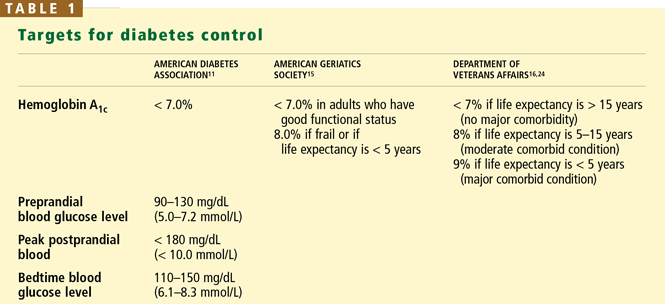
- Hemoglobin A1c levels < 7.0%
- Preprandial blood glucose levels 90–130 mg/dL
- Bedtime blood glucose levels 110–150 mg/dL.
Guidelines from the Department of Veterans Affairs24 and the American Geriatrics Society15 are slightly different, and are based on randomized trials in younger patients, primarily the Diabetes Control and Complications Trial (DCCT)25 and the United Kingdom Prospective Diabetes Study(UKPDS).21,26 A recent position statement from the American College of Physicians, based on a review of all the major guidelines, recommends the following: “Statement 1: To prevent microvascular complication of diabetes, the goal for glycemic control should be as low as is feasible without undue risk for adverse events or an unacceptable burden on patients. Treatment goals should be based on a discussion of the benefits and harms of specific levels of glycemic control with the patient. A hemoglobin A1c level less than 7% based on individualized assessment is a reasonable goal for many but not all patients. Statement 2: The goal for hemoglobin A1c should be based on individualized assessment of risk for complication from diabetes, comorbidity, life expectancy, and patient preferences.”27
Although few data exist for elderly patients, these guidelines are the most current approach to treating diabetes in the elderly. Less stringent goals are appropriate for patients who have limited life expectancy, hypoglycemia unawareness (lack of autonomic warning symptoms of low blood sugar), seizures, dementia, psychiatric illness, or alcoholism. It is important to keep in mind the following as one strives for lower A1c levels: Although the relative risk reduction accomplished by lowering hemoglobin A1c is linear, the absolute risk reduction is log-linear—more benefit is gained by lowering hemoglobin A1c from 9% to 8% than from 8% to 7%.28
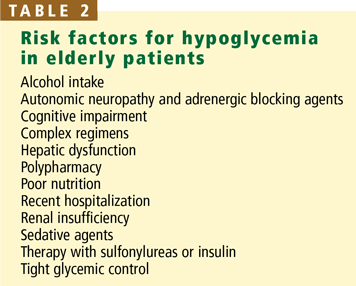
Hypoglycemia is a major limiting factor in glycemic control. Many risk factors for hypoglycemia are common in the elderly (Table 2). Hypoglycemia was a chief adverse event in both the DCCT and the UKPDS, with a twofold to threefold higher rate in patients who were intensively treated.29 Even mild hypoglycemia in the elderly can result in an injurious fall, which can lead to long-term functional decline. The rate of severe or fatal hypoglycemia—the major risk of tight glycemic treatment—increases exponentially with age.30–33
As people age, the mechanisms that regulate blood sugar are impaired: the glucagon response is diminished, which increases dependence on the epinephrine response to prevent hypoglycemia.34 Medications such as beta-blockers, which can suppress the symptoms of hypoglycemia, may further impair the response. Consequently, older patients may be less aware of hypoglycemia, and the symptoms may be less intense. Renal insufficiency may also exacerbate the problem by reducing clearance of oral agents. In addition, confused patients may take extra doses of medications.
Patients with type 2 diabetes treated with insulin, sulfonylureas, or meglitinides should be evaluated for symptoms of hypoglycemia. Older patients may have more neuroglycopenic symptoms (eg, dizziness, weakness, confusion, nightmares, violent behavior) than adrenergic symptoms (eg, sweating, palpitations, tremors), although both types should be asked about during an evaluation.2,32,33 Hypoglycemia may also present as transient hemiparesis, coma, or falls.35
We carefully evaluate the glycemic regimen and care environment of any elderly patient who presents with a blood glucose level below 100 mg/dL. The regimen should be altered for less strict control if the patient is cognitively impaired, is at risk of falling, or has an unstable care situation (eg, has irregular meals or needs assistance with daily activities and does not have a regular caregiver). Patients at significant risk of hypoglycemia should be encouraged to check their blood glucose level with a fingerstick before driving.
Tight control in the hospital is controversial
Glycemic control in the hospital has traditionally been designed primarily to maintain “safe” blood glucose levels, ie, to prevent hyperglycemia-induced dehydration and catabolism while avoiding hypoglycemia. Recent studies have suggested that tighter glycemic control may reduce the rates of complications and death perioperatively and in patients with myocardial infarction or who are seriously ill in the intensive care unit, although the evidence is mixed.36–38 Specific targets are controversial, and although studies have included some elderly patients, results cannot be generalized to this group.


