
Silver Screening


Needles is still trying to digest all the news from the Academy Awards this week. In honor of Best Picture winner The Artist, I will write today’s blog in black and white, without speaking. Also, I’m wearing my tuxedo socks. What, too much information?
One place it turns out you won’t get too much information is your local tanning salon, at least according to the results of an investigation by the US House Energy and Commerce Committee. Committee investigators contacted 300 indoor tanning salons while posing as fair-skinned 16-year-old girls (some of the older Committee members had to inhale from helium balloons). Not only did 90% of salons deny to callers that tanning presented any sort of health risk, more than half took pains to explain that links between indoor tanning and skin cancer were a bunch of hooey, much like the hoaxes around global warming, evolution, and gravity. Many repeated the line that if tanning were indeed dangerous, the US government would have banned it altogether, just like they did cigarettes.
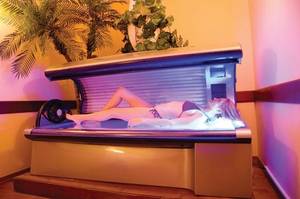
Salons actually highlighted the myriad health benefits of tanning, most previously unknown to medical science. These included the prevention and treatment of arthritis, depression, obesity and cellulite! The news understandably generated spasms of excitement among cellulite researchers. Fortunately for those of us who feel there should be stricter limits on minors undertaking life-threatening activities, the news media have jumped all over this story, educating the public by showing photographs of teenaged girls in tanning beds wearing bikinis. All that’s left to do now is to wait for those skyrocketing melanoma rates to start falling.
News like this may make some people angry, but researchers publishing in Development and Psychopathology might suggest those people not overreact, at least not in front of their toddlers. A study of 361 adoptive families showed that parents who become upset easily are more likely to see behavioral problems in their two-year-old children. I can imagine these investigators interviewing their subjects: “I’m sorry I cut you off down there in the parking lot, but I was running late for, well, this very interview! Can I get you some more cold coffee? You probably want some after I kept you waiting for...what has it been, like ninety minutes? Now, would you say your child is a brat?” Follow-up studies will determine whether these short-fused parents also get faster service in restaurants, fewer bumped airplane flights, and more restraining orders from psychopathology researchers.
Parents, of course, are not the only ones that can be irritable. So can bowels. Irritable bowel syndrome and functional abdominal pain are among the most frustrating conditions for doctors to diagnose and treat. A study in the American Journal of Gastroenterology, however, gives patients and the doctors who treat them new hope in the form of hypnosis (clarification: they hypnotized the patients, not their doctors). In the study 52 children with functional abdominal pain were randomly assigned to undergo either standard care or gut-directed hypnotherapy. As I understand it gut-directed hypnotherapy is like regular hypnosis except that the experimenter dangles a pocket watch in front of the patient’s belly button. Patients underwent six rounds of therapy and also received CDs to help them practice at home. In contrast to the 20% improvement rate seen in the standard care group, nearly 70% of the hypnosis group remained pain-free as long as five years out! Additionally, whenever members of the experimental group would snap, their colons would strut around and cluck like chickens.
This blog, on the other hand, has been completely silent, as promised. Return next week, when Needles hopes to add a disarmingly cute Jack Russell terrier.