
Characteristics of urgent palliative cancer care consultations encountered by radiation oncologists


Background Palliative radiation therapy (PRT) is often used in patients with advanced cancers who require urgent consultation.
Objective To report on the characteristics of urgent palliative issues encountered by radiation oncologists.
Methods Patterns of presentation in 162 consultations for urgent PRT at 3 centers were prospectively evaluated from May 19 to September 26, 2014. A survey of palliative care issues, including assessment of reasons for urgent consultation, disease presentation, characteristics, and sites of RT delivery, was completed by physicians and/or nurse practitioners. The response rate was 86%, with 140 of 162 responses received.
Results The median age of the patients was 63 years, with 80% older than 50 years. 56% were men, and 44% were women. 57% had an Eastern Cooperative Oncology Group Performance Status of 0-1. Primary cancer diagnoses were lung (28%), breast (13%), prostate (10%), melanoma (10%), sarcoma (7%), and others (32%). The main reasons for PRT consult were pain (57%), brain metastases (29%), and cord compression (13%). The most common presenting symptoms were pain (69%), neurologic symptoms (51%), and fatigue (49%). Patients were seen throughout the trajectory of their care as follows: 63% at the time of an established metastasis, 19% at the time of their initial diagnosis continuing further cancer therapies, and 16% before hospice care without further anticancer therapy.
Limitations Single institution and descriptive
Conclusions PRT occurs across the spectrum of advanced cancer, from initial diagnosis to end of life, and is used in a range of urgent oncologic issues, mostly painful metastases, followed by brain metastases and cord compression. Radiation oncologists manage cancer-related symptoms such as pain, neurologic symptoms, and fatigue.
Accepted for publication July 17, 2018
Correspondence Muhammed M Fareed, MD; mmfareed@bwh.harvard.edu
Disclosures The authors report no disclosures or conflicts of interest.
Citation JCSO 2018;16(4):e193-e199
©2018 Frontline Medical Communications
doi https://doi.org/10.12788/jcso.0415
Related content
Integrating survivorship care planning in radiation oncology workflow
Use of radiotherapy services by a palliative care unit
Submit a paper here
Results
In total, 162 patients were seen in consultation for PRT during the 19-week enrollment period, or an average of 8.7 consults a week. Of that total, surveys for 140 patients were returned (Table).
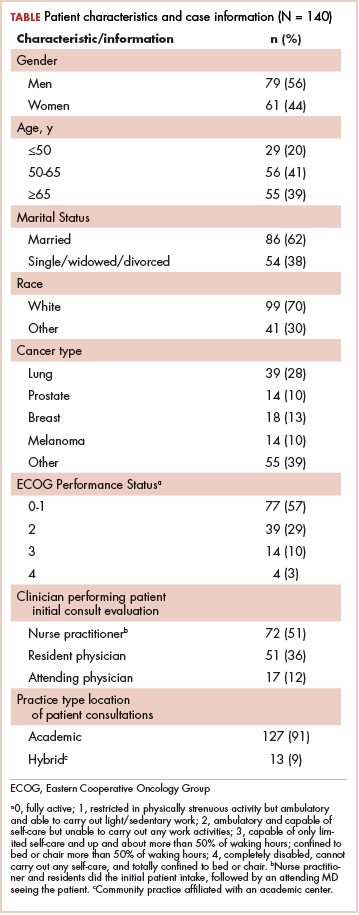
The median patient age was 63 years (range, 29-89 years). A sizeable minority (20%) was 50 years or younger. The most common cancer diagnosis was lung cancer (28%), followed by breast (13%) and prostate (10%) cancers, melanoma (10%), and sarcoma (7%). Other diagnoses accounted for the remaining 32%.
Timing of PRT consult in cancer trajectory
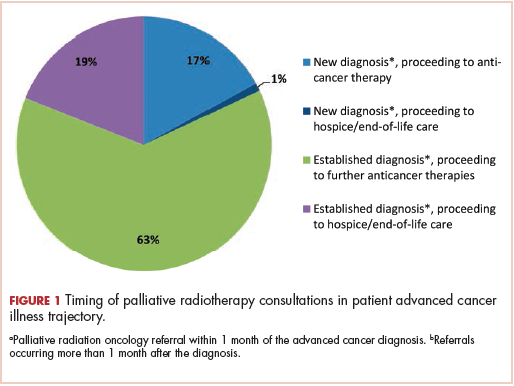
The points in the advanced cancer illness trajectory at which patients were seen for PRT evaluation are shown in Figure 1. Most patients (63%) were seen for a PRT evaluation at the time of an established diagnosis (>1 month after diagnosis of metastatic cancer) and were continuing to further cancer therapies. An additional 19% of patients with an established diagnosis proceeded to hospice or end-of-life care after the PRT evaluation. A notable minority of patients (18%) were seen for a PRT evaluation at the time of a new diagnosis (<1 month of diagnosis of metastatic cancer), and of those, 17% went on to receive anticancer therapy after the PRT evaluation and 1% proceeded to hospice or end-of-life care.
Characteristics of PRT consults and symptoms at presentation
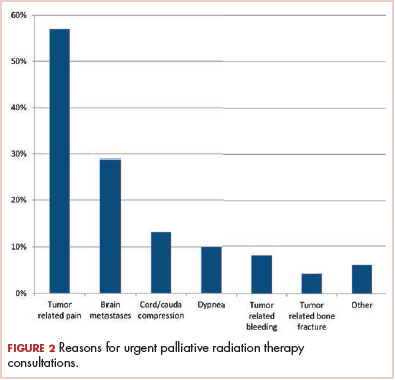
The primary reasons for urgent consultation for PRT are shown in Figure 2. Cancer-related pain (57%), brain metastases (29%), and malignant spinal cord or cauda equina compression (13%) were the predominant reasons for consults. Notable minorities were seen for tumor-related dyspnea (10%), bleeding (8%), and bone fractures (4%).
PRT recommendations and targets
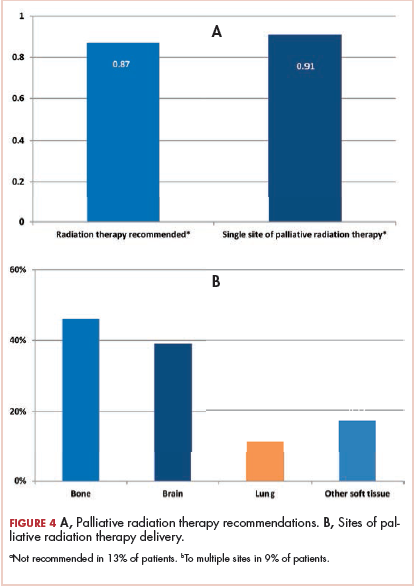
Recommendations regarding PRT are shown in Figure 4A. Of the total 140 patients, 18 (13%) were not recommended for RT. Of the 122 patients for whom PRT was recommended, 11 (9%) received RT at more than 1 site.
Discussion and conclusions
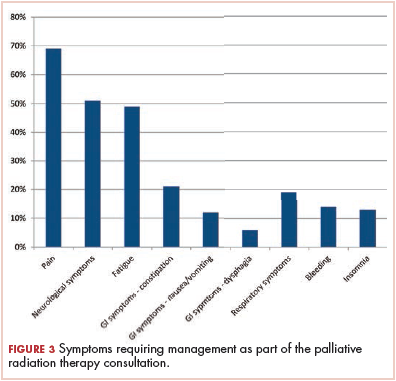
The present study provides a descriptive overview of urgent metastatic cancer patient presentations to radiation oncology clinicians through a comprehensive evaluation of 140 consults for PRT. The most common reasons for urgent evaluation were cancer-related pain (57%), but brain metastases (29%), spinal cord compression (13%), and respiratory symptoms (10%) were also common. Other less-common indications included cancer-related dysphagia, bleeding, and poststabilization management of bone fractures. The most common symptoms requiring management by radiation oncology clinicians were pain (69%), neurologic symptoms (51%), and fatigue (49%). The study also provides a comprehensive characterization of the timeframe of PRT consultation and the treatment recommendations in this cohort. Though most PRT consults occurred at the time of an established metastatic cancer diagnosis and before further anticancer therapies, sizeable minorities occurred at the time of a new diagnosis of metastatic cancer (18%) and before comfort-focused, end-of-life care and no further anticancer therapies (20%). Most patients (87%) were recommended PRT, and of those recommended RT, 11% received RT to more than 1 site. The most common PRT sites were to bone (46%), followed by brain (29%), nonlung soft-tissue sites (17%), and lung (8%). This comprehensive description of the day-to-day urgent, advanced cancer care issues seen and managed in radiation oncology practice can help guide PRT clinical structures, education, research, and quality improvement measures in clinical practice.


