
Medical Education Leaps Ahead in Liberia



For example, residents might see cases of tetanus, which is almost never seen in the United States.
And I remember one physician assistant who was able to diagnose and treat a rare case of malaria after his return to the United States, because he had become familiar with it during his time in Liberia.
How has the health care situation improved over the past decade?
There is always the need for more equipment, but the government has improved health care enormously in the past few years. That said, although the right equipment is important, emergency physicians in particular are used to making a lot of decisions without machines. If you have good doctors, you can work with people and give them good care.
The greatest challenge is not having enough trained medical personnel to meet the needs of the population. I would like to overcome this by being able to provide more trained medical personnel all the time.
What else would you like physicians to know about the value of volunteering in Liberia?
I think we must remember, especially in emergency medicine, that it is a global world, and anyone from anywhere who travels on a plane may end up in your hospital.
I think that physicians should pay attention to global health, because this world is becoming smaller. I’m not a global health physician by training, and I never thought I would be involved in global health.
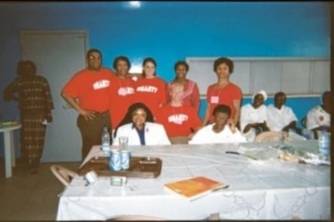
Liberia is a very safe place to be right now. We have physicians and residents there all the time, and I think the Liberian people understand that doctors are there to help them. The ability to provide adequate medical care has improved by leaps and bounds. Also, the people there speak English, so there is no need for translators, and the currency is the U.S. dollar, which also makes it an easier place for U.S. physicians to visit.
As part of the emergency medicine residency in Liberia, HEARTT requires participants to complete a pre-departure online series of readings. One section provides background about the country and the current goals for improving health care in Liberia, and another section provides information on clinical tropical diseases that residents will likely encounter, including malaria, meningitis, encephalitis, typhoid, acute respiratory infections, and diarrhea with severe dehydration.
For more information about the Liberia residency or about volunteering through HEARTT, visit the organization’s website.
--Interview by Heidi Splete
Think globally. Practice locally.
U.S.-trained internists who have practiced abroad will receive a $100 stipend for contributing to this column. For details, visit the World Wide Med column or send an e-mail to imnews@elsevier.com.

