
A Pharmacist-Led Process to Monitor Discrepant Urine Drug Screen Results


Background: A urine drug screen (UDS) is a common risk-mitigation strategy tool for prescribing controlled substances, particularly opioids. Due to their complexity, UDS results can be misinterpreted and thereby have profound impacts on the patient-clinician relationship. From 2021 to 2022, a clinical dashboard to review potentially discrepant UDS results—based on a comparison of the results to the patient’s medication list—was made available by the Veterans Health Administration.
Methods: This quality improvement project implemented a process for weekly clinical pharmacist reviews of the UDS dashboard. Significant discrepant UDS results were reviewed in depth. From June 2022 through September 2022, 700 UDSs were performed and 60 patients had significant discrepancies that warranted in-depth review.
Results: Pharmacist interventions during the review included 39 collaborations with medication prescribers to discuss follow up (65%), 25 queries to a prescription drug monitoring program (42%), and 9 confirmatory UDS on the original sample (15%). In-depth reviews were required for about 4 patients weekly, with a mean length of 14 minutes.
Conclusions: A pharmacist-led process to monitor discrepant UDS results led to opportunities for collaboration with prescribers and positively impacted confirmatory testing at a rural veterans affairs health system.
Results
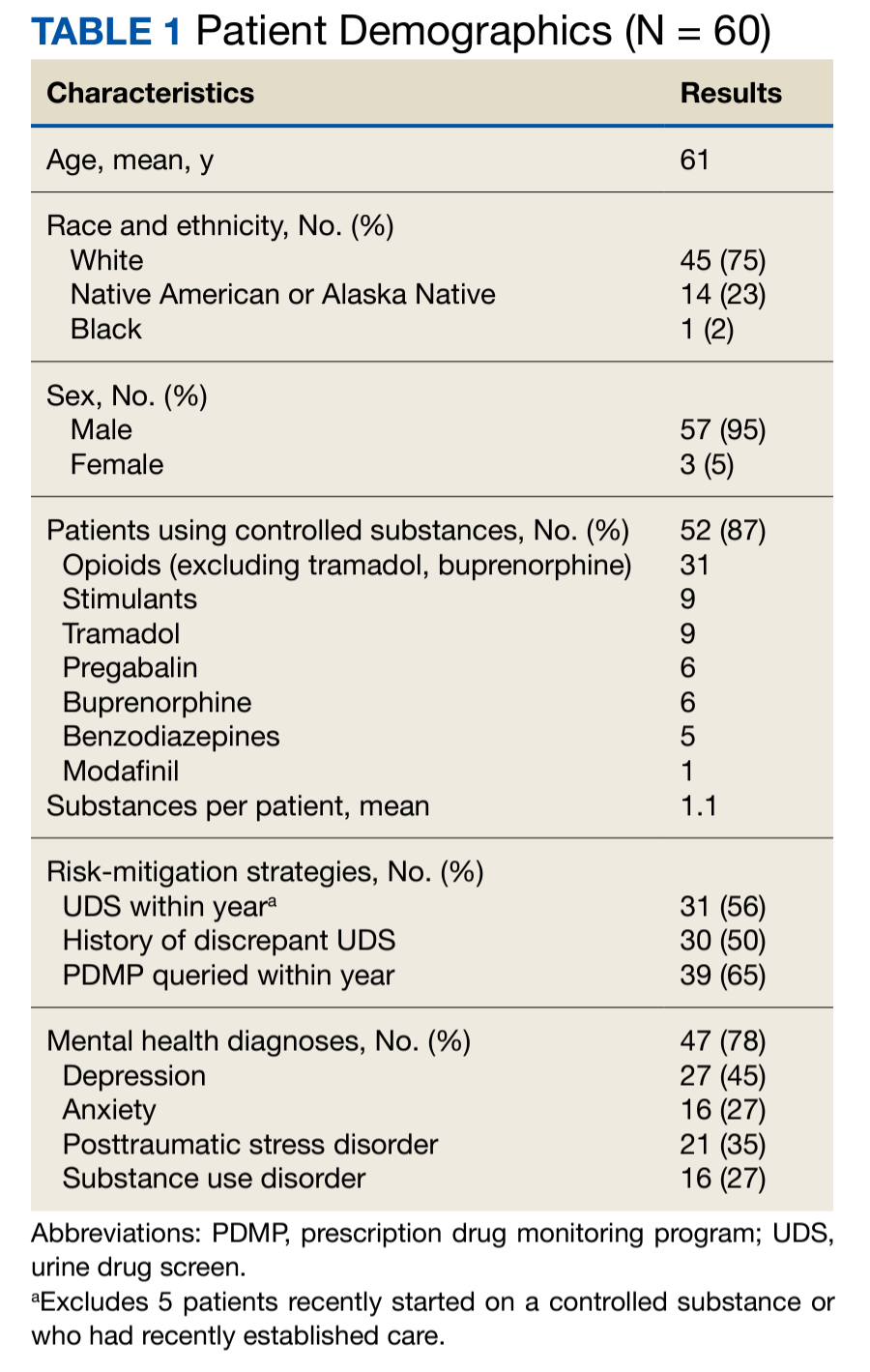
From June 2022 through September 2022, 700 UDSs were performed at VABHHCS with 278 (39.7%) patients identified as having a potential discrepancy based on UDS results. Sixty patients (8.6%) had significant discrepancies that warranted in-depth review. The most common reasons for determining whether a potential discrepancy was not significant included unexpected negatives due to documented non-VA medications no longer being prescribed, unexpected positives due to recent expiration of a controlled substance prescription the patient was still taking, or unexpected positives due to the detection of a substance for which the clinician was already aware. During the 16-week study period, the mean number of patients warranting in-depth review was 4 per week.
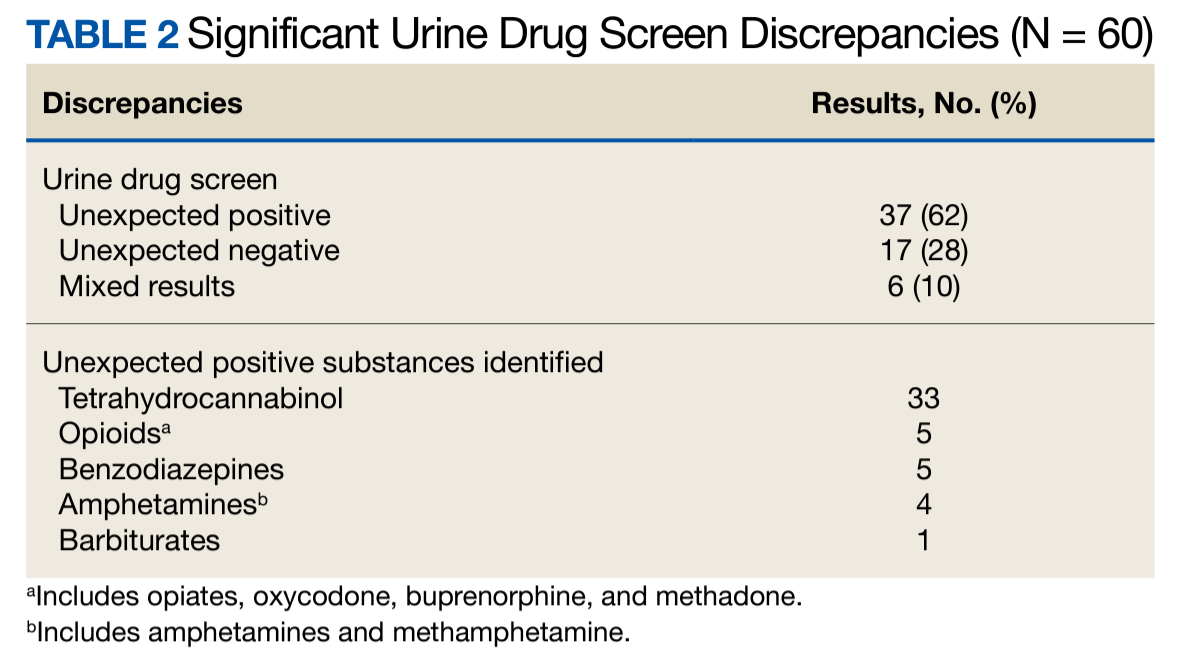
The patients were predominantly male with a mean age of 61 years, and most (87%) were prescribed at least 1 controlled substance (mean, 1.1), primarily opioids for pain management (Table 1). Most patients had recent substance risk mitigation with UDS (56%) and PDMP (65%) checks within the past year. Of the 60 patients reviewed with significant UDS discrepancies, 50% had a history of discrepant UDS results. Of the 60 UDS discrepancies, there were 37 unexpected positive results (62%), 17 unexpected negative results (28%), and 10 patients with both positive and negative results (17%). THC was the most frequently detected substance, followed by opiates, benzodiazepines, and amphetamines (Table 2).
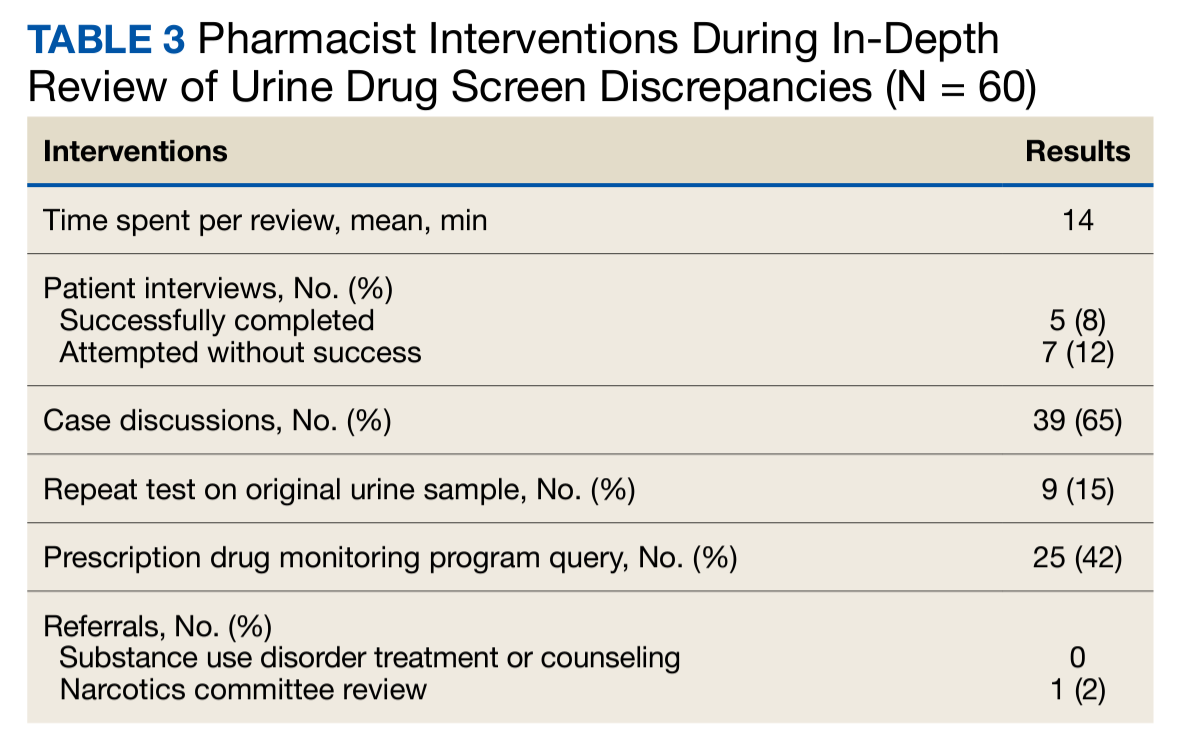
Each in-depth review with interventions by the PMOP coordinator or pharmacy resident lasted a mean of 14 minutes (Table 3). Five patients were successfully contacted for an interview and 7 patients could not be contacted. The ordering clinician of the UDS sometimes had contacted these patients prior to the PMOP coordinator or pharmacy resident reviewing the UDS dashboard, eliminating the need for additional follow-up.
The most common pharmacist intervention was discussing future actions with the primary care clinician and/or prescriber of the controlled substance (n = 39; 65%). These conversations resulted in actions such as ordering a repeat UDS with confirmatory testing at a future date or agreeing that the clinician would discuss the results and subsequent actions with the patient at an upcoming visit. Pharmacist interventions also included 25 PDMP queries (42%) and 9 orders of confirmatory UDS on the original urine sample (15%). Only 1 patient was evaluated by the narcotics review committee, which resulted in a controlled substance flag being placed on their profile. No patients were referred to substance use disorder treatment or counseling. It was offered to and declined by 1 patient, and 3 patients were already engaged in these services.
Medication therapies that could contribute to false-positive results were also evaluated. Fourteen patients who tested positive for THC had a prescription for a nonsteroidal anti-inflammatory drug or proton-pump inhibitor, which could have created a false-positive result.6 One patient who tested positive for amphetamines had a prescription for phentermine.16 No other potential false-positive results were identified.


