
Battlefield Acupuncture vs Ketorolac for Treating Pain in the Emergency Department


Background: Many patients arrive in the emergency department (ED) with acute pain. Battlefield acupuncture (BFA) uses small, semipermanent acupuncture needles in 5 set points anatomically located on each ear to reduce pain in a few minutes. Pain relief can last months, depending on the pathology of the pain. At the Jesse Brown Veterans Affairs Medical Center (JBVAMC) ED, ketorolac 15 mg is the preferred first-line treatment of acute, noncancer pain. In 2018, BFA was offered first to veterans presenting with acute or acute-on-chronic pain to the ED; however, its effectiveness in pain reduction vs ketorolac has not been evaluated in this patient population. The objective of this study was to determine whether BFA monotherapy was noninferior to ketorolac 15 mg for reducing pain scores in the ED.
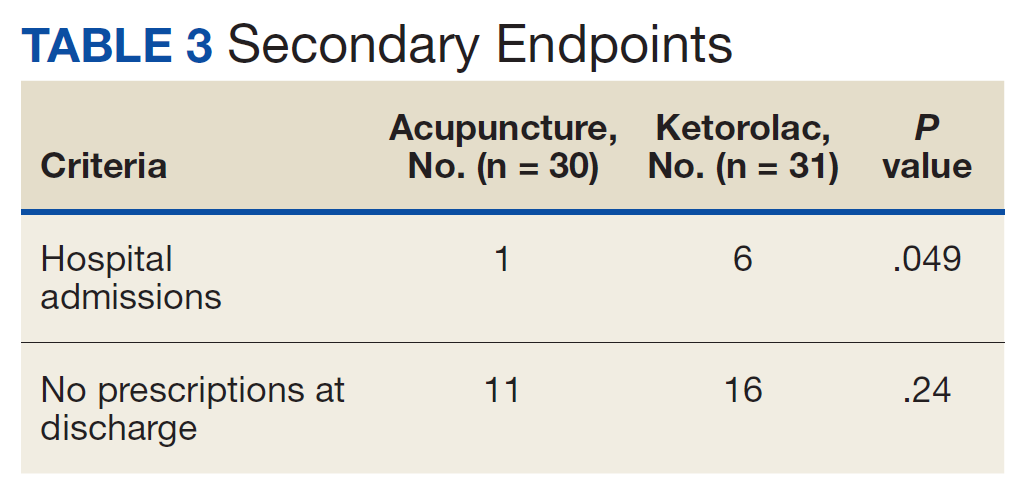
Methods: This study was a retrospective, electronic chart review of patients who presented to JBVAMC ED with acute pain or acute-on-chronic pain and received ketorolac or BFA. The primary endpoint was the mean difference in the numeric rating scale (NRS) pain score from baseline. Secondary endpoints included the number of patients receiving pain medications, including topical analgesics, at discharge and treatment-related adverse events in the ED.
Results: A total of 61 patients were included in the study. Baseline characteristics were similar between the 2 groups except for the average baseline NRS pain score, which was higher in the BFA group (8.7 vs 7.7; P = .02). The mean difference in NRS pain scores from baseline to postintervention was 3.9 for the BFA group and 5.1 for the ketorolac group. The difference in reducing the NRS pain score between the intervention groups was not statistically significant. No adverse events were observed in either treatment group.
Conclusions: For treating acute and acute-on-chronic pain in the ED, BFA did not differ compared with ketorolac 15 mg in NRS pain score reduction. This study’s results add to the limited existing literature suggesting that both interventions could result in clinically significant reductions in pain scores for patients presenting to the ED with severe and very severe pain, indicating BFA could be a viable nonpharmacologic treatment option.
Results
Sixty-one patients received BFA during the study period: 31 were excluded (26 received adjunct treatment in the ED, 2 had active cancer documented, 2 had an indication other than pain, and 1 received BFA outside of the ED), leaving 30 patients in the BFA cohort. During the study period, 1299 patients received ketorolac.
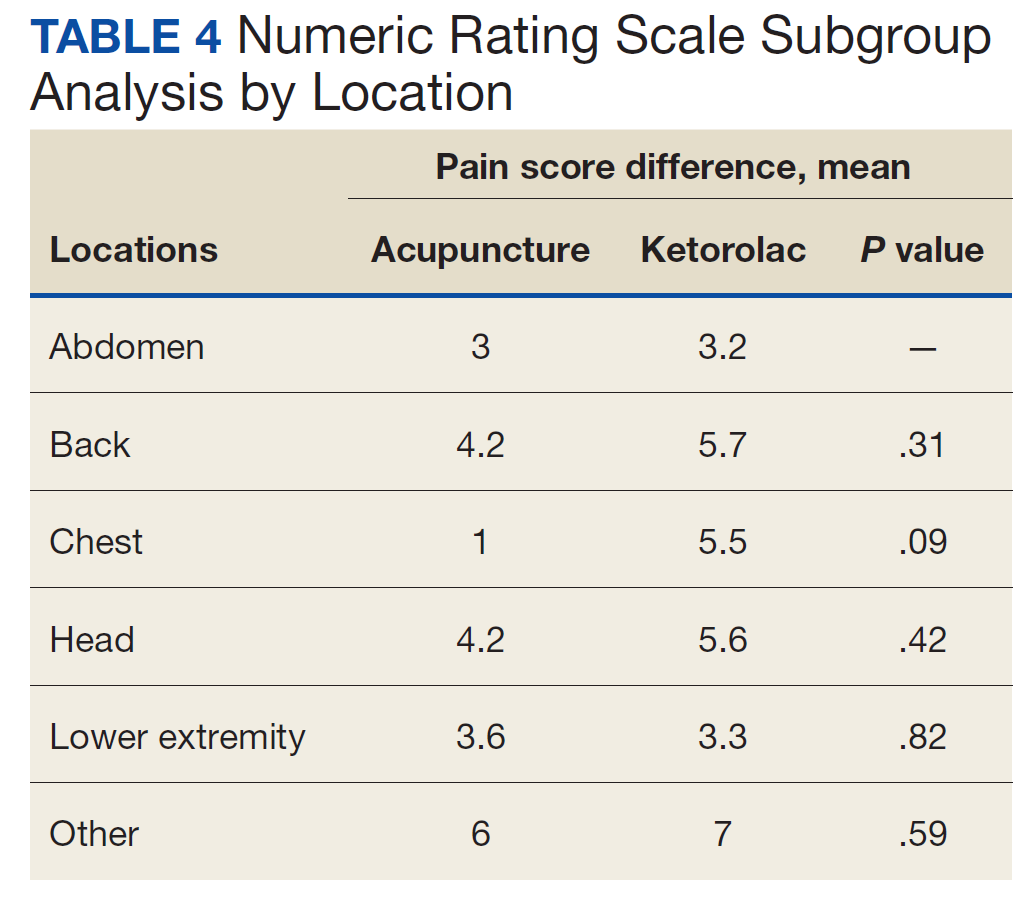
Baseline characteristics were similar between the 2 groups except for the average baseline NRS pain score, which was statistically significantly higher in the BFA vs ketorolac group (8.7 vs 7.7, respectively; P = .02). The mean age was 51 years in the BFA group and 48 years in the ketorolac group. Most patients in each cohort were male: 80% in the BFA group and 71% in the ketorolac group. The most common types of pain documented as the chief ED presentation included back, lower extremity, and head. 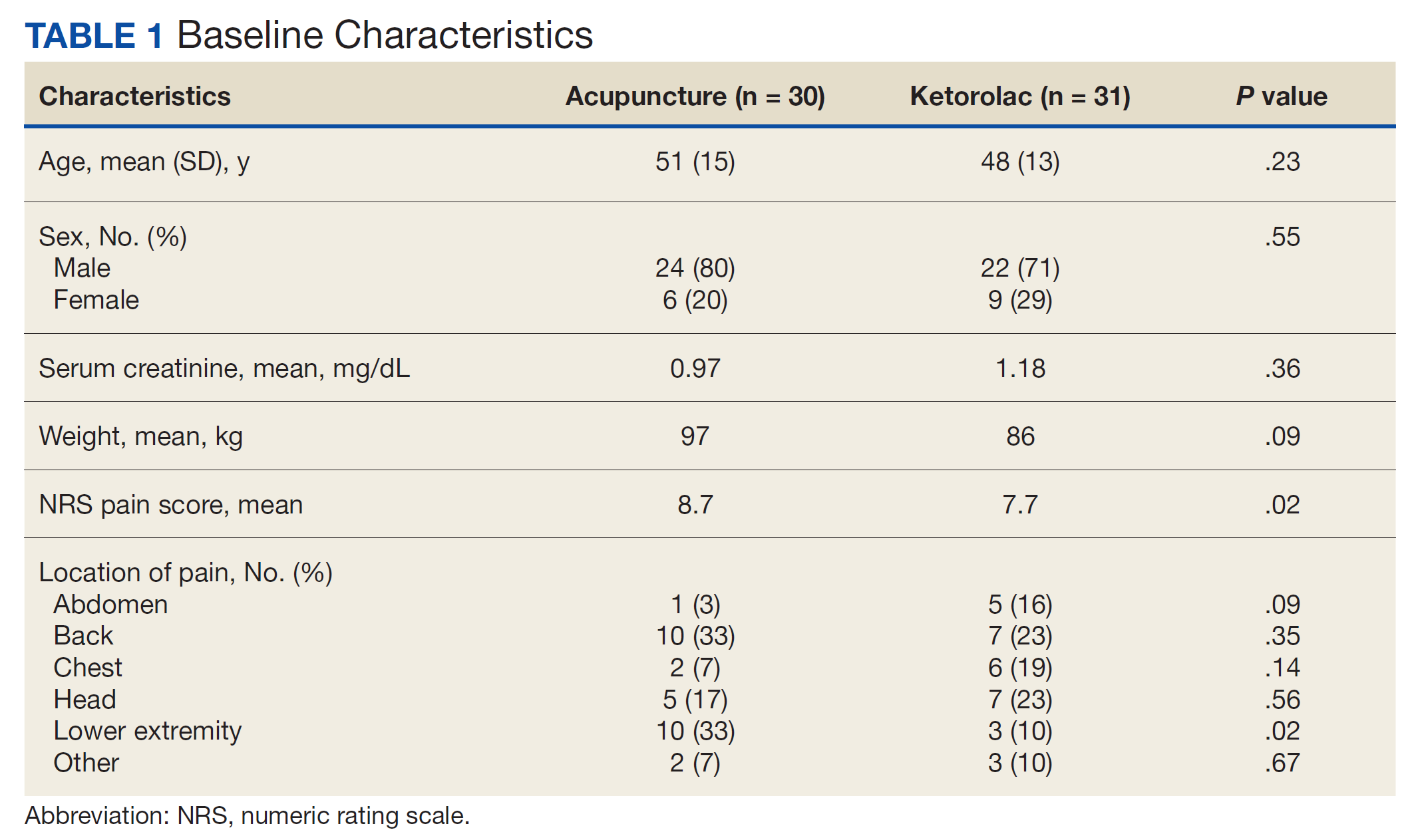
Endpoints
The mean difference in NRS pain score was 3.9 for the BFA group and 5.1 for the ketorolac group. Both were clinically and statistically significant reductions (P = .03 and P < .01), but the difference between the intervention groups in NRS score reduction was not statistically significant (P = .07).
For the secondary endpoint of outpatient prescriptions written at discharge, there was no significant difference between the groups except for oral NSAIDs, which were more likely to be prescribed to patients who received ketorolac (P = .01). 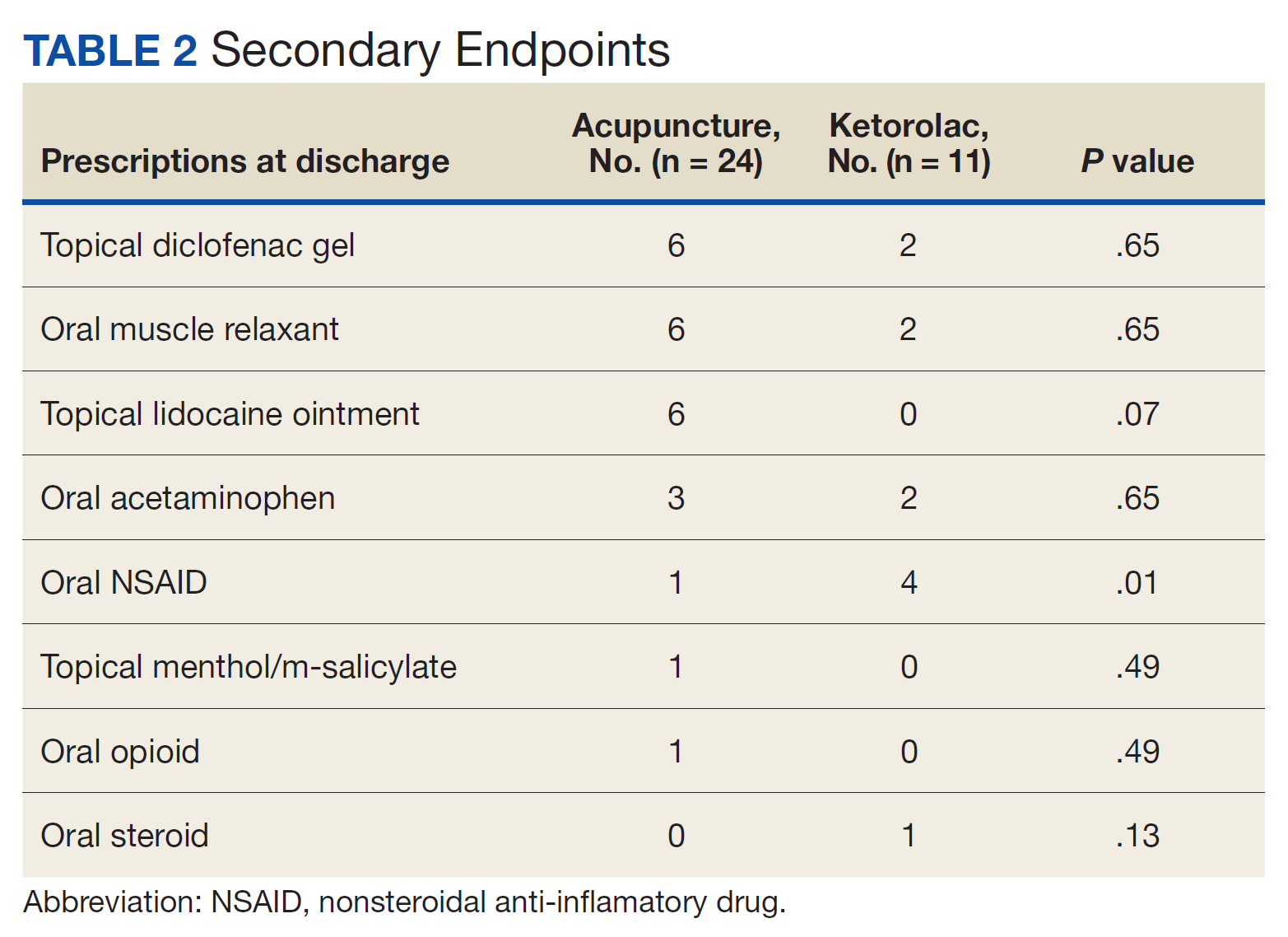
Subgroup Analysis
An analysis was performed for subgroups classified by baseline NRS pain score (mild: 4; moderate, 5 - 6; severe, 7 - 9; and very severe, 10). Data for mild pain was limited because a small number of patients received interventions. For moderate pain, the mean difference in NRS pain score for BFA and ketorolac was 3.5 and 3.8, respectively; for severe pain, 3.4 and 5.3; and for very severe pain, 4.6 and 6.4. There was a larger difference in the preintervention and postintervention NRS pain scores within severe pain and very severe pain groups. 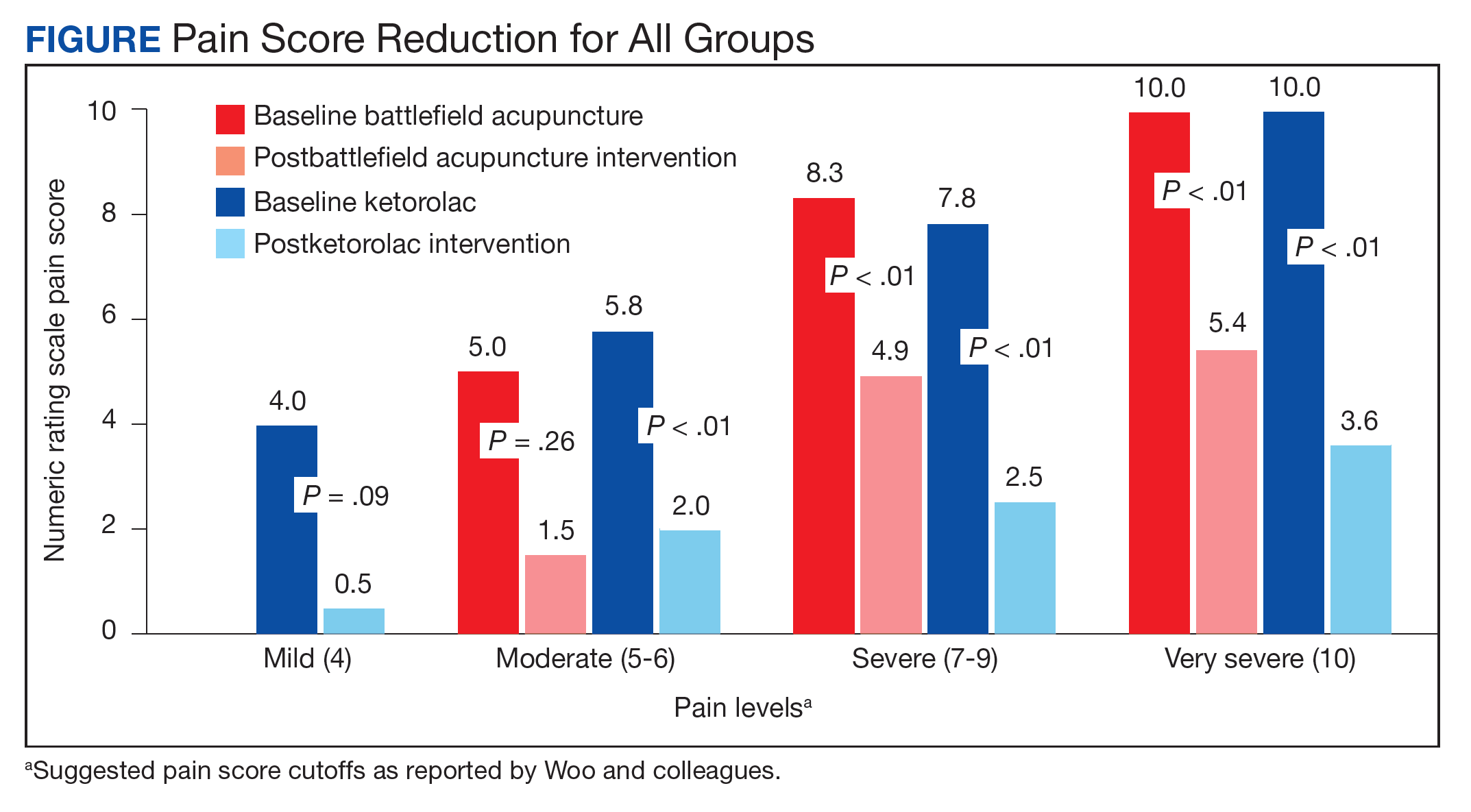
Discussion
Both interventions resulted in a significant reduction in the mean NRS pain score of about 4 to 5 points within their group, and BFA resulted in a similar NRS pain score reduction compared with ketorolac 15 mg. Because the baseline NRS pain scores were significantly different between the BFA and ketorolac groups,


