A Transdisciplinary Program for Care of Veterans With Neurocognitive Disorders


Background: Veterans face specific risk factors for neurocognitive disorders. Providing them with comprehensive care for dementia and related neurocognitive disorders is a challenge as the population ages. There is a need for family-centered interventions, specialized expertise, and collaboration among clinicians and caregivers. The literature suggests that application of a transdisciplinary care model can address these needs and provide effective dementia care.
Observations: The Veterans Affairs Greater Los Angeles Healthcare System has employed existing expertise to create a conference-centered transdisciplinary model that responds to the US Department of Veterans Affairs directive for a dementia system of care. This model involves direct participation of behavioral neurology, geriatric psychiatry, geriatrics, neuropsychology, nursing, and social work. In this model, the social worker serves as a dementia care manager and, along with the nurse specialist, assures long-term management through follow-up and monitoring. Transdisciplinary interactions occur in a clinical case conference where each discipline contributes to the veteran’s care. The team generates a final report on treating these veterans, the caregiver’s needs, referral for psychosocial services, and plans for monitoring and follow-up.
Conclusions: This model could be a template of a program for implementing the Dementia System of Care across Veteran Affairs medical centers.
Procedures
Before the office visit, the coordinating geriatric psychiatrist triages veterans to neurology, psychiatry, or geriatric physicians based on the clinical presentation, history of neurologic signs or symptoms, BPSD or psychiatric history, functional decline, or comorbid medical illnesses. Although veterans often have overlapping concerns, the triage process aims to coordinate the intake evaluations with the most indicated and available specialist with the intention to notify the other specialists during the transdisciplinary conference.
Referrals to the program occur from many sources, notably from primary care (70.8%), mental health (16.7%), and specialty clinics (12.5%). The clinic also receives referrals from the affiliated Veterans Cognitive Assessment and Management Program, which provides dementia evaluation and support via telehealth screening. This VAGLAHS program services a diverse population of veterans: 87% male; 43% aged > 65 years (75% in our clinic); 51% non-Hispanic White; 19% non-Hispanic African American; 16% Hispanic; 4% Asian; and 1% Native American. This population receives care at regional VA medical centers and community-based outpatient clinics over a wide geographic service area.
The initial standardized assessments by intake or lead physicians includes mental status screening with the Montreal Cognitive Assessment (with certified clinicians), the Neurobehavioral Status Examination for a more detailed assessment of cognitive domains, the Columbia-Suicide Severity Rating Scale, the Patient Health Questionnaire for depression screening, and assessment for impairments in instrumental or basic activities of daily living. This initial evaluation aims to apply clinical guidelines and diagnostic criteria for the differential diagnosis of neurocognitive disorders, determine eligibility for cognitive-enhancing medications and techniques, assess for BPSD and the need for nonpharmacologic or pharmacologic interventions, determine functional status, and evaluate the need for supervision, safety concerns, and evidence of neglect or abuse.
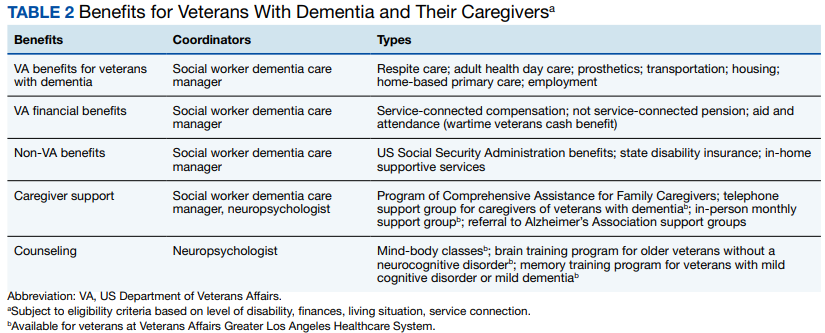
As part of its mission, the clinic is charged with implementing the VA Dementia System of Care (DSOC). The stated goals of the DSOC are to provide individualized person-centered dementia care to help veterans experiencing dementia and their caregivers maintain a positive and optimal quality of life and create an environment where VA medical center staff understand the health care needs of veterans with dementia and their caregivers’ role. As part of this initiative, the clinic includes (1) coordination of care through a SW-DCM; (2)