
Itchy perianal erythema



This young patient had a perianal rash that did not respond to topical clotrimazole. What is your diagnosis?
Diagnosis: Perianal streptococcal dermatitis
A rapid strep test of the perianal lesion was positive, confirming the diagnosis of perianal streptococcal dermatitis (FIGURE 2). Perianal streptococcal dermatitis typically presents as a bright red, moist, sharply demarcated perianal rash. Itching, rectal pain, and blood-streaked stools are common.
Mucoid or serosanguinous oozing from the affected area can also occur. Less commonly, a patient may have perianal swelling, tenesmus, constipation, and anal fissures. Patients with perianal streptococcal dermatitis are afebrile and show no systemic signs of infection.
FIGURE 2
Rapid stress tests for the pharyngeal and perianal areas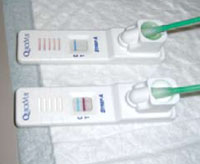
A common condition in children
Perianal streptococcal dermatitis occurs mostly in children between 6 months and 10 years of age, although cases in adults have been reported.1 The incidence in pediatric practices ranges from 1 in 200 to 1 in 2000, with a male to female ratio between 2:1 and 3:1.1 Transmission to family members and contacts in daycare settings have been reported.1,2


