
Hiren Shah M.D., MBA – QI is the tool of choice for thrombosis prevention


Medical director, Medicine and Cardiac Telemetry Hospitalist Unit, Northwestern Memorial Hospital
National chair, Clinician Intervention Committee for ACP’s Initiative on Atrial Fibrillation and Stroke Prevention
Director, Society of Hospital Medicine’s National Atrial Fibrillation Initiative
Trend to watch: Promoting stroke and bleed risk assessment at the time of admission or discharge
Dr. Hiren Shah, one of the first academic hospitalists at Northwestern Memorial Hospital in Chicago, began his career with a focus on improving hospital systems through quality improvement (QI) projects. Many of his efforts have focused on preventing deep vein thrombosis and pulmonary embolism in hospitalized patients. His push to standardize prophylaxis protocols, add medication reminders to the computer-based order entry system, and initiate QI driven cultural change led to a substantial decrease in Northwestern’s postoperative VTE rate.
He has now focused his efforts on another thrombosis-related clinical condition, namely preventing thrombotic stroke in atrial fibrillation. Dr. Shah serves as national chair of the clinician committee for the American College of Physicians’ Initiative on Atrial Fibrillation and Stroke Prevention and is the director for the Society of Hospital Medicine’s national atrial fibrillation initiative. Also, he recently joined the advisory board of Hospitalist News.
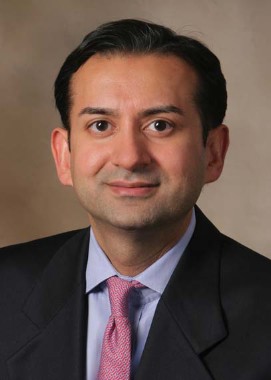
In an interview with Hospitalist News, Dr. Shah explained why hospitalists don’t always begin recommended anticoagulation therapy in atrial fibrillation patients.
Question: As many as 50% of atrial fibrillation patients don’t get evidence-based anticoagulation therapy. Why?
Dr. Shah: It’s quite amazing that there is this substantial quality gap. The reasons are multifactorial. There may be an education gap as it relates to understanding the risk of stroke, which is fivefold higher in atrial fibrillation, and with the risk of bleeding from anticoagulants. Studies show that clinicians overestimate bleeding risk and underestimate stroke risk. So unless you do objective stroke and bleeding scores, this balance may be estimated in the wrong direction and the anticoagulation gap may continue. Through our efforts, we are educating clinicians to use tools such as CHADS2 Score for Atrial Fibrillation Stroke Risk and the HAS-BLED index. But most importantly, we need to address systems change to ensure that their use is incorporated seamlessly into the work flow of clinicians.
Question: How can we improve systems to ensure that anticoagulation is started?
Dr. Shah: Our efforts in this area are focused on changing systems to provide reminders to do an assessment. Hospitalists should be triggered to do a stroke and bleed risk assessment when patients are admitted or at the time of discharge. The EMR can be leveraged in this process and protocols can be developed for paper-based hospitals. One big challenge will be to ensure that hospital ordering systems can identify patients who have atrial fibrillation to allow for a reminder alert to appear.
Through SHM’s initiative on stroke prevention, we have written a soon-to-be published health system guide to provide hospitals with the tools to make this kind of systems change. We will also have an upcoming AF QI resource room within the SHM website. Future projects will include helping hospitals develop unit-based QI efforts through mentored implementation that leverage the entire interdisciplinary team. On the outpatient side, we have developed a scoring sheet using CHADS2 and the outpatient OBRI bleed index that was mailed to many ACP members.
Question: What do hospitalists need to know about using new anticoagulation medications?
Dr. Shah: Quite a lot. The choice on anticoagulation in the past was only warfarin, but now there are three novel anticoagulants that have been approved for the use of stroke prevention in atrial fibrillation. The inclusion criteria and study design for trials of the novel agents were all different and the efficacy and safety outcomes require some time to grasp. Since patient characteristics are different, it is important to understand these trials in the context of your particular patient when choosing a novel agent.
On the plus side, these new agents do not require injections to start as a bridge to oral treatment, do not need drug-level monitoring, and have very few drug-drug interactions in relation to warfarin. Oral use also expedites discharge from the hospital. In many cases, patients who present to the emergency department can be safely discharged without admission, and the complex care coordination needed when warfarin with parenteral therapy is started will not be needed with the oral agents. Oral drugs also lead to improved patient compliance.
Question: Do you think most hospitalists take atrial fibrillation seriously enough as a risk factor for stroke?
Dr. Shah: Hospitalists do feel that this issue is serious and believe that they evaluate patients for stroke risk most of the time. Unfortunately, the ultimate result is that we have 50%-60% of patients who don’t receive anticoagulation when they qualify for it.
Interestingly, when you look at some studies, it indicates that clinicians say that they discuss the issue of stroke prevention 90% of the time, but patients in those same studies indicate that they discussed it less than 33% of the time. Part of the disconnect may be because despite the fact that they perform a stroke assessment, they don’t act on that information. For one, they may not have the time to talk to the patient. You need to discuss their stroke and potential bleed risk since anytime you use anticoagulation, adverse events can occur. So the patient’s values and involvement in the decision making is quite important, but it’s also time intensive.

