
Commentary: Defining Professionalism


"Oh, Dr. Powell, you don't want to come to this," she said. I turned to look at the resident behind me as I held the door to the auditorium open for her. We were walking into a noon conference, mostly aimed at the residents but occasionally visited by attendings. She recognized me as a new attending at that academic center. But she could not have known anything about my prior activities elsewhere with various committees on medical ethics, health law, and ACGME (Accreditation Council for Graduate Medical Education) requirements. The title of the noon conference, "Professionalism," had sparked my interest. I'd looked forward to it all week. So I just smiled, shrugged my shoulders, and followed her in.
In 2 decades, I've worked in 13 states and 24 hospitals, the whole gamut from rural solo practice to academic meccas. She had been a resident for only 2 months, but she knew her residency program. She had given me wise counsel. It was not the first time that I've ignored it.
What I listened to was a 50-minute litany of all the unprofessional things residents were not supposed to do. The residency director droned on as I winced and thought of Robert Fulghum's "All I Really Need to Know I Learned in Kindergarten." Great book, and a fun read that would require less time than this noon conference and deliver the same message. I sighed and sank deep into my uncomfortable auditorium chair, figuring that this exercise was legal CYA so that, if a resident misbehaved, the powers that be couldn't be sued by patients or by a resident who was expelled. It’s a product of the "No Child Left Behind" mentality. Count me out.
The mementos on my bookcase didn't come from meeting the minimal standards. I leave remediation of problematic colleagues and pupils to others. Management isn't my forte. I strive to inspire the best to become better and let the rest chase after those examples. My favorite teachers gave that same inspiration to me on a "pay it forward" basis. I am trained in quantitative physiology. I believe that in medical care, nothing truly replaces getting the diagnosis correct and the treatment right. But enveloping that science is professionalism.
Currently, the definition of professionalism that I find most succinct is "doing the right thing in the right manner." It's the stuff beyond the pathophysiology. Some have described it as the art of medicine, although I often find the term "art" used (and misused) to describe many other things, such as tailoring medical care to an individual patient rather than utilizing an evidence-based approach. In medical education, professionalism has been referred to as the hidden curriculum, with elements from law, ethics, and the humanities. It is more than dress and demeanor, although a physician and part-time actor colleague of mine points out that an actor – when she or he puts on a costume and takes on a character – temporarily lives the part. He urges medical students to put on the white coat and "act like a doctor until it is part of your nature." Fake it 'til you make it. That is prudent advice to a third-year medical student, but for an experienced practitioner there is much more for which to strive.
That noon conference poses one of the critical issues of professionalism. Do the codes of a profession define misconduct or aspirations? The Hippocratic Oath contains both. But which emphasis serves society better? Do we focus on the minimal behaviors society expects of physicians (confidentiality, sobriety while working, no sexual advances, and the like) or do we channel the competent, empathic healer dedicated to just access and medical progress?
Is a profession defined by its floor or its dome? Personally, I don't walk into a cathedral to look down at the floor.
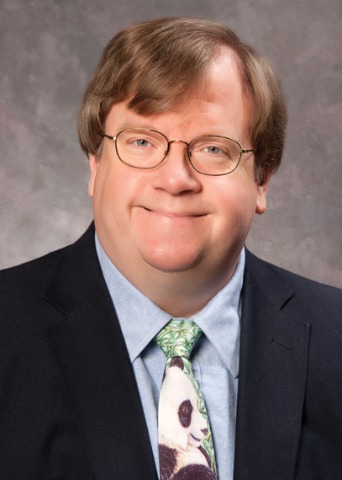
Dr. Powell is associate professor of pediatrics at St. Louis University and a pediatric hospitalist at SSM Cardinal Glennon Children’s Medical Center in St. Louis.