
To the Summit


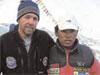
My expedition ended shortly after the Sherpas’ deaths. One cold, windy morning while climbing to the top of the icefall, I noticed something was wrong. My breathing became very labored, and every step took great effort. When I reached the Western Cwm close to Camp One I collapsed, unable to go farther. I knew I was in grave trouble and might not make it out alive. I had pulmonary edema, a condition I knew well from my hospital experience, but in a totally different setting.
Luckily, one of our Sherpas came upon me and assisted me to Camp One. It was a long night, but I survived with the assistance of my teammates and Sherpas. I was already on nifedipine for hypertension and as a prophylactic and acetazolamide (Diamox) and was hypotensive. I took a sildenafil (Viagra; this is not at all funny if you don’t regularly use Viagra), which improved my pulmonary volume status. Sildenafil citrate inhibits cGMP specific phosphodiesterase type-5 in smooth muscle, where it is responsible for degradation of cGMP; it increases cGMP within vascular smooth muscle cells resulting in relaxation and vasodilation, leading to the vasodilation of my pulmonary vascular bed. This was the only type of bed I was thinking about.
I was able to descend to Base Camp the next day and felt better as I went to a lower altitude. But I knew my climb was over. Another team member had a suspected heart condition and was later airlifted off the mountain by helicopter.
The rest of our team was eventually successful, however. The last man standing, Doug Tumminello, a lawyer from Denver, successfully summitted the mountain on May 22. Apa Sherpa also was successful, taking his world record from 15 to 16 summits.
Before returning home I trekked to the village of Thame, Nepal, the home of the deceased Sherpas. I wanted to pay my respects to their families and friends.
Being a hospitalist suits my lifestyle very well. Now I do a good job of working hard and playing hard. The ability to play hard has allowed me to work even harder and to keep my passion for medicine alive.
Now when I have a patient in pulmonary edema—whatever the cause—I have a greater understanding of the sensation and discomfort of dyspnea and the limitations of the human body. Despite not summitting, I would not have missed the ride for the world. I have no desire to climb Everest again, but hope to continue climbing for many years to come. TH
Dr. Rigsby, Everest climber and grandfather of eight, is a 55-year-old internal medicine physician. He is a practicing hospitalist at Memorial Hospital in Chattanooga, Tenn., and a consultant for Eagle Hospitalists in Atlanta.

