
Hospitalist Down Under


A Few Things I Have No Answer For
I have yet to admit someone with alcohol withdrawal—this in a country with a higher per capita alcohol consumption. I have yet to order a PCA pump for a medical patient. Low-back pain is managed by surgery, and a pneumothorax goes to the medical service. There is no Pyxis equivalent, just an open cupboard in the ICU where the meds are kept. There is no separate page for physician orders; the staff is expected to read the notes. In an old physical plant such as Whakatane, there are no private bathrooms for patients—it’s down the hall. Oh, and it’s four patients to a room, with no television, no Internet, and no telephone. There are plans for a new hospital in a few years’ time.
Culturally, the patients and their families are more accepting of the fragile nature of old age, with a strong desire to avoid unnecessary interventions at the end of life. There is a robust community hospice program that helps patients remain comfortable at home. As a local colleague of mine explains, the Kiwis are uniformly grateful for the care they receive, even if it means sharing a room with another patient (or three).
Final Observations
Healthcare delivery in New Zealand is different from what we see in the U.S. Obviously, the vast majority of healthcare delivered in New Zealand is through the public sector. No matter which direction U.S. healthcare reform goes next, it’s highly improbable it will ever resemble New Zealand’s system.
One quote that resonates comes from the medical practice handbook, which is given to all newly registered physicians in New Zealand: “Doctors have a responsibility to the community to foster the proper use of resources—in particular, by making efforts to use resources efficiently, consistent with good patient care.”4 It’s sound advice.
Changes are coming, and hospitalists everywhere are in a unique position to gain knowledge and lead the change. In the U.S. or in New Zealand, as a hospitalist or a physician consultant, medicine is a fascinating field of practice.
I hope you enjoyed reading about one hospitalist’s observations from New Zealand. Time for tea. TH
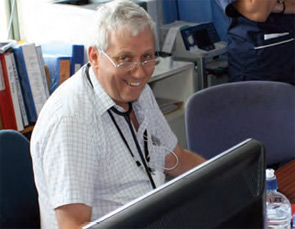
M-A Williams has been a practicing hospitalist in Denver since 1999. He worked with the same company (Inpatient Services, which then merged with Sound Physicians) for 11 years until departing for New Zealand. He is a member of Team Hospitalist.
References
- Organisation for Economic Cooperation and Development website. Available at: www.oecd.org. Accessed Dec. 31, 2010.
- The United Nations Statistical Division website. Available at: https://unstats.un.org/unsd/default.htm. Accessed Jan. 4, 2011.
- Ashton T, Marshall RM. The organization and financing of dialysis and kidney transplantation services in New Zealand. Int J Healthcare Finance and Econ. 2007;7:233-252.
- Cole’s Medical Practice in New Zealand (2009). Ed., Ian St. George. Medical Council of New Zealand: Wellington:18.
New Zealand Fast Facts
Demographics
- New Zealand pop.: 4.3 million
- Capital: Wellington
- Largest city: Auckland, 1.4 million pop.
- Whakatane District pop.: 32,814
- Ohope Beach pop.: 2,760
Information
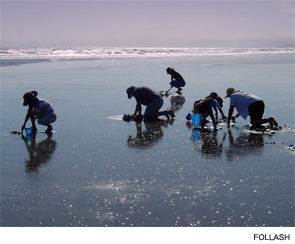
- Whakatane District in the Bay of Plenty features 34 miles of sandy beaches.
- Ohope Beach is a popular vacation spot. White Island, an active volcano offshore, is a world-renowned tourism attraction.
- The kiwi, NZ’s national emblem, is a flightless bird with hair-like feathers and a long, slender bill, which it uses to pull worms and insects out of the ground.
- New Zealanders often refer to themselves as Kiwis, and the term is also used as a short form for the famous kiwi fruit. The NZ dollar is referred to as the kiwi.
- Whakatane summer temperatures average in the 80s, and winter months in the 50s. The district records New Zealand’s high temperature about 55 days a year.
- New Zealand’s seasons are the reverse of the Northern Hemisphere.
Health Stats
- Spending as a percentage of GDP: 8%
- Per capita spending on healthcare: $2,700
- Average life expectancy: 80.2 years (13th in the world)

