
Critical Care Commentary: Hypertonic saline as osmolar therapy?


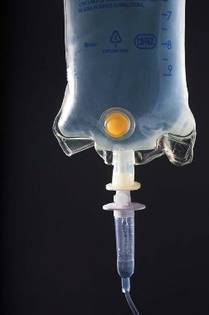
Hypertonic saline (HTS) at various concentrations is used as an osmolar agent to limit edema formation, thereby limiting its clinical consequences. Primarily used in disorders of the central nervous system, its use attempts to diminish tissue or intracellular water accumulation by raising intravascular osmolarity (sodium levels). Traditionally, this was solely used in the treatment of clinically symptomatic hyponatremia, in which the rise in extracellular sodium limits intracellular water accumulation, reversing CNS symptoms related to neuronal cell swelling.
The osmolar effects of HTS have also been utilized in trauma resuscitation, where given as bolus administration, it can rapidly expand intravascular volume by drawing from the extravascular compartments.
Physiology
The essential idea of osmolar therapy is that water will follow an osmolar concentration gradient if separated by an intact semipermeable membrane (Ropper et al. N Engl J Med. 2012: 367[8]:746). This works well in the treatment of certain disorders and less so in others. Indeed, it is clear that acute increases in tonicity have effects on alleviating tissue edema, most notably in the administration of mannitol. By lowering brain edema, mannitol lowers intracranial pressure, thus improving the neurologic findings (Bratton et al. J Neurotrauma. 2007;24 Suppl 1:S14-20). However, acute changes in osmolarity can also worsen conditions as seen when patients with renal failure and CNS injury undergo dialysis or in overly aggressive treatment of patients with hyponatremia. In such patients, slow gradual dialysis and implied gradual changes in volume and osmolarity are safer. Similarly, in patients with hyponatremia, a gradual rise in serum sodium is often prudent.
It is safe to say that as in most medical-clinical areas, there are few large controlled trials looking at HTS benefits. Specifically, the use of HTS has been examined in the following conditions: severe hyponatremia, elevated intracranial pressure, burn victims, and trauma resuscitation.
Hyponatremia
In syndrome of inappropriate antidiuretic hormone secretion (SIADH) or any symptomatic hyponatremic presentations, the goal is to quickly raise the sodium and hence the osmolarity of the extracellular space to achieve a gradient allowing intracellular water to equilibrate. The normalization of cellular volume and water prompts the normalization of neuron function and the patient’s symptoms.
In symptomatic patients there is an initial "bolus" over 10 minutes of HTS (3 mmol/kg body weight), followed by infusion. HTS at a low concentration (3%) is continuously infused to reach a precalculated sodium level that only approaches normal with frequent monitoring of serum sodium levels. The process works well providing that the (rise) return of the serum sodium is not too quick or overdone. Proper monitoring is essential since rapid correction can potentiate central pontine myelinolysis. Fluid restriction, change in medications, and/or treating the underlying cause are the other interventions.
Emergency resuscitation in trauma
The trauma literature has suggested that at high concentrations of HTS can be beneficial in the initial resuscitation of hypovolemic trauma patients (Patanwala et al. Am J Health-Syst Pharm. 2010;67[22]:1920). When used as a bolus, and not continuously, it may provide an initial boost in intravascular volume by drawing from extravascular "reserves," for example, from tissue and intracellular spaces. Bolus doses in the literature have ranged from 7.5% to 20%, 100 to 30 mL, respectively. This may buy valuable minutes while standard crystalloid resuscitation is provided.
However, the literature, as yet, has not supported any benefit over saline.
Though there are studies touting mortality benefits, a Cochrane review concluded that hypertonic crystalloids were no better than isotonic or near-isotonic crystalloids for fluid resuscitation in trauma patients (Bunn et al. Cochrane Database Syst Rev. 2004;3:CD002045). In fairness, many of the studies administered their HTS with dextran, and the latter has since been shown to have complications such as renal failure. In those studies showing benefit, HTS appeared to improve survival in those with Glasgow Coma Scale scores of <8 or MAP <70 mm Hg.
At this point, the evidence does not support HTS providing any additional benefit over isotonic crystalloid solutions in trauma.
Burns
Use of HTS in patients with burn injury has been shown to decrease the volume required for resuscitation. Unfortunately, in one prospective study, results indicated that HTS increased rates of renal failure (40% vs 10.1%, P less than .001) and mortality (53.8% vs 26.6%, P less than .001) as compared with those patients who did not receive HTS (Huang et al. Ann Surg. 1995;221[5]:543). At this stage, guidelines from the American Burn Association have suggested that HTS may be used for burn shock resuscitation by experienced providers with close monitoring to avoid excessive hypernatremia.

