
Children's Hospitalist


Dr. Calhoun joined the hospitalist group early on. Having practiced pediatric emergency medicine for eight years in Wisconsin, she interviewed for a similar position at CHCC but chose the nascent hospitalist program instead. “It was a very large hospital, and I saw huge growth potential for hospitalists,” she says. “There weren’t many rules, and I knew we’d create a niche for ourselves.”
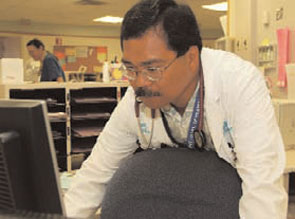
Ralph Diaz, MD, joined the group in 2000. Two years later, he became Children’s Hospital Medical Group’s medical director, dealing with quality issues, patient safety, and revenue enhancement. He even mediates disputes between doctors for the 80-person multi-specialty group. Despite a dual workload as hospitalist and administrator, Dr. Diaz loves his job. “It’s what gets me up in the morning,” he says. “The acuity of illness of the children we treat and the fact that we see everyone—from a yuppie family in one room … to migrant farm workers in another—is exciting.”
“When 70 percent of your revenue comes from the government, you’ve got to be efficient, because you don’t have market leverage with the payers,” says Maxwell. “Hospitalists can be a hugely powerful force in improving efficiency because they’re in a unique position to observe what goes on in the hospital and how to fix it.”
But hospitalists don’t automatically improve efficiency and the hospital’s bottom line. “Many hospitalist programs start for the attending physicians’ convenience, which only adds another layer of costs,” he says. “Hospitalists need reflection time to harness their power and focus on efficiencies. If the hospital medicine department is understaffed and hospitalists struggle through long days, it’s hard for them to focus on bottom line issues.”—MP


Paramount Efficiency
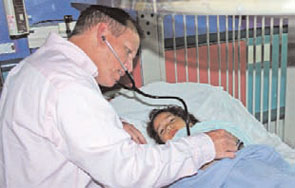
CHCC’s hospitalist program isn’t an admitting service for community physicians’ convenience. It deals with very sick children, lean and mean reimbursement, $20 million annually in uncompensated care, and little to no financial margin of error. With 70% of its patients funded by Medi-Cal and others uninsured, the hospitalist program, says Todd Suntrapak, the hospital’s COO, needs to be lean and efficient and must retain stellar doctors. “Our population is medically underserved, reimbursements don’t always cover our costs, and we deliver millions of dollars of uncompensated care,” says Suntrapak. “Our hospitalists continue to elevate the quality of care with clinical pathways for over 25 conditions and are constantly improving efficiency.”

