
Assimilating Simulation in Surgical Training: Dainty Morsels or Pig in a Python?


But Does It Work?
Dr. Lumsden’s position, and that of all strong proponents of simulation, was called into question in the Vascular Annual Meeting debate by Dr. Makaroun of the University of Pittsburgh Medical Center, who stated that it is a waste of time and money.
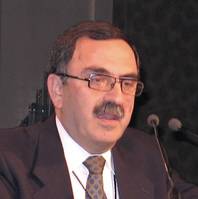
"Simulation makes sense. ... It is safe and can’t hurt patients, it should improve education and learning, and it should improve clinical performance; it should help in the evaluation of competency. ... It has already been adopted by everybody ... and everywhere I look, simulation is there," he acknowledged. However, he said, "it is crucial that we recognize that the success of the flight simulator [the example always touted as a key triumph for simulation] does not translate well in simulating everything – in particular, not in highly complex, highly indeterminate situations such as human biology and behavior."
For effective simulation, he stated, you need an effective teacher, you need repetition, you need to measure the performance and get feedback, and thus you need the accessibility of local simulation facilities – meaning hundreds, if not thousands, of simulators nationwide.
Major simulation centers have cost between $20 million and $40 million to build, and the simulators in those facilities can cost in the hundreds of thousands of dollars, he added. Perhaps the priciest commodity of all is the time of a faculty trainer, he suggested.
Dr. Makaroun complained that industry is actively promoting this entire area and that the ultimate price tag is in the billions. So the case against simulation is that it is too expensive.
"So far, there is absolutely no data to indicate that it has improved the surgical skills of graduates who trained on simulators vs. those who did not," said Dr. Makaroun. There are also "absolutely no data" indicating a link between simulator use and improved patient outcomes and safety.
In fact, he said, most simulator studies being reported in the literature simply show that somebody who practiced a task on a simulator was better at doing that same task on the simulator after practice than before. "Are we really surprised that vascular residents can learn something after 2 days?" he asked. Studies are needed to assess whether surgeons trained on simulators performed actual procedures better at 6 months after training than did those who had received standard training.
Some general surgery residents also are still conflicted about the value of simulation training. In the in-depth survey cited above, 25 general surgery residents, all of whom were exposed to simulation training at the Texas A&M Health Science Center College of Medicine, were almost equally divided as to whether "ACGME should require a simulation curriculum in surgery residency" (52.1%, yes; 47.8%, no). Further questioning elicited concerns about whether there was any evidence of efficacy of simulation in surgical residency training beyond the traditional approach, and how simulation could not replace "real experience" on patients.
So, despite the growing consensus that simulation has a role in surgical education and training, there is less consensus as to how to evaluate the effectiveness (if any) of such training when the rubber (or plastic model) meets the operating room.

And if effectiveness cannot be proven, how can the tremendous investments in technology, time, and facilities be justified?
What Next?
In the end, the problems of cost, level, and effectiveness of simulation remain to be resolved. "Unfortunately, the promise of patient-specific, high-fidelity, virtual reality vascular surgical simulation remains largely unfulfilled due to the enormous development costs and the computational complexity associated with mimicking the response of tissue to deformation," Dr. Eidt said during his presidential address at the annual meeting of the Southern Association for Vascular Surgery (J. Vasc. Surg. 2012;55:1801-9).
He added that "low-fidelity, low-cost simulation is effective for teaching basic surgical skills such as suturing or knot-tying, or the sequence of steps in an operation to novice surgeons, but is remarkably ineffective for advanced learners where fidelity is critical."
Dainty morsels may apply for early trainees, but are pig-in-a-python meals required for the more advanced?
The lines are drawn, with seemingly the majority of educators, government regulators, and the general public convinced that the logic of simulators is undeniable, and that enough data from fields outside of surgery exist to justify the wide adoption of simulators in surgical training.

