
After Tornado, Joplin Rebuilds Stronger Than Before


When the catastrophic EF5 tornado hit Joplin, Mo., on that late Sunday afternoon of May 22, 2011, the paper records and x-rays from St. John's Hospital were scattered across nearby counties like ticker-tape confetti.
The building was unusable and the power system and generators were destroyed, but the hospital’s IT network connection, with access to its newly minted electronic medical record system, was miraculously still working.
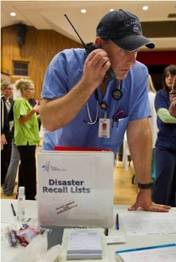
"We’d only gone live with the system on May 1, which in hindsight turns out to be a blessing because when all of the patients that were in our facility – 183 inpatients and 24 patients in the emergency department – were transferred to other facilities, they were able to access their records," said emergency physician Dr. Sean Smith, president of Mercy Clinic–Joplin.
Records were subsequently printed off-site and faxed or sent by courier to other hospitals. If patients went to a sister facility in the Mercy Health network, their new physicians had immediate access to everything from medication and allergy information to history and physical examination records. "Everything was seamless, as if they’d been at that facility all along," he said.
The Joplin tornado destroyed some 8,000 structures in the area and was the first direct hit by a tornado on an acute care hospital in this country. In late January, demolition began on the building that had been St. John’s Hospital since 1968, along with three medical office buildings and a rehabilitation facility across 47 acres. An emotional groundbreaking was also held that month for a permanent 600,000-square-foot, 327-bed hospital on 100 acres about 3 miles south of the old hospital, slated for completion in early 2015.
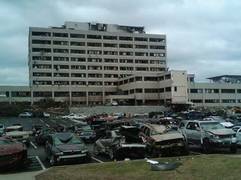
St. John’s, now known simply as Mercy-Joplin, has gone through several incarnations over the last year, including a MASH unit, a prefabricated modular hospital, and a 150,000-square-foot component hospital that just opened its doors in April, according to Mercy president and CEO Lynn Britton. The new component facility contains a full-service emergency department and is stronger than the old building, with glass that can withstand 200-mph winds.
"One thing we definitely learned is the power of the electronic medical record in this kind of situation," Mr. Britton said, but much of the credit for maintaining continuity of care lay in the resilience and dedication of the health care providers who worked 48-72 hours without stopping after the disaster, he added.
Quick thinking during triage sent patients with complex medication regimens to a Mercy facility where their records could be instantly accessed, while others were sent to facilities across the region. Within 90 minutes, a command center was set up at Joplin Memorial Hall, and within 12 hours, a portable hospital was in place and stocked with two large truckloads of supplies delivered through Mercy’s independent supply chain. Within 48 hours, arrangements had been made to have CT scanners set up in the parking lot of Memorial Hall, Dr. Smith said.
"A lot of that is due to the fact that we’re part of a larger organization," he said. "If we had been a solitary, independent hospital in Middle America, I don’t think we would have had that level of infrastructure to support our services."
That scale also allowed Mercy Health – the eighth largest Catholic health care system in the United States, with 31 hospitals – to make a promise that none of the 2,200 employees in Joplin would lose their jobs. At an annual payroll of $120 million, it was a hefty commitment.*

"The reason we did it was a lesson learned from [Hurricane] Katrina," Mr. Britton said. "When the health care systems couldn’t or didn’t make that commitment, medical professionals not only needed income, but also had to continue to practice their skills or they lose competency, so they had to seek a place to practice. I didn’t want the medical community in Joplin to lose their competencies or disband."
The decision was also important to the economy of Joplin, a city of 50,000 and a regional hub for Kansas, Oklahoma, Missouri, and Arkansas that swells to 250,000 people during the workday. Mercy and nearby Freeman Health System are two of the big economic drivers, and without Mercy, it’s unlikely that Joplin could have recovered economically, Mr. Britton said, adding, "It didn’t make sense to take the money and run."
Although Mercy is maintaining much of its patient care, some services such as obstetrics and elective or emergent cardiac surgery have been off-line for most of the past year. Hospitals and health care providers throughout the region have had to increase services following the disaster, albeit without the same bolus of disaster funding or resources as Mercy had.

