
Polly can make you sick: Pet bird-associated diseases


ABSTRACTPet birds can harbor diseases that can be transmitted to their owners. This review describes the presentation, evaluation, and basic treatment of infectious syndromes caused by these bacterial, viral, protozoal, fungal, and parasitic zoonoses.
KEY POINTS
- Most cases of pet bird-associated illness are asymptomatic or self-limited.
- Transmission to humans occurs predominantly via inhalation or ingestion of infected or contaminated material. Prevention of human infection largely depends on proper hygiene and sanitation.
- Bird-associated diseases that present with influenzalike or pulmonary symptoms include psittacosis, influenza, histoplasmosis, Newcastle disease, Q fever, West Nile virus fever or encephalitis, and allergic alveolitis.
- Diseases presenting with gastrointestinal symptoms include salmonellosis, campylobacteriosis, and giardiasis.
- Diseases presenting with cutaneous symptoms include pasteurellosis, erysipeloid, cryptococcosis, avian mite dermatitis, and nontuberculous mycobacteriosis.
Histoplasmosis
Histoplasma capsulatum is a fungus that colonizes the gastrointestinal tract of birds and contaminates the soil via bird and bat droppings. The most highly endemic regions of the world are the Ohio and Mississippi River valleys. Typical pet birds such as canaries and parrots are not susceptible to symptomatic infection, but doves and pigeons (often treated as pets by bird-lovers) may become colonized if they contact contaminated birds or excreta (R. Stevenson, personal communication, 2007).5,18
Humans commonly acquire the organisms when they inhale disrupted soil contaminated with the organism. Human-to-human transmission has not been reported.
The degree of human illness depends on the inoculum size and the immunity of the person infected. In more than 90% of cases, the primary infection is minimally symptomatic or goes unnoticed. The typical incubation time is 7 to 21 days. In patients who become ill, symptoms include fever, chills, headache, nonproductive cough, and adenopathy-mediated chest pain. Disseminated disease generally occurs in immunocompromised patients and presents with fever, weight loss, hepatosplenomegaly, and pancytopenia.18
Newcastle disease (avian pneumoencephalitis)
The virus that causes Newcastle disease, avian paramyxovirus 1, can affect animals, reptiles, birds, and people. It is most common in wild birds, but parrots are also highly susceptible and can be reservoirs that continue to shed the virus for up to 12 months after the acute illness has subsided. Illegally imported Amazon parrots are the most likely source of infection for US households. The virus is spread through an infected bird’s feces and secretions from the nose, mouth, and eyes and can be carried on a person’s clothing, footwear, and equipment.
Some infected birds show no signs of it; others have respiratory signs, green diarrhea, muscle tremors, circling, paralysis, or swelling of tissues around the eyes and neck. The mortality rate in infected birds can be up to 100%.19
Human infection most often results in conjunctivitis. Chills, fever, and lethargy are exceptionally rare.15 Because the virus is prevalent in poultry, poultry workers are at greatest risk of infection. Rapid recovery in humans is common. People with conjunctivitis due to Newcastle disease virus should avoid contact with birds.2,20
Q fever
Q fever is caused by Coxiella burnetii, a gram-negative pleomorphic bacillus. Ticks and vertebrates (goats, sheep, and, less commonly, birds) are natural reservoirs for the organism. Human infection results from contact with infected animals or inhalation of dust contaminated with infected excreta or placental tissue.2 Birds may harbor the infection in experimental and natural settings.21,22
Symptoms in humans typically include fever, pneumonitis, severe headache, and photophobia. Meningitis, hepatitis, and thromboses are seen in more-severe disease. Infection acquired in pregnancy may lead to prematurity, abortion, or stillbirth.18,21
West Nile fever and West Nile encephalitis
Wild birds such as corvids and raptors harbor the West Nile virus; pet songbirds (passerines) can harbor it as well.23,24 The principal means of transmission of West Nile infection from birds to humans is via a mosquito biting an infected bird and then biting a human. Direct bird-to-human transmission has not been described.18 Infected birds may be asymptomatic or appear ill or reluctant to fly and die of disseminated viral infection.23
The incubation period in humans is generally 3 to 14 days, followed by the sudden onset of fever, malaise, nausea, vomiting, rash, lymphadenopathy, and retro-orbital pain. Neurologic presentations—ataxia, extrapyramidal signs, cranial nerve abnormalities, myelitis, optical neuritis, and seizures—are quite rare and generally occur in the elderly or immunocompromised. Fewer than 1% of affected people develop more-severe disease, such as acute encephalitis, aseptic meningitis, or Guillain-Barré syndrome.25
Allergic alveolitis
Allergic alveolitis (hypersensitivity pneumonitis, parakeet dander pneumoconiosis, pigeon lung disease, bird-breeder’s lung, bird-fancier’s disease) is not a zoonosis; the term describes diffuse parenchymal lung disease caused by repeated exposure to an inhaled allergen.26 However, it should be considered in patients with pulmonary symptoms and bird exposure. Avian proteins are a known trigger.27
Acute allergic alveolitis is clinically indistinguishable from a respiratory infection. It is characterized by the abrupt onset of an intense nonproductive cough, chest tightness, dyspnea, chills, fever, myalgia, and malaise. Symptoms gradually improve over 24 to 48 hours without antigen exposure but recur with repeated exposure.
Subacute illness presents with similar symptoms, which gradually worsen over weeks to months, and it can be indistinguishable from interstitial lung disease. Many patients with chronic allergic alveolitis are suspected of having tuberculosis or fungal pneumonia or receive a misdiagnosis of idiopathic pulmonary fibrosis.
Patients usually have a favorable outcome if the allergen is removed. If exposure continues, irreversible pulmonary fibrosis may develop.28
DISEASES PRESENTING WITH GASTROINTESTINAL SYMPTOMS
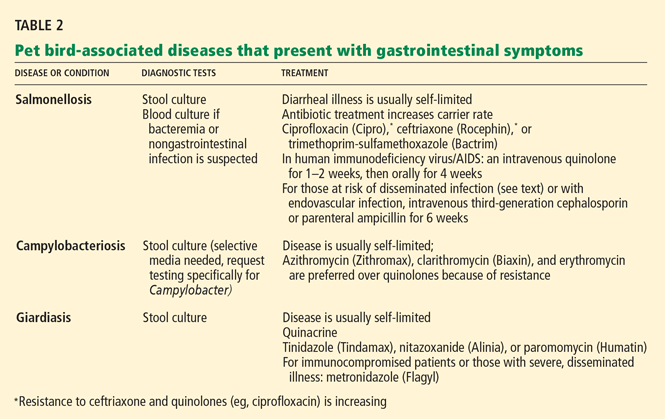
Salmonellosis
Nontyphoidal Salmonella species colonize the gastrointestinal tract of many animals, including birds. Up to 80% of chicken eggs are contaminated with this gram-negative bacterium.
Spread of nontyphoidal Salmonella to humans is much more common from poultry, poultry products, and pet reptiles than from pet birds, although ducks and baby chicks have transmitted infection to humans. Hand-to-mouth spread occurs after contact with pets or pet excreta.29,30 Infected birds may be healthy carriers, may develop enteritis or hemorrhagic hepatosplenic disease, or may even die.2,9
Gastroenteritis due to nontyphoidal Salmonella in humans begins with nausea, vomiting, fever, and loose, nonbloody diarrhea about 48 hours after ingestion. Most gastroenteritis infections are self-limited, with resolution of fever within 48 to 72 hours and resolution of diarrhea within 4 to 10 days.31
Systemic or severe infection warranting “preemptive” therapy is more likely in immunosuppressed patients, in patients with reduced gastric acid or impaired gastrointestinal mucosal integrity, in infants less than 3 months of age, and in patients with chronic gastrointestinal tract disease, malignant neoplasms, hemoglobinopathies, or infection with the human immunodeficiency virus.31 Systemic nontyphoidal Salmonella infection may settle in structurally abnormal sites such as in existing fractures, severe degenerative joint disease, organs affected by stones, or abnormal lung tissue. Large-vessel arteritis due to non-typhoidal Salmonella should be suspected in a person at risk (particularly if the person is elderly) who presents with back, chest, or abdominal pain preceded by gastroenteritis.31,32


