
Congenital long QT syndrome: Considerations for primary care physicians


ABSTRACTCongenital long QT syndrome is an inherited disorder of cardiac repolarization that predisposes to syncope and to sudden death from polymorphic ventricular tachycardia. The disorder should be suspected when the electrocardiogram shows characteristic QT abnormalities, or when there is a family history of long QT syndrome or of an event that raises suspicion of long QT syndrome, such as sudden death, syncope, or ill-defined “seizure” disorder. We can now classify some types of congenital long QT syndrome according to their genetic mutations and their triggers, such as exercise, rest, or startle.
KEY POINTS
- Because of the heterogeneity of the syndrome, genotyping is often useful in making therapeutic decisions, such as avoiding alarm clocks in bedrooms in patients with long QT genetic type 2, or restricting physical activity (particularly swimming) in patients with genetic type 1.
- When patients on beta-blocker therapy experience further syncopal episodes or aborted cardiac arrest and are considered at high risk, implantation of a cardioverter-defibrillator is appropriate.
- In a select few patients, left cervical-thoracic sympathetic denervation may be appropriate.
DRUGS TO AVOID
The list of drugs that prolong the QT interval is already quite long and seems to grow daily. Generally, drugs that block the rapid component of the delayed rectifier potassium channel (IKr) are the offenders; this is, essentially, an iatrogenic form of LQT2. Examples include macrolide antibiotics (eg, erythromycin), phenothiazine antipsychotics (including some antiemetics), and class III antiarrhythmics. Also to be avoided are sympathomimetics.
While the propensity of erythromycin or droperidol (Inapsine) to prolong the QT interval is well known, lesser-known offenders such as methadone (Dolophine) are often involved in clinically significant arrhythmic events.49 Often, a second drug delaying the metabolism or excretion of another drug is responsible.
Keeping abreast of all the drugs that prolong the QT interval can be challenging, but fortunately, several excellent resources are available, including two user-friendly databases, www.torsades.org and www.long-qt-syndrome.com. In addition, for use at the point of care, most PDA or pocket drug databases provide similar information. As a general rule, the agents listed in these sources are safe for use in the general population but greatly increase the risk of arrhythmia in patients with long QT syndrome.
When choosing an agent and weighing its arrhythmic risk, one should be mindful of its therapeutic window, its metabolism and excretion pathways, and its interactions. A narrow therapeutic window poses a potential problem in and of itself: when a drug with a narrow therapeutic window also has only one means of metabolism or elimination, the risk of adverse events is considerably magnified. Drug-drug interactions are especially relevant with antiarrhythmic agents; in such cases it is advisable to consult with a cardiologist or electrophysiologist.
EMOTIONAL AND PSYCHOLOGICAL ASPECTS AND RESOURCES
The diagnosis of long QT syndrome nearly always has a large emotional and psychologic impact on the patient and family and entails the need the need for emotional adjustment, perhaps requiring counseling. The patient’s or family’s fear of sudden death on learning of the diagnosis is obvious. If the diagnosis in the family was made after a family member died, the other members may have guilt about their survival and about not having pushed health care providers for a diagnosis earlier. Parents can feel emotional trauma and guilt about transmitting the mutation to a child.
A recommendation to quit a sport, which may have been one of the patient’s favorite activities or a source of identity, is often one of the hardest adjustments patients and families face. Patients and their physicians can find information and support from the Cardiac Arrhythmias Research and Education Foundation (www.longqt.org) and the Sudden Arrhythmia Death Syndromes Foundation (www.sads.org).
GENERAL TIPS
Congenital long QT syndrome should be suspected when the electrocardiogram shows the characteristic QT abnormalities or when there is a history of syncope or ill-defined “seizures” in the patient or in the patient’s family.
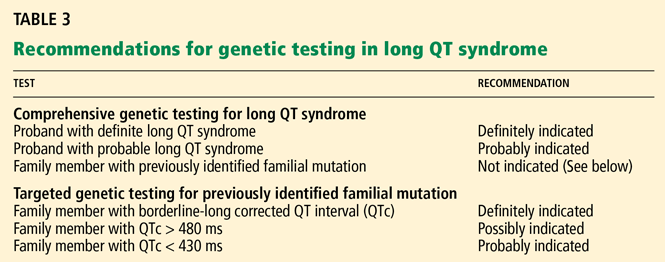
As a general rule, beta-blockers are advised for probands and affected family members. When patients on beta-blocker therapy experience further syncope or aborted cardiac arrest, implantation of a cardioverter-defibrillator is appropriate. These devices carry concerns, such as infection or fracture of the leads and the lifelong need for generator changes; therefore, they should be reserved only for those patients at high risk. In a selected few, left cervical-thoracic sympathetic denervation may be appropriate as well.


