
Results of the GLAGOV trial


ABSTRACT
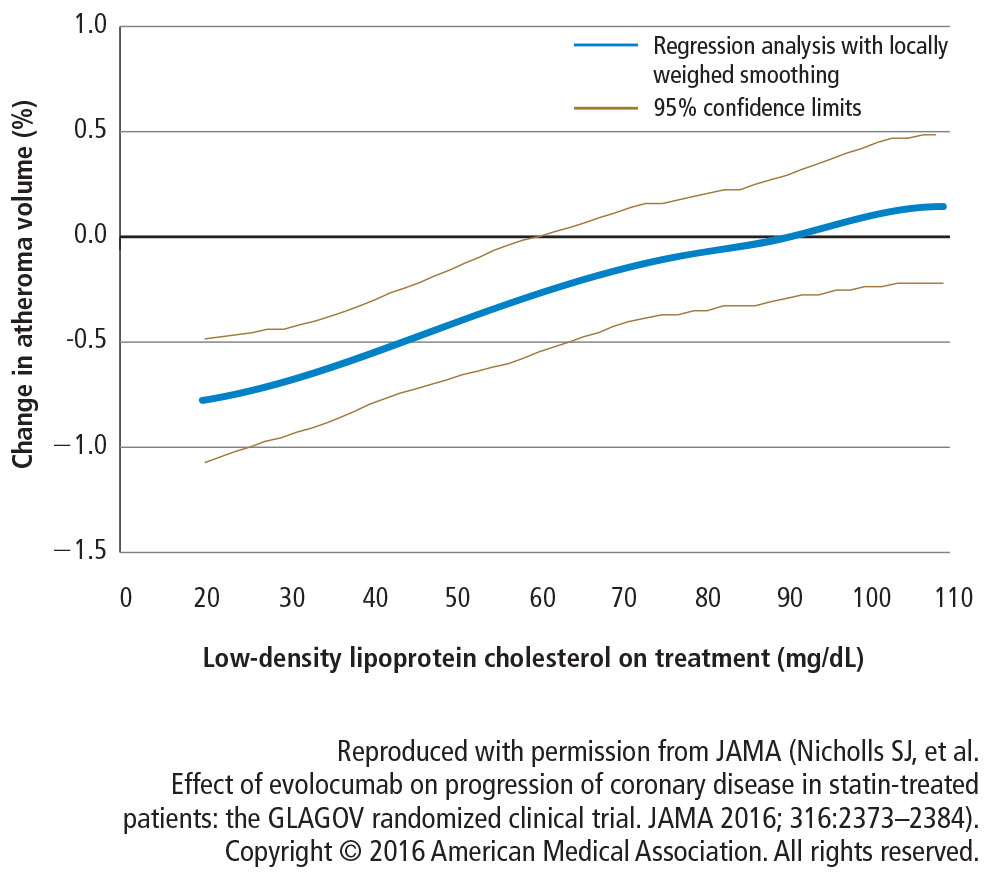
Statins therapy reduces atheroma in proportion to the reduction of low-density lipoprotein cholesterol (LDL-C). Proprotein convertase subtilisin–kexin type 9 (PCSK9) inhibitors are a new class of injectable human monoclonal antibodies shown to lower LDL-C when added to statin therapy. In a randomized, double-blind, placebo-controlled study, 968 patients with symptomatic coronary artery disease were treated with statins alone or combined with the PCSK9 inhibitor, evolocumab, and assessed for change in percent, total volume, and regression of coronary atheroma. Treatment with statins plus evolocumab achieved mean LDL-C levels of 36.6 mg/dL, produced atheroma regression with a mean change in percent of atheroma volume of about 1% (P < .001), and induced regression in a greater percentage of patients. The clinical benefits of LDL-C as low as 20 mg/dL shown in this trial warrant further investigation.
KEY POINTS
- Statin therapy achieves regression of atherosclerosis in proportion to reductions in LDL-C.
- PCSK9 inhibitors are a new class of injectable human monoclonal antibodies shown to lower LDL-C when added to statin therapy.
- Treatment with statins plus the PCSK9 inhibitor, evolocumab, achieved mean LDL-C levels of 36.6 mg/dL, atheroma regression, and demonstrated clinical benefit for LDL-C as low as 20 mg/dL.
Change in percent atheroma volume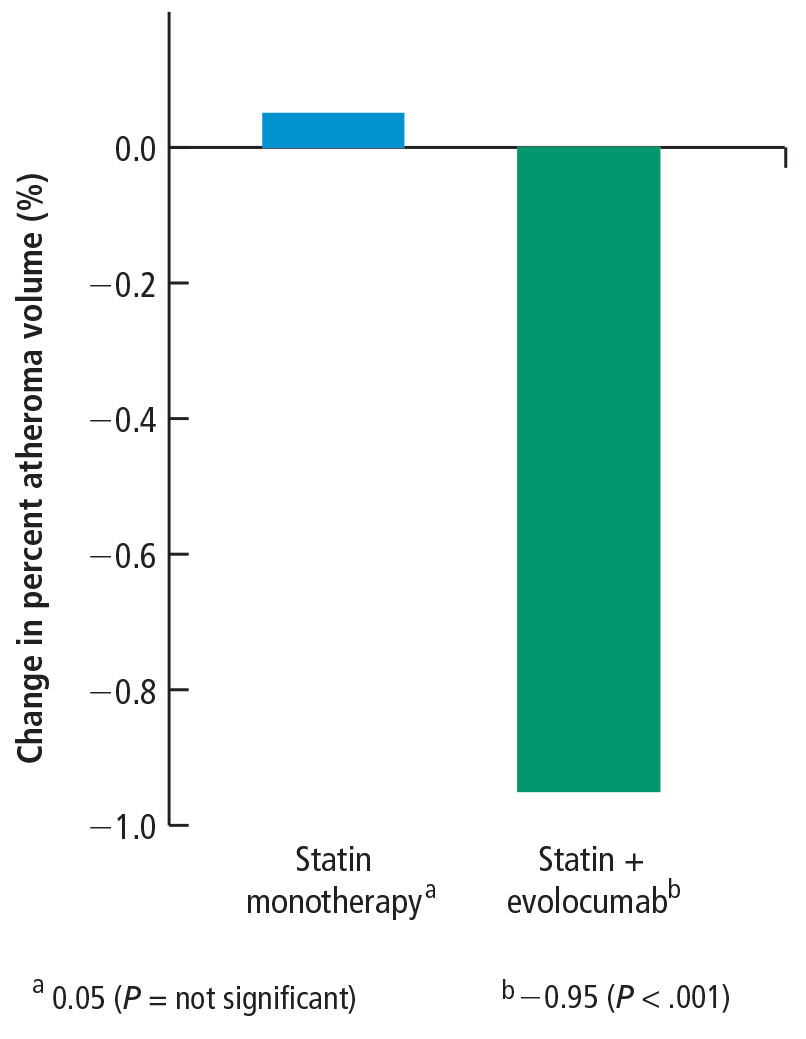
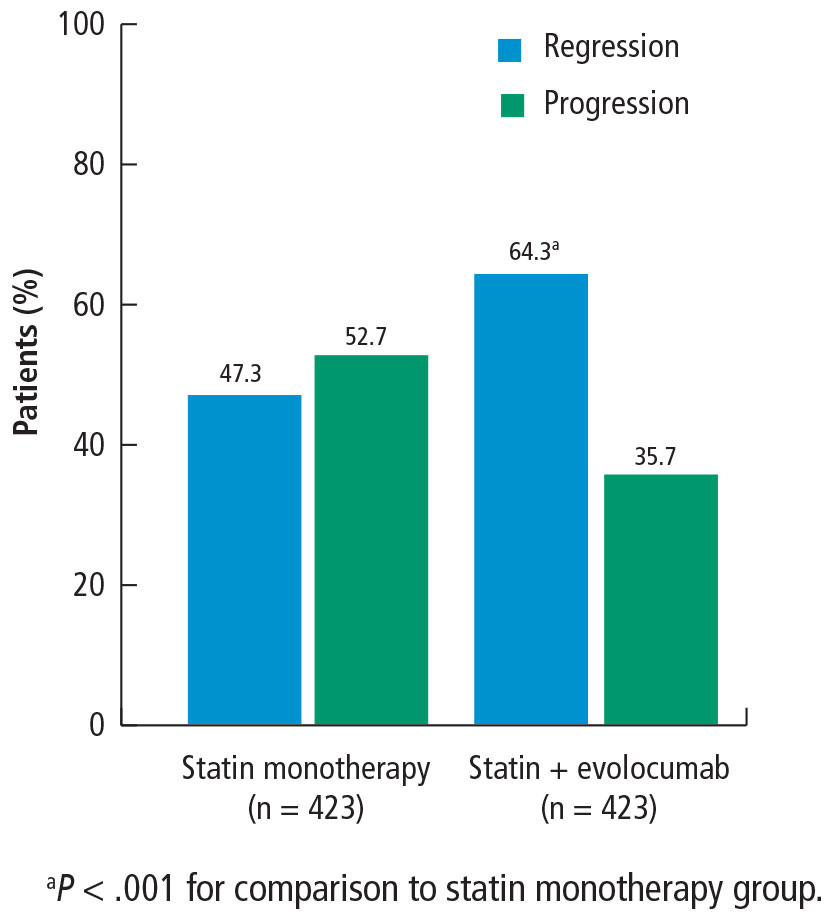
Total atheroma volume and percent of patients with atheroma regression
The secondary end point measuring the total atheroma volume in the coronaries showed no change in total volume of atherosclerotic plaque in the statin monotherapy group and a decrease in the statin plus evolocumab group.
Patients with LDL-C < 70 mg/dL
A subgroup of patients had a baseline LDL-C below 70 mg/dL, the lowest level recommended by guideline. Patients in this subgroup who received statin monotherapy remained at a mean LDL-C of 70 mg/dL whereas patients on statin plus evolocumab achieved a mean LDL-C of 24 mg/dL with a mean 2-week post-dosing trough level of 15 mg/dL, an unbelievably low level of LDL-C. In this subgroup, 81% of patients receiving statin plus evolocumab had atheroma regression, compared with 48% of patients in the statin monotherapy group. The percent of patients with atheroma regression in this subgroup of patients with low LDL-C at baseline was twice that seen in the larger study population (33% vs 17%), revealing profound levels of regression in patients treated with dual therapy.


