
Clinical challenges in diagnosing and managing adult hypertension


ABSTRACTAlthough there is still no consensus on how to diagnose hypertension, opinion is moving toward incorporating out-of-office blood pressure measurements into the process. The SPRINT trial poses potential opportunities and challenges. Simplified antihypertensive drug regimens incorporating single pill combinations are very effective.
KEY POINTS
- Diagnosing hypertension continues to require a sufficient number of well-performed office blood pressure measurements for most patients.
- First-tier drug choices are angiotensin-converting enzyme inhibitors and angiotensin receptor blockers (but not both together), calcium channel blockers, and thiazide-type diuretics. Add-ons to achieve blood pressure targets should come from first-tier classes not used initially.
- Simple implementation principles can achieve high control rates across a fractured healthcare delivery landscape. Equitable care can reduce racial disparities in hypertension control.
ANTIHYPERTENSIVE DRUG TREATMENT STRATEGIES
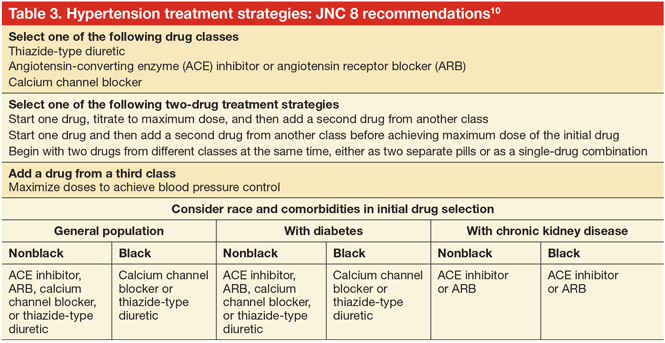
The Eighth Joint National Committee (JNC 8)10 issued a strictly evidence-based guideline based on adequate randomized controlled trials comparing representative drugs of different antihypertensive classes with respect to hard cardiovascular outcomes to arrive at well-supported recommendations (Table 3). The three groups of agents with the greatest evidence to support their use are:
- Thiazide-type diuretics
- Angiotensin-converting enzyme (ACE) inhibitors and angiotensin receptor blockers
- Calcium channel blockers.
Beta-blockers did not make the first tier because the beta-blocker atenolol was found to be inferior to the angiotensin receptor blocker losartan in terms of the rate of the primary end point (death, myocardial infarction, or stroke) in the Losartan Intervention For Endpoint Reduction in Hypertension (LIFE) trial,11 and we lack hard end point evidence to support other beta-blockers. However, patients with coronary artery disease or heart failure have a compelling drug-specific indication for a beta-blocker outside of blood pressure reduction.
There is an important race-based difference in the initial antihypertensive drug treatment options based on the findings of the prespecified subgroup of more than 10,000 black patients in the Antihypertensive and Lipid-Lowering Treatment to Prevent Heart Attack Trial (ALLHAT).12 The thiazide-type diuretic chlorthalidone was more effective than the ACE inhibitor lisinopril in improving the rates of adverse cardiovascular and cerebrovascular outcomes, including stroke and heart failure, and the calcium channel blocker amlodipine was more effective than lisinopril in improving the rate of stroke. There have been no randomized controlled trials or prespecified subgroups in randomized controlled trials evaluating angiotensin receptor blockers in black patients. Therefore, thiazide-type diuretics and calcium channel blockers are the preferred initial options for reducing cardiovascular outcomes in the general black population. ACE inhibitors and angiotensin receptor blockers are preferred across all races for patients with chronic kidney disease to improve renal outcomes.10 However, a strategy using initial combination therapy with an ACE inhibitor or an angioten sin receptor blocker together with a thiazide diuretic or calcium channel blocker does satisfy the evidence, improving both cardiovascular and renal outcomes in black patients with and without chronic kidney disease.
JNC 8 recommended thiazide-type diuretics as a class rather than specifically recommending chlorthalidone because confirmatory trials used thiazide-type diuretics other than chlorthalidone, such as hydrochlorothiazide. For example, whereas the ALLHAT trial found that chlorthalidone 12.5 or 25 mg was superior to the calcium channel blocker amlodipine in terms of reducing the incidence of heart failure, the International Nifedipine Study: Intervention as a Goal in Hypertension Treatment (INSIGHT) similarly found that hydrochlorothiazide titrated up to 50 mg was superior to the calcium channel blocker nifedipine in reducing the incidence of heart failure.13
Dose as well as drug is important. Inadequately dosed hydrochlorothiazide (12.5–25 mg/day) in the Second Australian National Blood Pressure (ANBP2) and the Avoiding Cardiovascular Events through Combination Therapy in Patients with Systolic Hypertension (ACCOMPLISH) trials14,15 did not fare as well as comparator agents. The hydrochlorothiazide dosage in these trials was decided on the basis of usual prescribing practices rather than strict examination of prior comparators. Common rationales for prescribing lower doses of diuretics are fear of renal fail- ure in the elderly or drug-induced incident diabetes. However, analyses of ALLHAT patients did not reveal increased renal failure or worsened outcomes due to drug-related diabetes.16,17 A supplement to the JNC 8 report, available online, provides a rationale for the target hydrochlorothiazide dose of 50 mg.18
ACE inhibitors and angiotensin receptor blockers should not be prescribed together to control hypertension in the general population, due to increased risk of acute renal failure.19 However, a nonprogressive decrease in creatinine clearance of up to 30% at the beginning of ACE inhibitor or angiotensin receptor blocker therapy in patients who have chronic kidney disease can be viewed as a good sign, indicating that intraglomerular pressure has been reduced and the kidneys are better protected against structural damage.20
Intensifying therapy
While the first-tier antihypertensive drug classes have been identified by randomized controlled trials, most patients require drug intensification. In the absence of randomized controlled trials examining second-step options, the JNC 8 recommended adding a drug from another of the first-tier treatment classes, based on expert opinion. The preferred medication intensification strategies are:
- Maximizing the first medication before adding a second, as was done in the randomized controlled trials
- Adding a second medication before reaching the maximum dose of the first, recognizing dose plateau relationships
- Starting with two medication classes separately or as a fixed-dose combination, a strategy that enhances hypertension control in large populations.
At the conclusion of the process, three drug classes are maximized as needed to achieve the goal blood pressure (Table 3).


