
Copper Deficiency Causing Peripheral Neuropathy, Leukopenia, and Anemia in the Setting of Zinc Ingestion


Background: Copper deficiency is an uncommon but clinically significant cause of myeloneuropathy and cytopenia. It can mimic myelodysplastic syndromes and other neurologic disorders. Recognition is essential to ensure accurate diagnosis and treatment. Excessive zinc ingestion may cause copper deficiency due to competitive absorption, and its use has become more prevalent since the COVID-19 pandemic.
Case Presentation: A male aged 73 years developed progressive peripheral neuropathy, leukopenia, and normocytic anemia. The patient had a prolonged history of over-the-counter zinc supplementation following a COVID-19 infection. Diagnostic workup excluded infectious, autoimmune, and neoplastic causes. Laboratory testing identified severe copper deficiency with low ceruloplasmin levels and normal zinc levels, likely the result of recent cessation of zinc supplementation. The patient received intravenous copper followed by oral supplementation, resulting in resolution of leukopenia, reticulocyte proliferation, and reported improvement in neurologic symptoms.
Conclusions: Peripheral neuropathy, leukopenia, and anemia are potential indicators of copper deficiency. Clinicians should discuss a patient’s zinc use when this presentation is encountered, as zinc-induced copper deficiency is a reversible cause of these findings. Prompt copper repletion can restore hematologic abnormalities and may improve neurologic symptoms.
Copper deficiency, particularly in its clinically significant form, is extremely rare.1 Delayed diagnosis and treatment can result in potentially irreversible neurologic deficits and reversible cytopenias.2-6
We report a case of peripheral neuropathy, leukopenia, and anemia in a veteran with severe copper deficiency who improved significantly upon copper supplementation.
Case Presentation
A male aged 73 years with type 2 diabetes, right occipital stroke, prostate cancer status post prostatectomy, lumbar spinal stenosis, peripheral artery disease, and bilateral iliac artery aneurysms presented with 2 months of progressive bilateral lower extremity weakness, stiffness, numbness, tingling, unintentional 40-lb weight loss, leukopenia, and anemia. He had experienced normocytic anemia since 2012. Prior workup included an esophagogastroduodenoscopy and colonoscopy 4 months prior to admission, which revealed Barrett esophagus without dysplasia and 3 polyps that were tubular adenomas. Two months prior to admission, the patient’s folic acid level was low, and supplementation with folic acid 1 mg daily was initiated. Leukopenia was first noted 2 months prior to admission.
The patient had been taking zinc gluconate 50 mg daily since 2021. He reported initiating both zinc and vitamin C 500 mg daily in 2021 following a COVID-19 hospitalization and the death of his younger brother from the same illness. He purchased the supplements over the counter after reading online that they could prevent COVID-19 and reported no alcohol use in the 3 years prior to admission.
The physical examination was unremarkable, except for the neurologic portion. He was alert and oriented to person, place, and time. He had decreased muscle bulk diffusely, worse in the bilateral lower extremities. Muscle tone was mildly increased in the bilateral lower extremities. His muscle strength was 4/5 diffusely. Deep tendon reflexes were 2+ diffusely, and the toes were downgoing on a Babinski examination. There was decreased sensation to light touch and vibration in the lower extremities up to the ankles. Romberg testing was negative. Cerebellar testing was unremarkable. He needed assistance standing and was able to take several small, cautious steps with a cane.
The patient’s complete blood count and metabolic panel were notable for normocytic anemia (hemoglobin 8.0 g/dL) and leukopenia (white blood cell [WBC] count 2.6 × 10³/uL). His peripheral blood smear showed anisocytosis and poikilocytosis with very rare schistocytes and teardrop cells (Table 1).
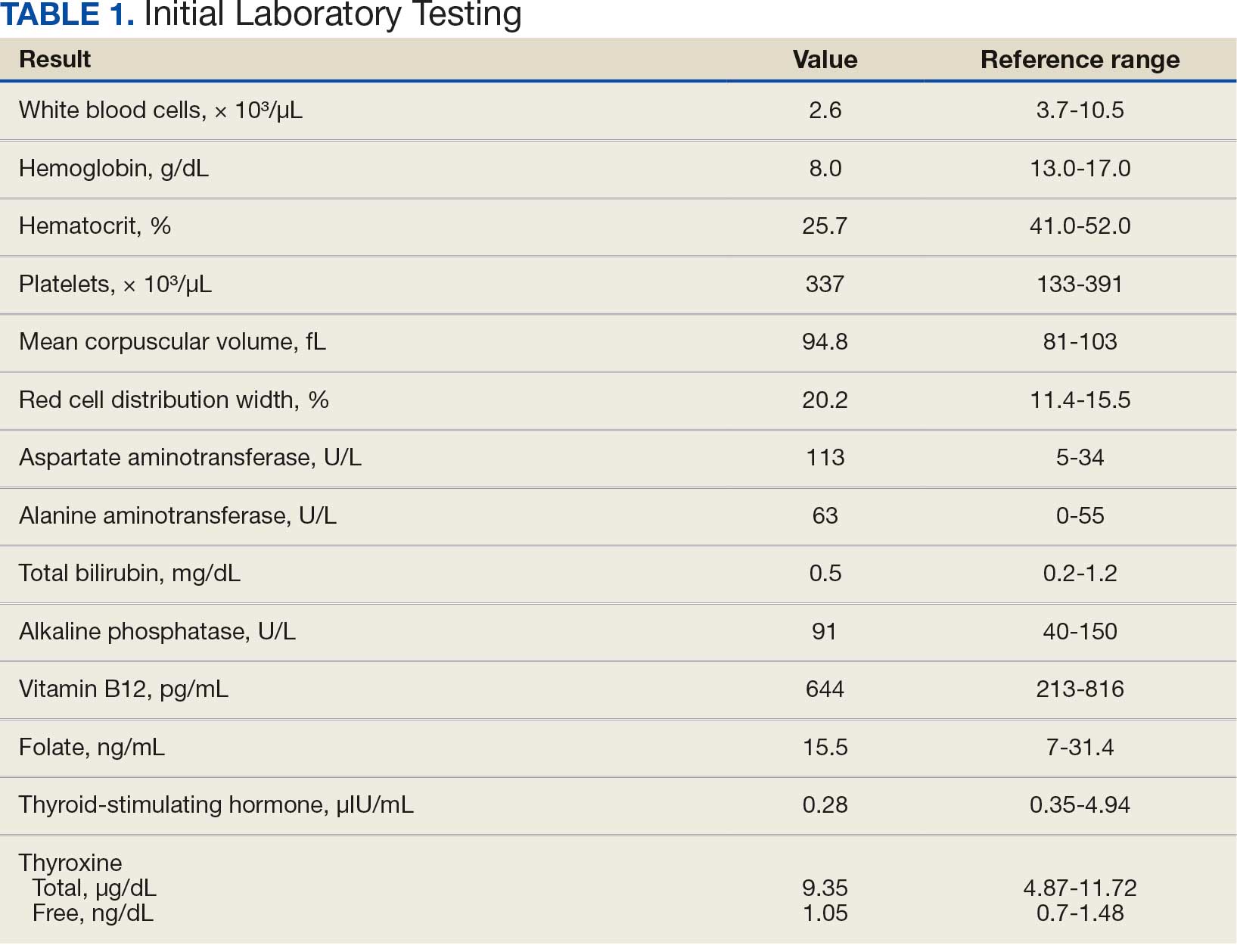
Given the patient’s age and history of prostate cancer status post prostatectomy, metastatic malignancy and a paraneoplastic syndrome were included in the differential diagnosis. Computed tomography of the chest, abdomen, and pelvis revealed no new malignancies or metastatic disease. Prostate-specific antigen was < 0.1 ng/mL. Magnetic resonance images of the brain and entire spine revealed an old right occipital infarct and multilevel degenerative disc disease in the cervical and lumbar regions.
There was only moderate central canal stenosis at L4-L5. Erythrocyte sedimentation rate, C-reactive protein, creatine kinase, and aldolase were all within reference ranges. Electromyography and nerve conduction studies revealed a length-dependent sensorimotor axonal polyneuropathy with evidence of ongoing axonal degeneration more distally. There was no evidence of demyelination. All autoimmune and infectious disease workups (including HIV, Lyme disease, and syphilis) were negative.
On hematologic workup, there was no evidence of hemolysis. Iron saturation was low at 10% with a slightly elevated ferritin level. Serum protein electrophoresis and urine protein electrophoresis were within reference ranges. Bone marrow biopsy and flow cytometry revealed no morphologic, immunophenotypic, cytogenetic, or molecular evidence of a myeloid neoplasm.
Because of the combined leukopenia, anemia, and sensorimotor axonal polyneuropathy, urine arsenic and whole blood lead, copper, and zinc levels were obtained. The arsenic level was undetectable, and the lead level was not elevated. His whole blood zinc level was 529 mcg/dL (reference range, 440-860 mcg/dL), and copper level was < 0.5 mcg/mL (reference range, 0.5-1.5 mcg/mL). Ceruloplasmin was low at 7.0 mg/dL (reference range, 16-31 mg/dL).
Factoring these levels and the entirety of the patient’s workup led to a diagnosis of copper deficiency myeloneuropathy with hematologic abnormalities. The patient’s care team discontinued the zinc supplements.
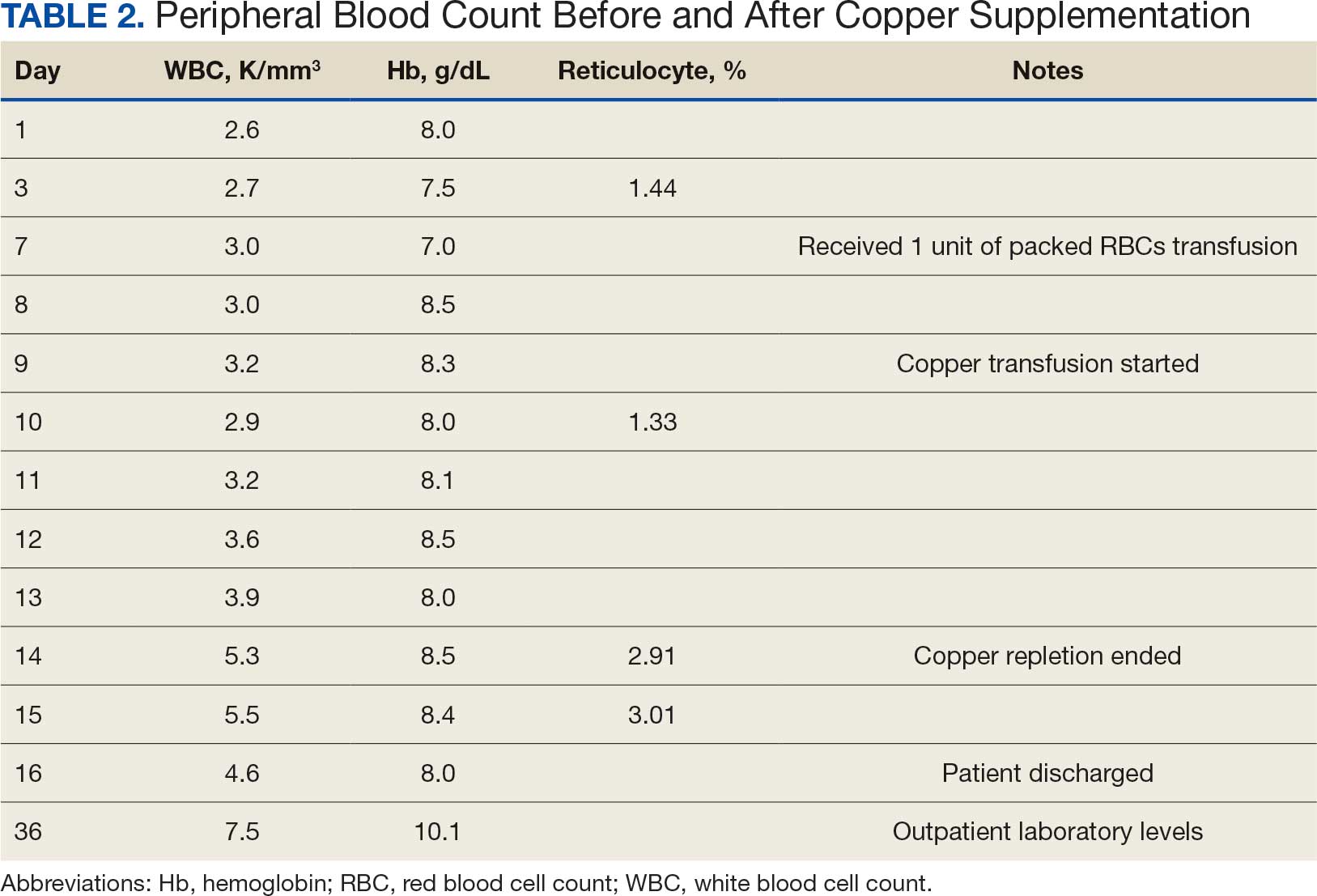
To treat copper deficiency, the patient received daily 3 mg intravenous (IV) copper infusions. He developed nausea after 2 days of treatment, so the dose was decreased to 2 mg IV copper daily for a total of 5 days. The nausea resolved after the copper dose was decreased. After 5 days of copper infusion, the patient reported improvement in bilateral knee stiffness, and improved sensation to light touch was noted on examination. The weakness in his legs remained the same. Additional laboratory testing revealed the patient’s leukopenia had resolved (WBC from 2.6 x 10³/uL to 5.3 x 10³/uL), and reticulocyte proliferation had sharply increased from 1.44% to 3.01% upon completing copper infusion (Table 2 and Figure). The patient was discharged to a skilled nursing facility for subacute rehabilitation. He was instructed to take 2 mg of oral copper daily and not to resume zinc supplementation.
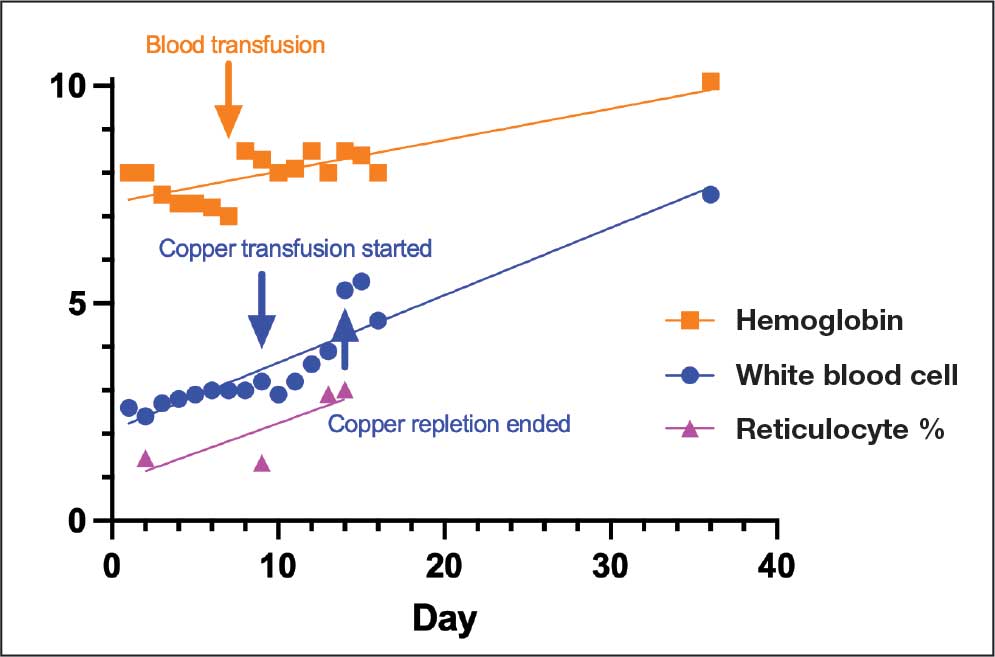
supplementation showing recovery of hemoglobin,
white blood cell count, and reticulocyte proliferation
from hospital admission (day 0) to outpatient laboratory
test results (day 36) with key time points noted.
Discussion
Copper deficiency is a relatively rare condition. Copper is a trace element found in a variety of plant and animal products. In humans, it is a cofactor required for several enzymes involved in energy production, iron metabolism, and neurotransmitter synthesis. The daily recommended dose for males is about 1400 mcg and 1100 mcg for females. Copper is primarily absorbed in the duodenum.1 The most common causes of copper deficiency include malabsorption in the duodenum caused by celiac disease, short bowel syndrome, or bariatric surgery.2 The patient described in this case tested negative for tissue transglutaminase immunoglobulin A and he was not deficient. He had no signs or symptoms of short bowel syndrome, and he never had bariatric surgery.
Copper deficiency is known to cause myelopathy, peripheral neuropathy, hypochromic anemia, and leukopenia.2-5 Excessive zinc consumption has been found to cause copper deficiency, as zinc and copper are absorbed competitively from the duodenum. High zinc intake stimulates the production of metallothionein, an intestinal protein that binds these metals. Because metallothionein has a stronger affinity for copper, it sequesters dietary copper within the intestinal cells. When these cells are naturally shed, the bound copper is lost in the feces, ultimately leading to systemic copper deficiency.7
The patient had been taking a zinc gluconate 50 mg supplement since 2021, exceeding the recommended daily upper limit of 40 mg for adults.8 He began taking zinc after reading an online article that promoted its use as a preventive measure against COVID-19. During the pandemic, widespread misinformation about supplements such as zinc circulated on news outlets and social media platforms. Zinc has been hypothesized to inhibit viral replication and attachment to the nasopharyngeal mucosa, fueling its popularity for preventing the common cold and COVID-19, despite mixed results in clinical trials and meta-analyses.9
Zinc supplementation was discontinued on admission. Laboratory evaluation demonstrated that the patient’s zinc level 2 days after admission was 529 mcg/dL (reference range, 440-860 mcg/dL). In patients taking zinc supplementation, zinc levels do not need to be elevated to cause copper deficiency. An analysis of 70 patient health records of prescribed zinc supplements found that 62% were prescribed zinc at doses sufficient to cause copper deficiency. In 48% of these patients, plasma zinc concentrations were not elevated.10
The timeline of our patient’s neurologic and hematologic abnormalities after 4 years of zinc supplementation supports zinc-induced copper deficiency as the underlying cause. This clinical picture is consistent with prior reports of zinc-induced copper deficiency that mimics hematologic disorders such as myelodysplastic syndrome.3 As unsupervised zinc ingestion has become increasingly common since the pandemic, clinicians should maintain a high index of suspicion for copper deficiency in patients with unexplained myeloneuropathy, anemia, and leukopenia. For patients with this triad, we recommend obtaining whole blood copper and zinc levels.
There are few guidelines on the management of copper deficiency.1,11 In a case report, cessation of zinc supplementation followed by 2 months of oral copper supplementation did not correct anemia and leukopenia.12 IV copper is thus preferred for severe copper deficiency with hematologic effects and neurologic symptoms.11 A patient was successfully treated with IV copper 2 mg daily for 5 days, followed by oral copper 2 mg daily.13 Another commonly used regimen is oral 8 mg of copper daily for week 1, 6 mg of copper daily for week 2, 4 mg of copper daily for week 3, and 2 mg of copper daily thereafter.2 The neurologic effects of copper deficiency are usually irreversible, but copper supplementation can prevent these effects from worsening.2,5 Hematologic effects of copper insufficiency, including anemia and leukopenia, are reversible over the course of weeks to months.2,3 After receiving a 5-day course of IV copper supplementation, the patient’s neurologic symptoms began to improve, with reported improvement in knee stiffness and neuropathy symptoms. From a hematologic standpoint, his leukopenia had resolved, anemia had slightly improved, and reticulocyte proliferation had sharply increased by the time of his last infusion, further suggesting copper deficiency as the cause of his symptoms. A prior case report showed that it took 6 months of oral copper supplementation for anemia and leukopenia to completely resolve.12
Interestingly, despite improvement in the patient’s symptoms and laboratory values, a 5-day course of IV copper supplementation was insufficient to completely restore our patient’s copper levels, as the copper level remained < 0.5 mcg/mL following supplementation. This finding is not unexpected, as in mild dietary copper deficiency, repletion with 2 mg daily for 35 days did not fully restore plasma copper levels, indicating that recovery can be slow and may require higher or prolonged dosing.14 The patient was instructed to start oral copper 2 mg daily and to follow up with his primary care physician for repeat copper levels and a complete blood count. Since oral copper is not always included in health plan formularies, patients are frequently advised to use over-the-counter supplements.
Conclusions
Many patients rely on zinc supplementation hoping to improve immunity and prevent infection. However, excessive zinc ingestion may lead to unintended consequences, such as copper deficiency. Therefore, recognizing the triad of peripheral neuropathy, anemia, and leukopenia is crucial to detecting copper deficiency. This case demonstrates that copper supplementation can improve cytopenias and may mitigate and prevent further neurologic damage, greatly improving patients’ quality of life.
